






Blog
What Does a Connected Home Cost in 2026? A Father’s Day Weekend Reality Check


TL;DR
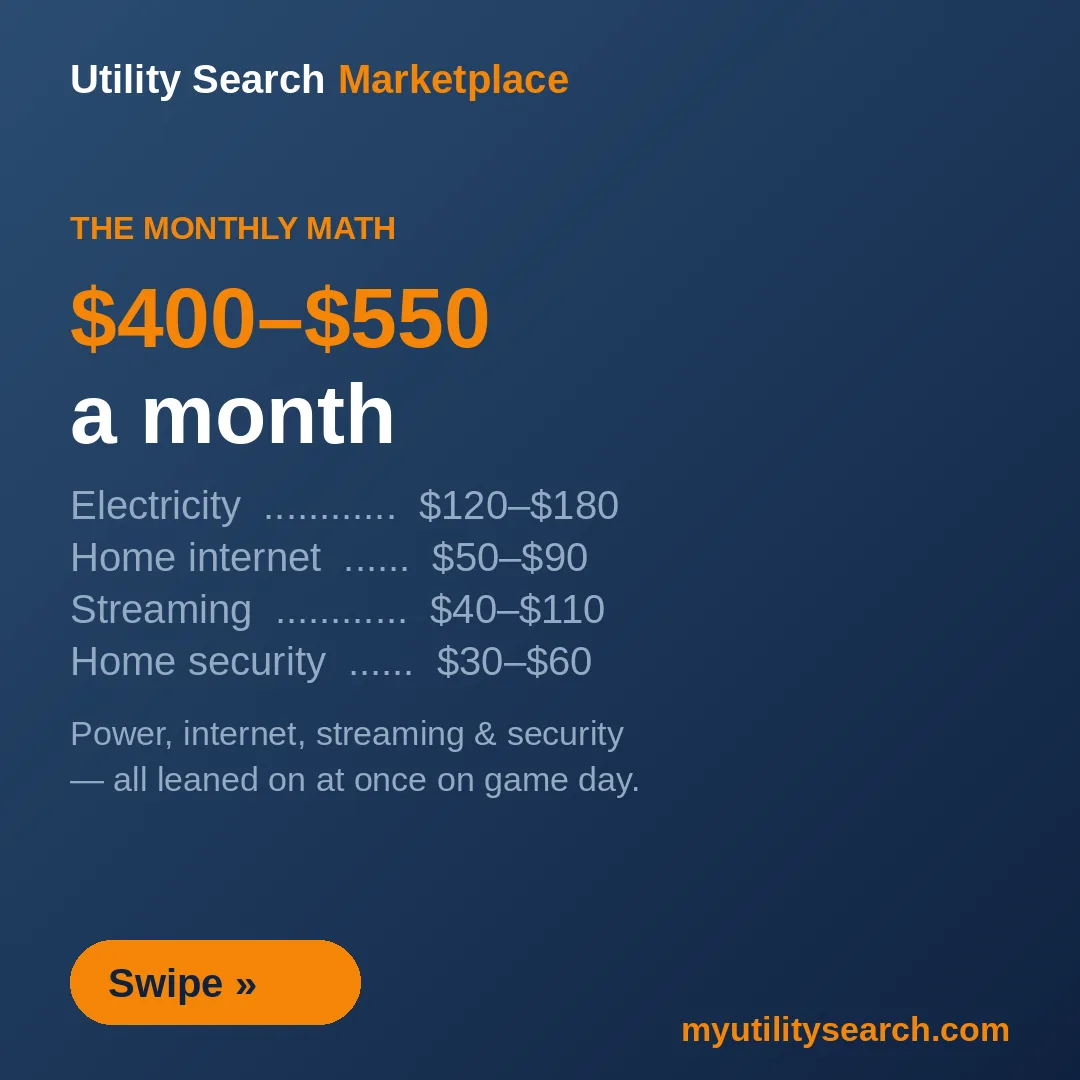
The connected home cost 2026 reality check: a typical U.S. household runs roughly $400–$550 a month once you add up electricity, internet, streaming subscriptions, and home security. On a big-game weekend — the College World Series finals and World Cup matches both streaming this Father’s Day — you lean on every one of those at once. The fastest savings come from re-shopping internet and electricity (in deregulated states) and trimming streaming overlap; security is the one most households underspend on. Compare options free at myutilitysearch.com.
Happy Father’s Day. However Dad is spending the weekend — out by the pool, firing up the grill, or parked in front of the big game — it’s also a quiet stress test for the connected home. The College World Series finals between North Carolina and Oklahoma start Saturday night on ESPN, USA and other World Cup matches are streaming across ESPN, Telemundo, and Peacock, and a high-profile Disney+ outage this week was a reminder of how much a weekend of family plans now rides on the services flowing into your house. Add up what powers and connects a modern home — electricity, broadband, streaming, and security — and most families are spending between $400 and $550 every month. The good news: two or three of those line items are far more negotiable than people assume — so this is the perfect weekend to give Dad one less bill to worry about.
How much does a connected home cost per month in 2026?
Here’s a realistic monthly picture for a typical family household. Your numbers will vary by state, home size, and how many streaming services you stack — but this is the shape of the bill most people are paying.
| Category | Typical monthly range | Where the money goes |
|---|---|---|
| Electricity | $120–$180 | Cooling, appliances, and a TV/streaming setup running all weekend |
| Home internet | $50–$90 | The pipe everything streams through — game day exposes a slow plan |
| Streaming services | $40–$110 | Often 3–5 overlapping subscriptions; the easiest place to trim |
| Home security | $30–$60 | Monitoring + cameras; the line item most homes skip or underbuy |
| Estimated total | $240–$440+ | Before phone, water, or gas — add those and many homes clear $500 |
Ranges are illustrative monthly estimates for a typical single-family home; actual costs vary by location, usage, and plan.
Why does a big-game weekend strain the connected home?
A championship weekend is when the connected home gets used the way it’s actually marketed. Three or four screens are live at once — the CWS finals on one TV, the USA World Cup match on a tablet, highlights on a phone, maybe a speaker out by the pool. That’s when a too-slow internet plan buffers at the worst moment, and it’s when the air conditioning and the entertainment system push electricity usage to its monthly peak. The Disney+ outage this week made the same point from the other direction: when a service you pay for goes dark mid-event, you feel exactly how much your weekend depends on it.

None of that means spending more. It means making sure the four services you already pay for are the right size for how you actually live.
Where can families realistically cut the connected-home bill?
1. Re-shop your internet plan
Most households overpay because they signed up years ago and never revisited it. Promo pricing expires, faster tiers launch, and new fiber builds reach more streets every quarter. If your plan buffers during a streaming-heavy weekend, that’s the signal to compare. Speeds and prices vary widely by address — the only way to know your real options is to check what’s available at your ZIP. Compare internet providers free at myutilitysearch.com, or call (844) 437-9527.
2. Re-shop electricity (if your state is deregulated)
In deregulated states — Texas, Ohio, Pennsylvania, Illinois, and others — you can choose your electricity supplier, and the rate you’re on may be well above what’s currently available. Summer is peak-usage season, so a better rate compounds across the months when you use the most. The U.S. Energy Information Administration tracks residential rates if you want to see how your state compares. To check supplier options for your address, start at myutilitysearch.com.
3. Trim streaming overlap
The average household pays for several streaming services and actively watches two or three. Big events are a natural audit moment: figure out which apps you needed for this weekend’s games (ESPN, Telemundo, Peacock) versus which ones have been auto-renewing untouched. Rotating subscriptions — keeping what you watch this month, pausing the rest — is the single easiest cut on this list.
4. Right-size home security
Security is the line item most homes underspend on — and the one a long weekend away from the house makes most relevant. Modern systems bundle monitoring, cameras, and smart-home control, and pricing is more competitive than most people expect. If you’ve been meaning to add or upgrade coverage, compare options at myutilitysearch.com or call (844) 646-6587.
The smart order to tackle it
You don’t have to do all four at once. The highest-leverage sequence for most families:
- Internet first — it’s the backbone every other service runs on, and re-shopping is fast.
- Electricity next — if you’re in a deregulated state, summer savings compound.
- Streaming — a five-minute subscription audit, often $20–$50/month back.
- Security — not a cut, but the upgrade most worth making while you’re reviewing everything.
Frequently asked questions
What is the average connected home cost 2026 per month?
A typical U.S. household spends roughly $400–$550 per month combining electricity, home internet, streaming subscriptions, and home security. The total varies with home size, location, and how many streaming services you keep active.
What’s the fastest way to lower my internet and electricity bills?
Re-shop both. Internet promo rates expire and new plans launch constantly, so comparing options for your specific address often reveals a better deal. In deregulated states you can also switch electricity suppliers. You can compare both free at myutilitysearch.com — providers pay the site, so it’s free to you and no Social Security number is required.
Why does my internet buffer during big sporting events?
Streaming several events at once — plus everyone else in your area doing the same — strains a plan that’s too slow for your household. If game-day buffering is routine, your plan likely needs an upgrade or you have faster options available at your address that you haven’t compared.
Is home security worth adding for a single weekend away?
A long holiday weekend is exactly when monitoring and cameras earn their keep. Modern systems are more affordable and easier to install than they used to be, and many bundle smart-home features. It’s the connected-home category most households underbuy.
Happy Father’s Day — make this the audit weekend.
Compare internet, electricity, and home security options for your address — free. Providers pay us, never you. No Social Security number required.
myutilitysearch.com • Internet: (844) 437-9527 • Home security: (844) 646-6587
Last updated: June 19, 2026 · Utility Search Marketplace