Blog
Home Security for Renters in 2026: No-Drill, No-Contract Systems That Move With You

By Utility Search Marketplace · Updated June 8, 2026 Finding the right home security for renters comes down to three things a homeowner never has to think about: no drilling, no long contract, and hardware that comes with you when you move. The good news is that in 2026 there are more renter-friendly options than ever, with portable wireless systems starting around $200 and professional monitoring available for under $30 a month — many with no contract at all. Here is how to choose the right setup for your place in about five minutes, free, with no SSN required.
What makes a security system right for renters?
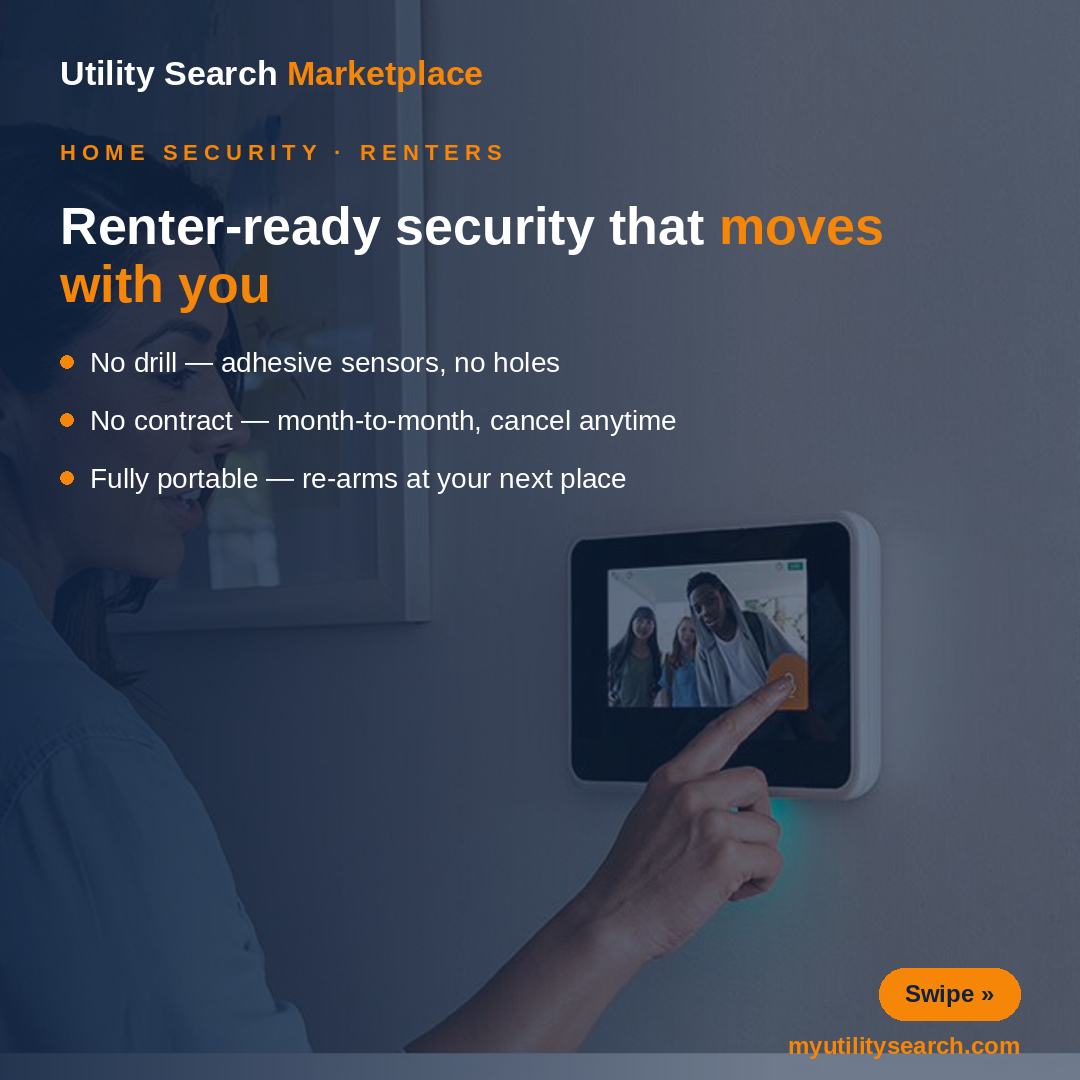
The best home security for renters is built around portability. That means wireless sensors that mount with adhesive strips instead of screws, a hub that simply plugs into an outlet, and month-to-month monitoring you can cancel or move when your lease ends. Most landlords have no issue with removable wireless systems because they do not modify the property — but it is always worth a quick check of your lease for any security-system clause. The key difference from a homeowner setup: you are protecting one unit and you need to be able to pack the whole thing in a box and re-arm it at your next address.
How much does home security for renters cost?
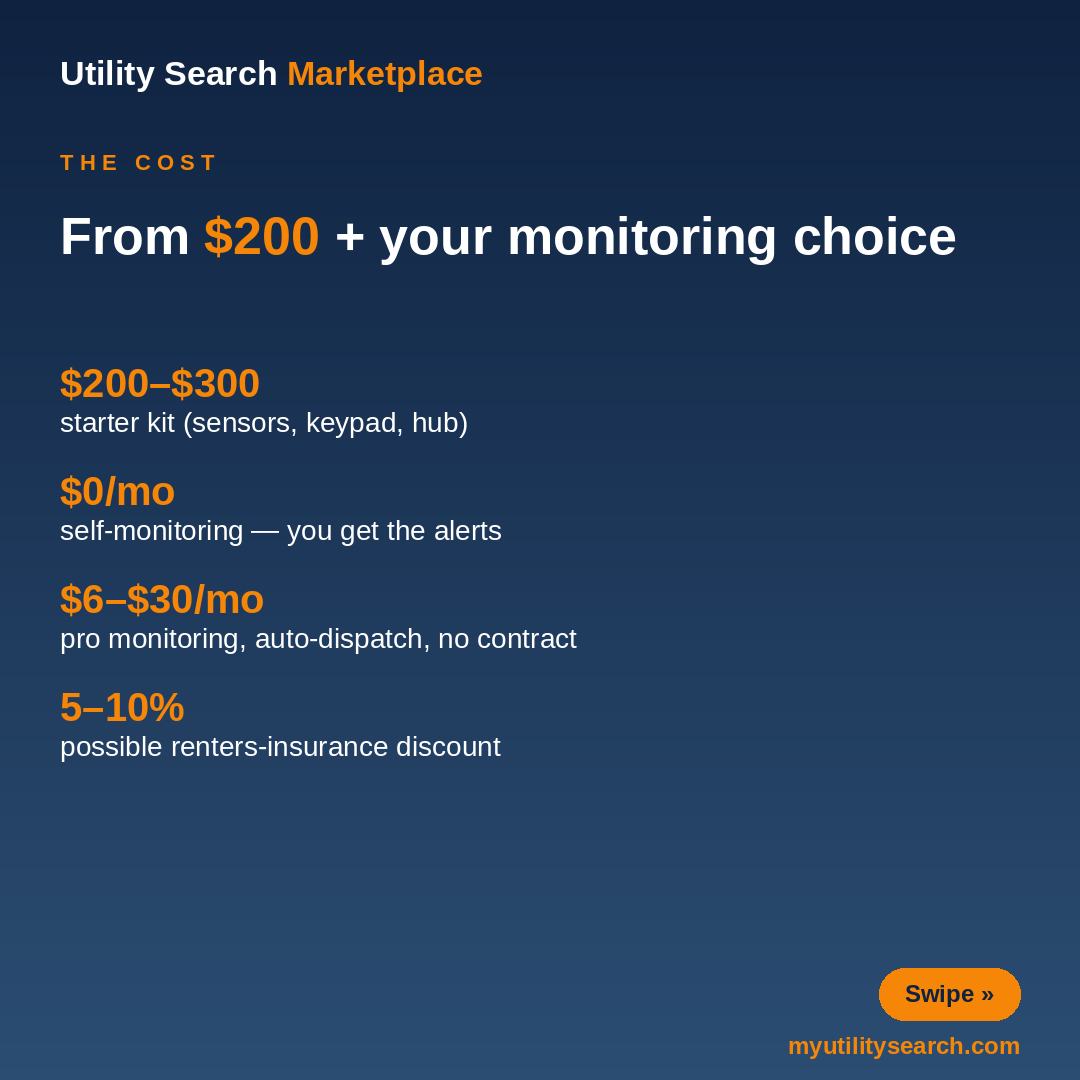
Costs split into two buckets: the equipment you buy once, and the monitoring you pay monthly. Starter kits generally run about $200 to $300 for the sensors, keypad, and hub. Monitoring is where renters have real flexibility — many systems offer free self-monitoring, where you get phone alerts and call for help yourself, while professional monitoring that dispatches help automatically typically runs from about $6 to under $30 a month with no contract. Over three years, a self-monitored kit can cost as little as the upfront $200 to $300, while adding professional monitoring lands most renters somewhere around $1,000 to $1,150 all-in. One more upside: some renters-insurance providers offer a 5 to 10 percent discount for a monitored system.
Self-monitoring or professional monitoring?
This is the choice that most affects your home security for renters budget. Self-monitoring is free or near-free: when a sensor trips, you get an instant phone alert and decide what to do. It is a solid fit if you are home often and want to avoid recurring costs. Professional monitoring adds a 24/7 center that can dispatch police or fire automatically — worth the monthly fee if you travel frequently or want faster response when you are away. Because the better renter systems are month-to-month, a common approach is to start on self-monitoring and add professional coverage only when life calls for it.
What about apartment-specific risks?
Building security is not the same as unit security. A front-desk guard or lobby camera protects common areas, not your individual apartment — so package theft at your door, shared-access break-ins, and an unlocked balcony door are still on you. That is the gap a portable system fills. Entry sensors on your door and accessible windows, a motion sensor for the main room, and an optional indoor camera cover the risks a building’s own security does not.
What should I do right now?
You do not need to wade through a dozen review sites to sort out home security for renters. Compare renter-friendly systems and monitoring plans side by side — portability, no-contract options, and the true all-in cost — and pick what fits your place and your lease. You can compare home security options in about five minutes on our security page: it is 100% free to you, because providers pay us, never you, and we never ask for your Social Security number. Prefer to talk it through? Call (844) 646-6587. If you are setting up a new rental, security is rarely the only box to check. It is the natural moment to compare internet providers for your new address, and in a deregulated electricity state, to compare energy plans so your power bill starts off right. Sorting the whole stack in one sitting is the simplest way to move in without overpaying.
Sources
General home-safety and security guidance is published by the Cybersecurity and Infrastructure Security Agency. System pricing and monitoring details referenced here reflect 2026 market data aggregated across independent security-system reviewers.
Frequently asked questions
What is the best home security for renters?
The best home security for renters is a portable, wireless system with adhesive-mount sensors, a plug-in hub, and no-contract monitoring you can move when your lease ends. The right pick depends on your unit size, whether you want self- or professional monitoring, and your budget.
Do I need my landlord’s permission to install a security system?
For removable wireless systems with adhesive sensors, generally no, because they do not modify the property. Still, check your lease for any security-system clause before installing, and avoid anything that requires drilling without approval.
How much does renter home security cost per month?
Equipment kits typically run $200 to $300 once. Monitoring is flexible: free self-monitoring is common, while professional monitoring usually costs from about $6 to under $30 a month, often with no contract.
Can I take my security system when I move?
Yes. Renter-friendly systems are designed to be portable — peel the adhesive sensors off, unplug the hub, and re-arm everything at your new address, often without re-pairing. That portability is the whole point of a renter system.
How can I compare home security options for renters?
Use a free comparison tool that shows renter-friendly systems and monitoring plans side by side. Utility Search Marketplace does this in about five minutes, free to you, with no SSN required, or call (844) 646-6587.