Blog
Satellite Direct-to-Device: What the Carriers-vs-Starlink Fight Means for Your Phone

Updated on October 1, 2026
6 min read
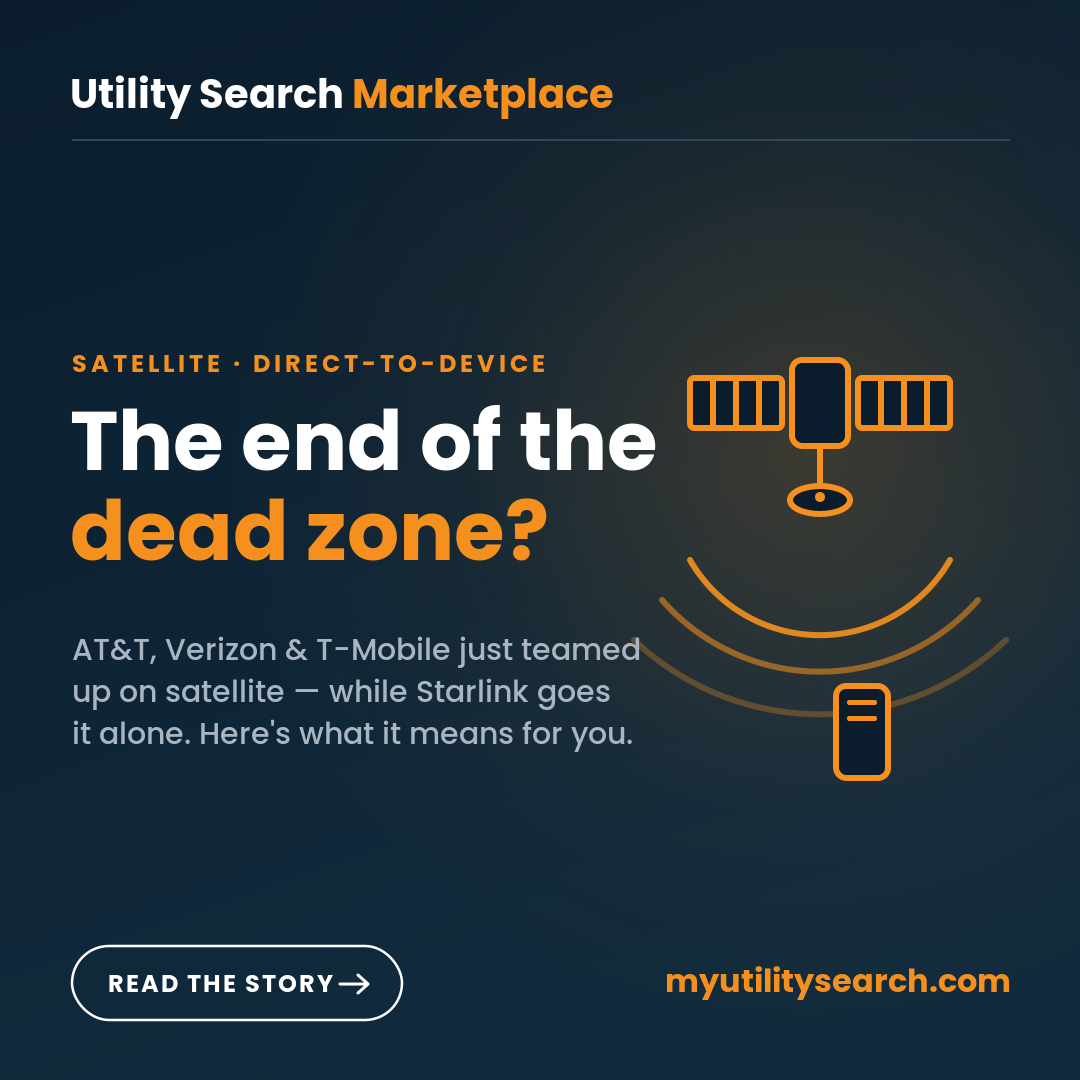
Satellite direct-to-device (D2D) lets an ordinary smartphone connect straight to a satellite when no cell tower is in range. In May 2026, AT&T, Verizon, and T-Mobile agreed to pool their spectrum and build it together — a defensive move against SpaceX’s Starlink Mobile. For you, it means fewer dead zones. The real fight is over who controls the coverage.
Key takeaways
- The three largest U.S. carriers — together about 98% of postpaid subscribers — announced a satellite direct-to-device joint venture on May 14, 2026.
- The goal: pool limited spectrum to nearly eliminate wireless dead zones, on standard phones, with no special hardware.
- It’s widely read as a defensive bloc against SpaceX, which spent about $17 billion on EchoStar spectrum to launch its own Starlink Mobile service.
- Nothing changes on your phone today. The venture is still “in principle,” and SpaceX’s spectrum doesn’t fully transfer until late 2027.
- Bottom line: satellite is becoming a standard utility layer, not a premium add-on — which strengthens the case for shopping coverage and price the way you shop internet and electricity.
What exactly did AT&T, Verizon, and T-Mobile announce?
On May 14, 2026, the three carriers said they have an “agreement in principle” to form a joint venture that pools their limited satellite spectrum into a single, shared satellite direct-to-device platform. Instead of each carrier cutting separate satellite deals and building separate technical standards, the venture would create one unified layer that any satellite operator can plug into.
The stated goal is to “nearly eliminate” wireless dead zones across the U.S. — rural highways, national parks, boats offshore, and disaster areas where ground towers fail. Importantly, the deal is not final: it still depends on definitive agreements and regulatory clearance, and each carrier keeps its existing satellite partnerships in the meantime.
What is satellite direct-to-device?
Definition — satellite direct-to-device (D2D): technology that lets a standard, unmodified smartphone connect directly to a satellite in orbit — the same way it connects to a cell tower — with no dish, special antenna, or add-on device. It’s what powers satellite texting (and, increasingly, data) when your phone shows “no service.”
Today, satellite direct-to-device mostly means emergency texting. As satellite constellations grow, it’s expanding toward full data and voice. The carriers frame satellite as a supplement to their ground networks — a safety net for the large share of U.S. land area that towers don’t reach — not a replacement for them.
Why did fierce rivals suddenly cooperate?
AT&T, Verizon, and T-Mobile almost never agree on anything. Together they control about 98% of U.S. postpaid wireless subscribers and spend billions competing for them. So when all three cooperate on a single layer, it usually means that layer has stopped being a place to win customers and started being plumbing.
The trigger is SpaceX. In May 2026, the FCC approved SpaceX’s roughly $17 billion purchase of EchoStar spectrum — 65 MHz of mid-band — giving it the legal foundation to run its own nationwide wireless service under a Starlink Mobile brand, rather than only through its partnership with T-Mobile. Faced with an outside player that owns both the satellites and now the spectrum, the incumbents chose to set the terms of direct-to-device together rather than let SpaceX define them.
Carrier alliance vs. Starlink Mobile: two very different bets
The two camps are betting on opposite ideas of where satellite belongs in the mobile stack.
| Carrier JV (AT&T, Verizon, T-Mobile) | Starlink Mobile (SpaceX) | |
|---|---|---|
| The bet | Satellite is shared infrastructure | Satellite is a competitive product |
| Approach | Pool spectrum into one open platform | Own the whole stack, own-brand service |
| Spectrum | Combined carrier holdings | ~$17B EchoStar purchase (65 MHz) |
| Your relationship | Stays with your current carrier | Potentially direct with SpaceX |
| Ground network | Existing nationwide towers | Still needs towers it doesn’t yet have |
| Timeline | “In principle,” pending agreements | Spectrum transfers late 2027 |
What does this mean for your phone and your bill?
Coverage. Over the next few years, “no service” should get rarer — especially in rural and emergency situations — no matter which carrier you use.
Price. Carriers describe satellite as a supplement. Today it’s often bundled into premium plans or offered as emergency texting at no extra charge. Whether richer satellite data becomes a paid add-on is the open question.
Choice. If Starlink Mobile launches as a standalone carrier, you could eventually buy mobile service straight from SpaceX — a genuinely new option in a market dominated by three companies.
None of this is live yet, but the direction is clear: coverage is becoming a feature you can compare, not a fixed fact of where you live.
When does this actually reach you?
Not immediately. The carrier joint venture is still an “agreement in principle” — no definitive contracts, no launch date, and regulators haven’t weighed in. On the SpaceX side, the EchoStar spectrum licenses don’t fully transfer until late 2027, and a full Starlink Mobile network also needs ground infrastructure the company hasn’t built yet. Expect satellite texting and limited data to keep improving through 2026–2027, with the bigger competitive shift landing later this decade.
The bottom line for shoppers
Satellite direct-to-device is following the same path as IP and the cloud: from differentiator to utility. For consumers, that’s good news — it means connectivity is something you can increasingly shop and compare, not just accept. It’s the same logic behind comparing internet providers and electricity rates by ZIP: the more a service becomes a commodity, the more it pays to shop it. Keep an eye on how your carrier packages satellite, and — as with Starlink’s 2026 price increase — don’t assume the priciest plan is the only way to stay covered. And before you lock in any plan, it’s worth checking whether gigabit internet is available at your address.
Compare internet, energy & home security at your address
Frequently asked questions
Do I need a special phone for satellite direct-to-device?
No. That’s the whole point of direct-to-device — it works on standard, unmodified smartphones. Newer phones support it best, but no dish or add-on antenna is required.
Will satellite replace cell towers?
No. Carriers are clear that satellite direct-to-device is a supplement to ground networks, not a replacement. Towers still deliver the fast, high-capacity service you use every day; satellite fills the gaps.
Is satellite direct-to-device free?
Sometimes. Emergency satellite texting is currently offered at no extra charge on many plans, but richer satellite data may become a premium or add-on feature. Pricing is still being decided.
What is Starlink Mobile?
Starlink Mobile is SpaceX’s planned own-brand wireless service, built on about $17 billion of spectrum it bought from EchoStar. It would let SpaceX sell phone service directly, rather than only through its partnership with T-Mobile — but it’s not fully live yet.
When will the carrier satellite joint venture launch?
There’s no launch date. As of mid-2026 it’s an “agreement in principle” among AT&T, Verizon, and T-Mobile, still subject to definitive agreements and regulatory approval.
Keep going
If satellite is filling the gaps where towers can’t reach, it’s worth seeing the ground-based options too. Read how rural homes get online with Rise Broadband’s fixed wireless internet, or what the Windstream deal means for fiber in Uniti Group and your internet. You can also weigh satellite against the alternatives in is Starlink worth it? and our fiber vs. cable vs. 5G home internet guide.
Keep going
- Starlink internet plans and prices 2026 — every tier, kit and fee
- Starlink news and timeline 2026 — price increases, IPO quarter, launches
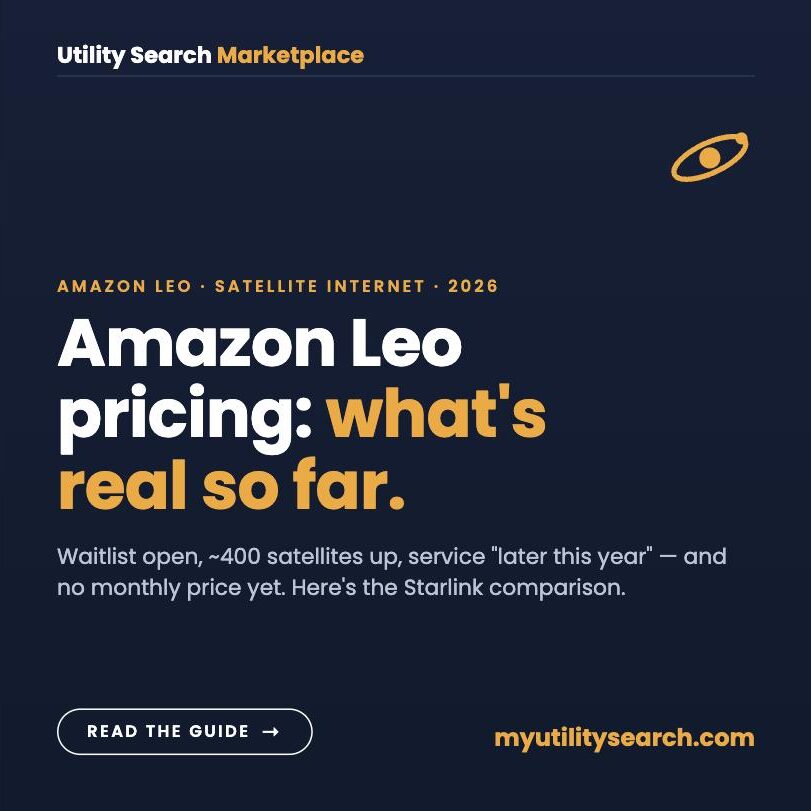
- Amazon Leo pricing — including the Globalstar direct-to-device deal
- Starlink vs T-Mobile Home Internet — the same two companies, at home
- Best 5G home internet — Verizon, T-Mobile and AT&T compared