Blog
Best Internet for Rural Areas: Options Compared

Updated on September 19, 2026
4 min read
The best internet for rural areas is fiber where you can get it; where you cannot, the top options are low-earth-orbit satellite (Starlink), fixed wireless, and 5G home internet. Legacy satellite like Viasat and HughesNet works almost anywhere but is slower. The right pick depends on what actually reaches your address.
TL;DR — key takeaways
- Order of preference: fiber > fixed wireless / 5G > Starlink > legacy satellite > DSL.
- Starlink is usually the best no-wires option on speed and latency; Viasat/HughesNet work anywhere but are slower.
- Check availability by address — rural coverage changes street by street.
- Most rural options have no hard data cap on their top plans, but check each provider.
What are the internet options for rural areas?
Rural homes usually choose among four technologies: fixed wireless / 5G home (a tower beams service to an antenna), low-earth-orbit satellite like Starlink, legacy satellite like Viasat and HughesNet, and, increasingly, rural fiber from co-ops and expanding carriers. DSL is a last resort where nothing else reaches.

Best internet for rural areas, by option
| Option | Typical speed | Latency | Best for |
|---|---|---|---|
| Rural fiber (if available) | up to 1 Gig | Lowest | Anyone who can get it |
| Fixed wireless / 5G home | ~100–300 Mbps | Moderate | Homes near a tower |
| Starlink (LEO satellite) | ~100–200 Mbps | Low for satellite | Remote homes, no wires |
| Legacy satellite (Viasat, HughesNet) | ~25–100 Mbps | High | Anywhere, last resort |
Confirm what is available at your exact address on the FCC National Broadband Map before choosing.
Is Starlink good for rural areas?
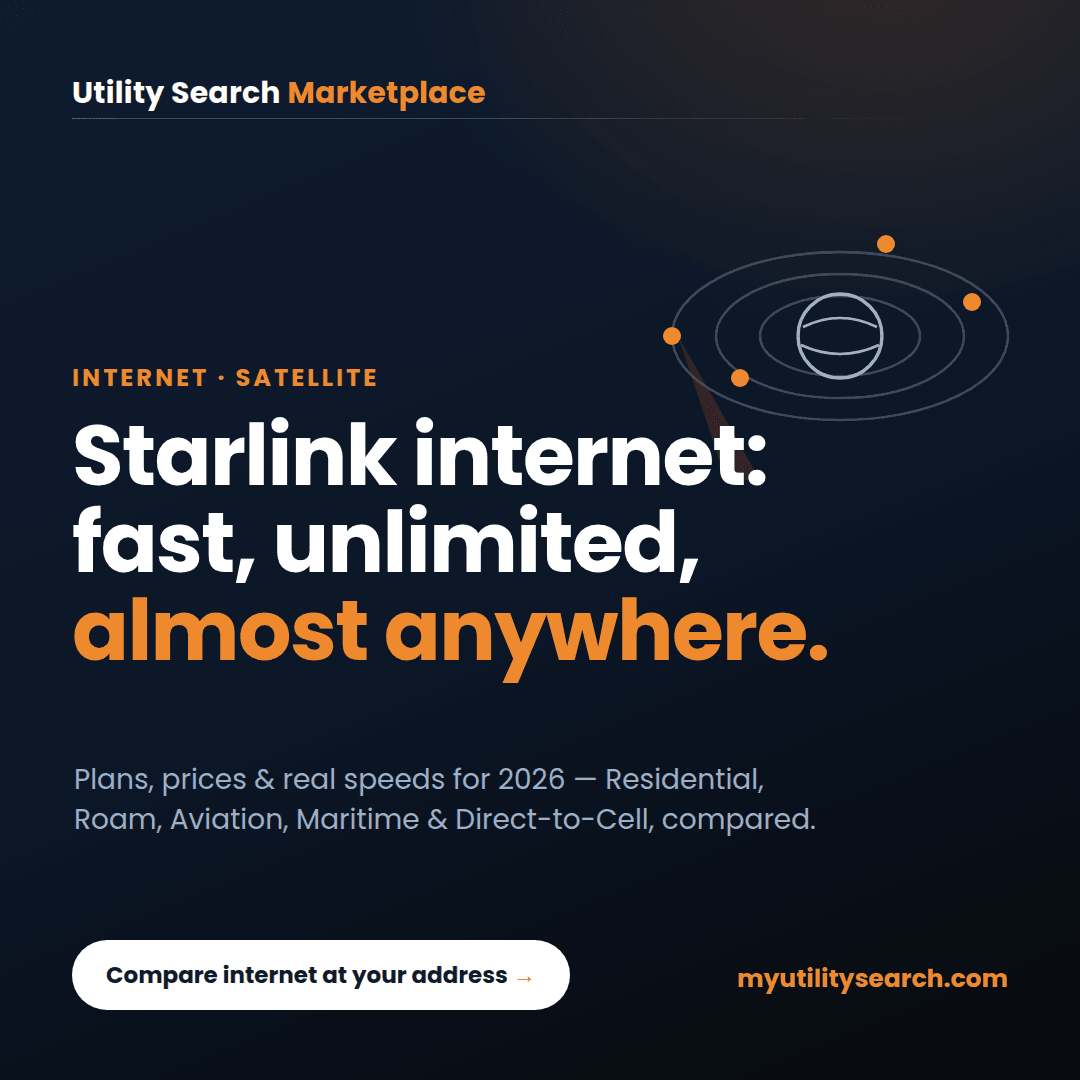
For most rural homes without wired service, Starlink is the best option: its low-earth-orbit network delivers ~100–200 Mbps with far lower latency than old satellite, making video calls and even casual gaming workable. It costs more than wired plans, but where no cable or fiber exists, it is usually the strongest choice.
Starlink at a rural address in 2026: plans, prices and the four things to check
Starlink sells three residential tiers, and which ones you see depends on how busy your cell is. Rural cells usually get the full menu:
| Starlink plan | Speed | Price (after June 18, 2026) | Hardware |
|---|---|---|---|
| Residential 100 | Up to 100 Mbps | $55/mo | $349 kit or free rental in low-demand areas |
| Residential 200 | Up to 200 Mbps | $85/mo | $349 kit or free rental in low-demand areas |
| Residential MAX | Up to 400 Mbps, priority data | $130/mo | $349 kit |
- Check the obstruction map first. Trees to the north are the number-one reason a rural Starlink install underperforms; the Starlink app’s obstruction check takes two minutes.
- Look for the free-rental kit. In low-demand rural cells Starlink waives the $349 kit for a monthly rental promo — that is the cheapest way in.
- Watch for a congestion charge. High-demand cells add a one-time $100+ fee; if you see one, the 100 and 200 tiers will also be missing.
- Ask about BEAD. If your state awarded your address to a satellite provider under BEAD, the subgrant carries a low-cost plan obligation; your state broadband office can tell you which provider and what the low-cost tier is.
The full rate card, Roam plans and kit options are in our Starlink internet plans guide. The one competitor to watch is Amazon Leo, which says U.S. service starts later in 2026 but has not announced a monthly price.
Fixed wireless and 5G home internet
If you live within range of a tower, fixed wireless or 5G home internet — from providers like Rise Broadband or T-Mobile — can beat satellite on price and latency. Speeds depend on signal strength and distance to the tower, so availability is very address-specific.
Legacy satellite: Viasat and HughesNet
Traditional satellite from Viasat and HughesNet reaches virtually anywhere in the country, which makes it a true last resort. The trade-offs are higher latency and slower speeds than Starlink or fixed wireless, so choose it only when nothing else is available.
Compare internet, energy & home security at your address
Frequently asked questions
What is the best internet for rural areas?
The best internet for rural areas is fiber where available; otherwise Starlink, fixed wireless, or 5G home internet, with legacy satellite as a last resort. The right pick depends on what reaches your address.
Is Starlink the best rural internet?
For homes with no wired option, usually yes — Starlink offers higher speeds and lower latency than legacy satellite. Where fixed wireless or fiber exists, those can be cheaper or faster.
What is the cheapest rural internet?
Fixed wireless and DSL are often the cheapest where available, but speeds vary. Starlink and legacy satellite cost more but work where wires do not reach.
Does 5G home internet work in rural areas?
It can, if you are within range of a 5G or LTE tower. Coverage and speed depend heavily on your distance to the tower, so check availability at your address.
Is satellite or fixed wireless better for rural areas?
Fixed wireless usually wins on latency and price if a tower is in range; Starlink wins where no tower reaches. Legacy satellite is the fallback when neither is available.
Keep going
- Bluepeak internet — fiber in small-town South Dakota, North Dakota, Oklahoma and Wyoming
- Midco internet — fiber and cable across small-town South Dakota, North Dakota, Minnesota, Wisconsin and Kansas
- Brightspeed internet — $29.99 fiber in small-town NC, PA, OH and VA — and the DSL to avoid
- TDS internet — 1 Gig fiber at $49.99 in small-town Idaho, Wisconsin and Tennessee
- AT&T Internet Air — the DSL replacement AT&T offers as copper retires
- Verizon 5G Home Internet — $35 with a Verizon phone plan, and Home Internet Lite for LTE-only addresses
- Is Starlink worth it?
- Viasat internet review
- HughesNet internet review
- Rise Broadband review
- Most reliable internet for remote work
- Compare the best internet providers for 2026