Blog
Is the Home Buyer Market Hot or Cold in 2026? What the Heat Index Says

Is the housing market hot or cold for buyers right now? It is the question on everyone’s mind in 2026 — and if you read the market like a heat index, blending buyer confidence, affordability, and momentum into one reading, the answer is clearly cold. Consumer sentiment sits near its lowest in a decade, home sales are near multi-decade lows, and the cost to own has pulled well above the cost to rent. People are not moving, because moving has rarely been more expensive.
So what led to this? A few forces stacked up at once: mortgage rates that more than doubled, prices that never came back down, and a savings cushion that thinned out. Below we break down the heat-index reading, what drove it, and — most importantly — the part of the cost you can still control: the hidden costs of owning a home that never show up on the listing or the mortgage estimate, and exactly which ones you can shop down.
The heat-index read, in 30 seconds
Before the detail, here is the short version of the market — and where the hidden costs of owning a home fit in:
- Market temperature: Cold for buyers — sentiment near 10-year lows, sales near multi-decade lows, owning costlier than renting
- The trap: Buyers fixate on the mortgage; utilities, insurance, and upkeep are the costs that quietly stack up
- What you control: Electricity (in deregulated states), internet, and home security are all shoppable — often the fastest savings available
Is the housing market hot or cold for buyers? The heat index says cold
Think of buyer conditions as a heat index built from three readings. All three are running cold:
- Confidence: University of Michigan consumer sentiment is near the bottom of its 10-year range — lower than during the 2022 inflation scare.
- Activity: Existing home sales are running near multi-decade lows (about 4.0 million annualized), as owners hold onto low mortgage rates rather than trade up to today’s ~6.5%.
- Affordability: The personal savings rate is near lows while prices sit near record highs — so the cushion that would let people stretch is gone.
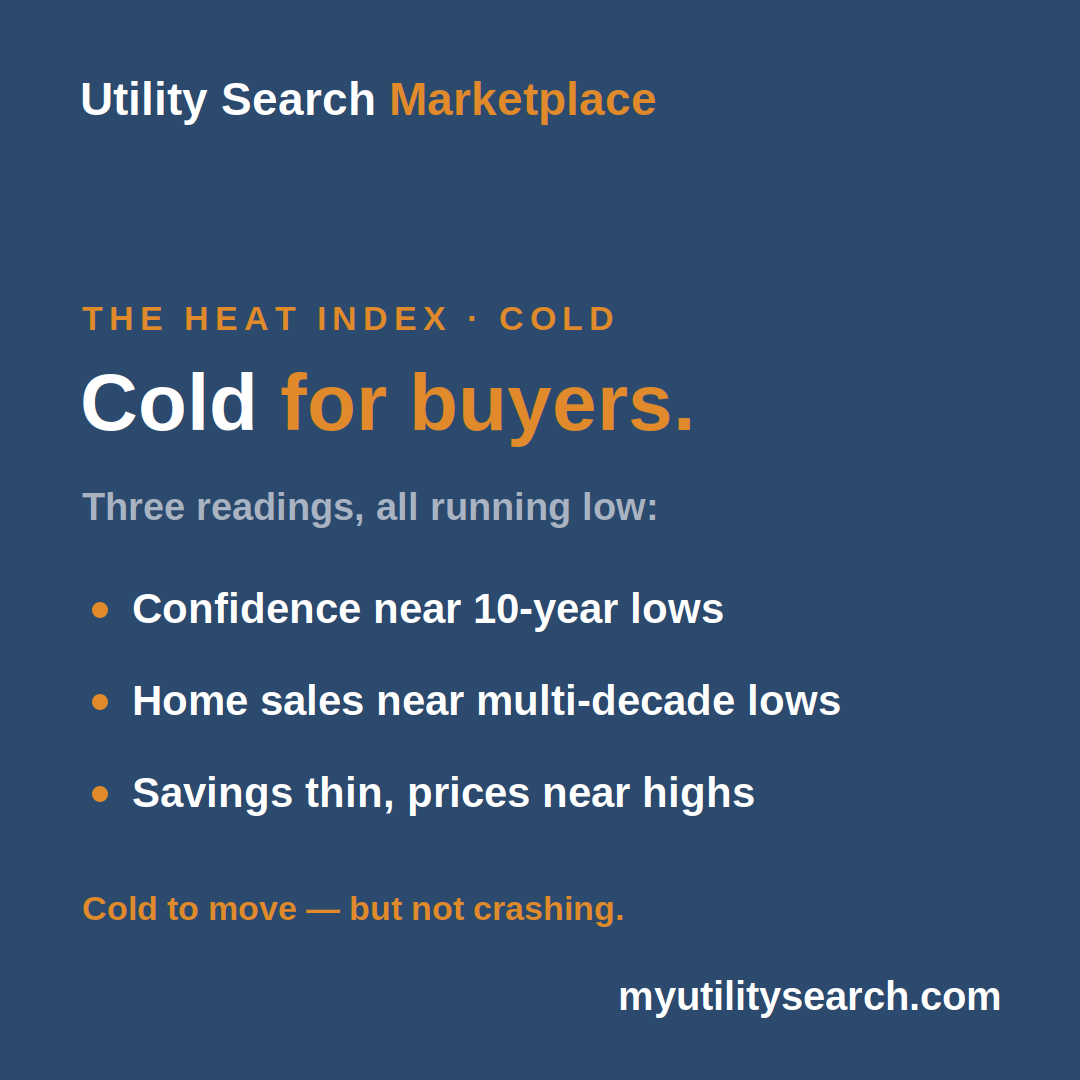
Cold, though, does not mean crashing. Prices are still near all-time highs and supply is tight, so this is a frozen, expensive market — not a collapsing one. And a cold market for moving is exactly when controlling your fixed monthly costs matters most.
What led to this: why owning got so expensive
Start with the backdrop, because it explains the squeeze. Over the past five years the typical U.S. home value rose about 28%, but the typical monthly mortgage payment rose roughly 70%, because mortgage rates more than doubled (Zillow Research data, through April 2026). The Federal Reserve (FRED) House Price Index sits near record levels, and the 30-year mortgage hovers around 6.5%.
That is just the payment. On top of it, the cost of everything you put in and around a home — furniture, appliances, repairs, materials — has climbed as supply-chain and shipping costs fed through to retail prices. The result: owning a home in 2026 costs noticeably more per month than renting a comparable one, and the difference is concentrated in exactly the costs buyers tend to underestimate. These are the hidden costs of owning a home, and they are where the real budget pressure lives.
“You’ll own nothing” — the backdrop that suddenly feels less abstract
Back in 2016, a World Economic Forum essay by Danish politician Ida Auken imagined life in 2030 with the now-famous line “you’ll own nothing and you’ll be happy” — a picture of a future where people lease and share cars, homes, and appliances instead of owning them. Auken framed it as a thought experiment to spark debate, not a policy plan, and the WEF has since said the same. The phrase has been widely misread online as a literal agenda, which it was not.
But strip away the conspiracy framing and the underlying tension is very real in 2026: when owning costs meaningfully more per month than renting, “owning less” stops being a slogan and starts being a math problem households actually run. Plenty of people are choosing to rent longer, or to stay in the home they have, precisely because the cost of owning more has climbed so fast. You do not have to buy the utopian version — or the dystopian one — to take the practical lesson: if ownership is getting pricier, the smartest move is to control the recurring costs you can.
The hidden costs buyers forget to budget for
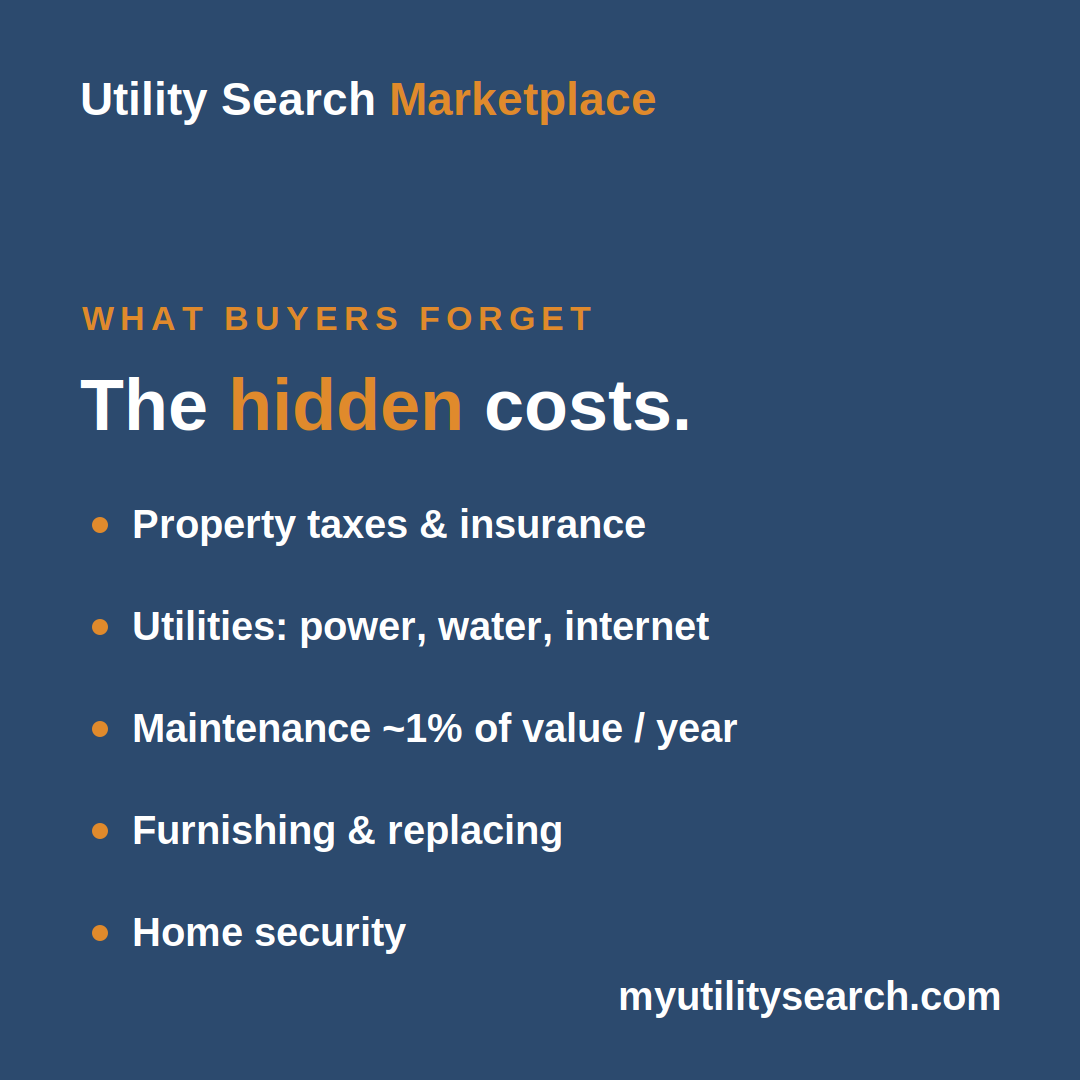
Beyond principal and interest, here is what actually leaves your account each month or year — the hidden costs of owning a home that rarely make the listing:
- Property taxes and insurance. Often bundled into escrow, but rising fast — home insurance especially, with sharp increases in disaster-exposed states like Florida.
- Utilities. Electricity, gas, water, and internet — a bigger combined line than most buyers expect, and the most shoppable one on this list.
- Maintenance and repairs. A common rule of thumb is roughly 1% of the home’s value per year — on a $368,000 home, that is about $3,700 a year you did not pay as a renter.
- Furnishing and replacing. Appliances, HVAC, water heaters, and furniture all cost more than they did a few years ago, and they all eventually break.
- Home security and monitoring. A real recurring cost for many owners — though no-contract options have made it far cheaper than it used to be.
The three hidden costs you can actually shop down
Here is the encouraging part. Taxes, your interest rate, and your home’s price are mostly fixed once you buy. But three of the biggest recurring costs are not — these are the hidden costs of owning a home you can shop the same way you would shop anything else, and the savings show up every single month.
1. Electricity
If you live in a deregulated state — Texas, Pennsylvania, Ohio, Illinois, and much of the Northeast — you can choose your electricity supplier and lock a fixed rate, often cutting the supply portion of your bill. Most owners never do this and overpay on the default utility rate by default. It is the single most overlooked of the hidden costs of owning a home. For state-specific examples, see our guides to Texas summer electricity rates and Ohio electricity rates.
2. Internet
Home internet is one of the few household costs actually getting cheaper, because new entrants are competing hard. Fiber providers are rolling out multi-year price guarantees, and switching can cut your bill meaningfully — especially valuable if you work from home. Our T-Mobile Fiber plans and pricing review is a good place to compare a fixed-rate option.
3. Home security
The old model locked you into long contracts with hefty monthly fees. Today, no-contract and bundle options have pushed monitoring costs down substantially, so you can protect the home without the recurring sting.
Comparing all three at your address — in one place — is exactly what a utility marketplace is for. It is the fastest way to take a bite out of the hidden costs of owning a home without refinancing or moving.
Staying put in a frozen market? Control what you can
Many people in 2026 are not moving at all. With existing home sales near multi-decade lows and consumer confidence near record lows, a lot of owners are choosing to stay in the home they have rather than trade a low mortgage rate for today’s higher one. If that is you, the smartest play is to attack the hidden costs of owning a home directly: you cannot easily change your mortgage, but you can absolutely change your monthly utility, internet, and security bills — and that is found money in a tight year.
Hot or cold housing market FAQ
Is the housing market hot or cold for buyers in 2026?
Cold. On a heat-index read of confidence, activity, and affordability, all three are running low: consumer sentiment is near a 10-year bottom, existing home sales are near multi-decade lows, and owning costs more per month than renting. It is a frozen, expensive market — though not a crashing one, since prices remain near record highs.
What led to the cold buyer market?
Mortgage rates more than doubled over five years to around 6.5%, while home prices stayed near record highs and never corrected. At the same time the personal savings rate thinned out, so the affordability cushion disappeared. The result is low confidence, low sales activity, and owning costing more per month than renting.
What are the biggest hidden costs of owning a home?
The biggest hidden costs of owning a home, beyond principal and interest, are property taxes, home insurance, utilities (electricity, gas, water, internet), maintenance and repairs (roughly 1% of the home’s value per year), and home security. Insurance and utilities have risen fastest in 2026.
How much should I budget for maintenance on a home?
A widely used rule of thumb is about 1% of the home’s value per year. On a typical $368,000 U.S. home, that is roughly $3,700 annually — a cost renters do not carry and buyers often forget.
Which hidden costs of owning a home can I actually lower?
The shoppable ones: electricity (in deregulated states, by choosing your supplier), internet (by switching to a cheaper or fixed-rate plan), and home security (with no-contract options). These are usually the fastest savings available without refinancing or moving.
Is it cheaper to rent or own in 2026?
On a monthly basis, owning currently costs more than renting a comparable home, largely because mortgage payments rose about 70% over five years while home values rose about 28%. Owning still builds equity, but the monthly cash cost — including the hidden ones — is higher right now.
Sources
Home values and payment trends: Zillow Research (through April 2026). House price index and mortgage rates: Federal Reserve (FRED). “You’ll own nothing” reference: Ida Auken / World Economic Forum essay “Welcome to 2030” (2016), a thought experiment, not a policy proposal. Figures are general and subject to revision; confirm current costs for your own situation.