Blog
Whole House Water Filter Cost in 2026: Prices, What Drives Them, and How to Choose

Updated on September 9, 2026
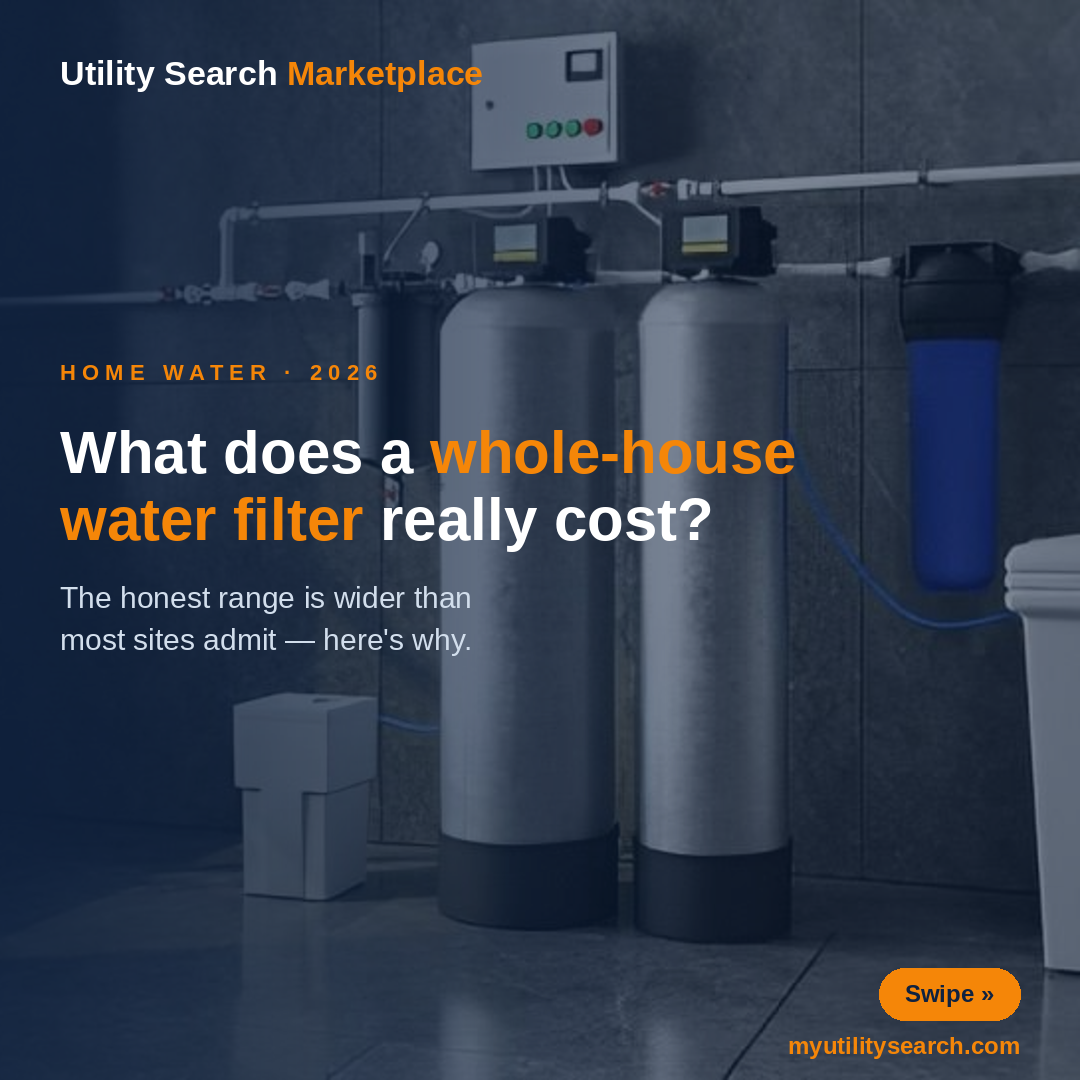
By Utility Search Marketplace · Updated June 8, 2026 If you are pricing clean water for your home, the whole house water filter cost is the first number you need — and the honest range is wider than most websites admit. A whole-house system typically runs about $850 to $5,400 installed, with simple carbon setups at the low end and multi-stage or reverse-osmosis systems at the top. Here is what actually drives that price, how it differs from a water softener, and how to land the right system for your home in about five minutes — for free, with no SSN required.
What is the average whole house water filter cost?
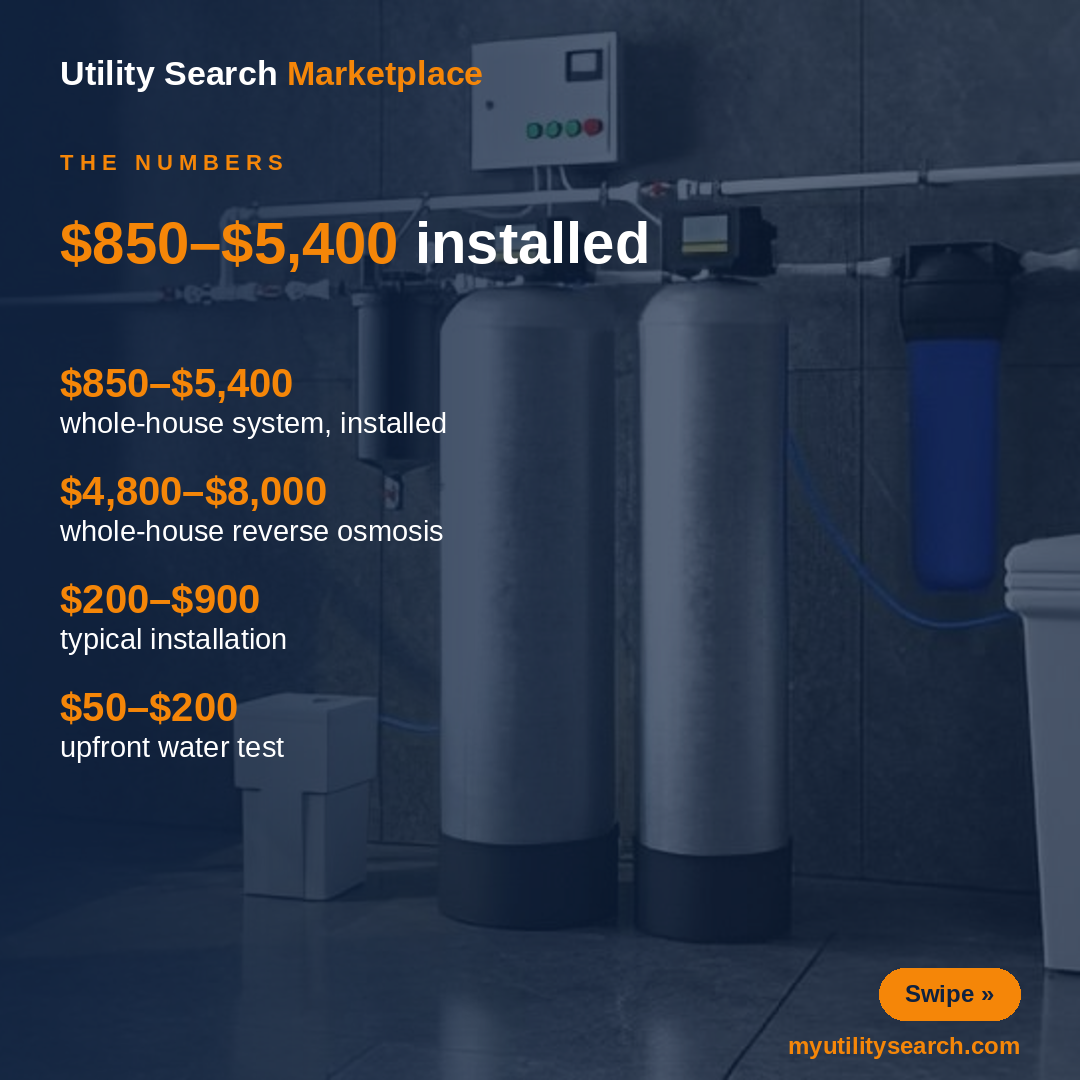
Across 2026 pricing data, the typical whole house water filter cost lands between $850 and $5,400 installed, and most homeowners pay somewhere in the middle of that band. Basic point-of-entry carbon systems that reduce chlorine, taste, and sediment sit at the lower end. Multi-stage systems that tackle a wider contaminant list cost more, and a whole-house reverse-osmosis setup — the most thorough option — can run $4,800 to $8,000 because it removes the vast majority of contaminants and needs more plumbing. The unit itself is only part of it: installation commonly adds $200 to $900 depending on your plumbing, and a water-quality test runs about $50 to $200. The apples-to-apples way to read these numbers is to separate one-time cost from ongoing cost. A filter’s true cost is the system plus installation plus the filter cartridges you will replace over the years — often only $60 to $300 in replacements because cartridges last a long time.
Water filter vs. water softener: which do I actually need?
A water filter and a water softener solve different problems, so the choice changes your whole house water filter cost. A filter targets what is in the water — chlorine, sediment, taste, odor, and specific contaminants. A softener does something different: it removes the calcium and magnesium that cause hard-water scale on your fixtures, dishes, and pipes. They solve different problems. If your complaint is taste, odor, or what is in the water, you want a filter. If your complaint is chalky buildup, spotty glassware, and dry skin, you want a softener. Many homes with hard water end up wanting both — and the costs stack, since a softener typically runs $1,000 to $5,000 and carries ongoing salt and maintenance of roughly $150 to $900 a year. Knowing which problem you are solving first is the cheapest decision you will make.
What drives the price up or down?
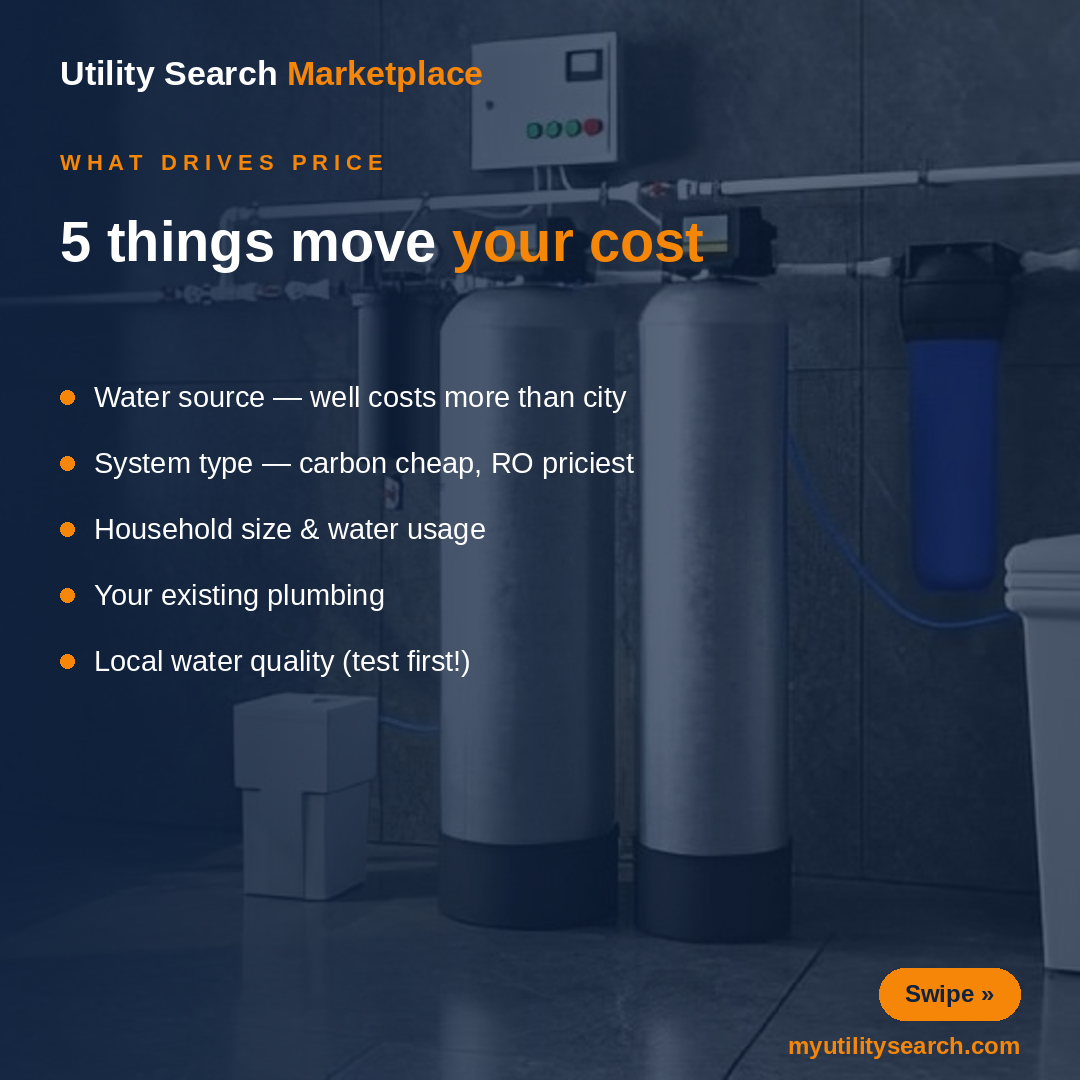
Five factors move your whole house water filter cost more than anything else. First, your water source: municipal water usually needs only basic carbon filtration, while well water often requires multi-stage treatment that costs more. Second, system type — carbon is cheapest, reverse osmosis is priciest. Third, household size and water usage, which set the capacity you need. Fourth, your existing plumbing; tricky tie-ins raise labor. Fifth, local water quality — the more contaminants present, the more filtration stages you pay for. A $50-to-$200 water test up front tells you which of these apply before you spend on equipment.
How do I keep the true cost down?
The move that saves the most is matching the system to your actual water, not to a sales pitch. Test first, then buy only the filtration your water needs — paying for whole-house reverse osmosis when a carbon system would clear your issue is the most common overspend. Compare installed quotes, not sticker prices, and factor the replacement-cartridge cost over the system’s decade-plus lifespan. Comparing providers and system types side by side is exactly what a marketplace is built to make fast.
What should I do right now?
You do not need to guess at the whole house water filter cost for your home. Compare water-treatment options and providers — including national names like Culligan — side by side, and get the true installed price for your situation rather than a teaser figure. You can do it in about five minutes on our water page: it is 100% free to you, because providers pay us, never you, and we never ask for your Social Security number. Questions? Call (844) 437-9527. And since clean water is usually one piece of a bigger home-setup moment, it is worth lining up the rest while you are at it. If you live in a deregulated electricity state, comparing energy plans in the same sitting keeps your power bill honest. If you are settling into a home, it is the natural time to compare internet providers and price a home security system too. Sorting your whole utility stack in one sitting is the simplest way to stop overpaying.
Sources
Water-quality guidance and contaminant information are published by the U.S. Environmental Protection Agency. Cost ranges referenced here reflect 2026 home-services pricing data aggregated across multiple installers.
Frequently asked questions
How much does a whole house water filter cost in 2026?
Most whole house water filter systems cost about $850 to $5,400 installed. Basic carbon systems are cheapest; whole-house reverse osmosis runs $4,800 to $8,000. Installation usually adds $200 to $900, and a water test is $50 to $200.
Is a water filter or a water softener better?
Neither is universally better — they do different jobs. A filter removes contaminants for cleaner, safer water; a softener removes the minerals that cause hard-water scale. If your water is hard and contaminated, you may want both.
What is the ongoing cost of a whole house water filter?
Filters are relatively cheap to maintain — typically $60 to $300 in replacement cartridges over the system’s life, since cartridges last a long time. Softeners cost more to run, around $150 to $900 a year for salt and maintenance.
Does well water cost more to filter than city water?
Usually yes. Municipal water often needs only basic carbon filtration, while well water can require multi-stage treatment for sediment, bacteria, and minerals, which raises the whole house water filter cost.
How can I compare water filtration providers?
Use a free comparison tool that shows water-treatment options and installed pricing side by side, including providers like Culligan. Utility Search Marketplace does this in about five minutes, free to you, with no SSN required.