Blog
Best Internet Plans 2026: Top Providers Compared by Price & Speed

Updated on November 7, 2026
11 min read
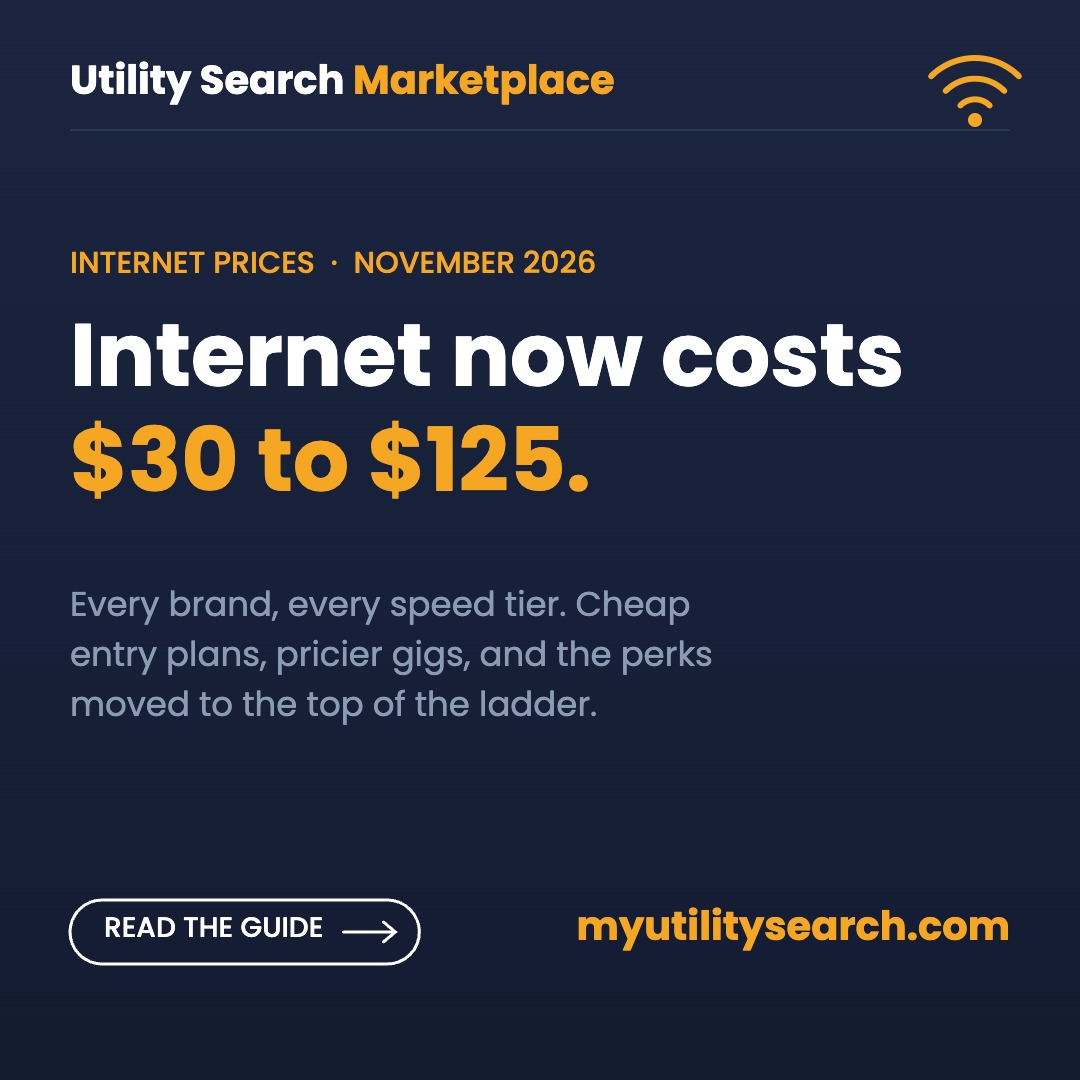
The best internet plans in 2026 are fiber plans where you can get them, and a $30 cable or prepaid plan where you cannot. For most households the shortlist is AT&T Fiber 300 ($50 to $55, symmetrical), Frontier Fiber 500 ($45 to $50), Verizon Fios 300 ($49.99), Spectrum Internet 100 or Xfinity NOW 100 at $30 for a budget line, and T-Mobile 5G Home Internet at $50 with a five-year price guarantee if neither fiber nor cable reaches you. Which of those is actually the best internet plan for you comes down to one thing: which ones are serviceable at your address, and that changes street by street.
Updated October 25, 2026. Prices are the providers’ nationally advertised rates with autopay as of October 2026; regional promotions differ, and the address check on this page shows the live offers at your home.
What is the best internet service?
The best internet service for most homes is fiber where it’s available — AT&T Fiber and Verizon Fios lead on speed and symmetrical uploads. Where fiber isn’t offered, cable internet (Xfinity, Spectrum, Cox) is the best widely available option, and T-Mobile 5G Home Internet is the best value no-contract pick. Your best internet service depends on what reaches your exact address — find internet providers near you to compare fiber, cable, and 5G side by side.
Best internet plans 2026: the shortlist
Ten plans that win their category on price, speed or terms. Promo price is the advertised first-year rate with autopay; the next column is what you pay when it ends.
| Plan | Type | Speed (down/up) | Promo price | After promo | Best for |
|---|---|---|---|---|---|
| AT&T Fiber 300 | Fiber | 300 / 300 Mbps | $50–$55 | $70–$75 | Best overall value where available |
| Frontier Fiber 500 | Fiber | 500 / 500 Mbps | $45–$50 | $65–$70 | Cheapest symmetrical fiber |
| Verizon Fios 300 | Fiber | 300 / 300 Mbps | $49.99 | $49.99 (price locked 2–3 yrs) | Northeast, no promo cliff |
| Astound Internet 300 | Cable | 300 / 20 Mbps | $30 | ~$55 | Cheapest 300 Mbps anywhere |
| Spectrum Internet 100 | Cable | 100 / 10 Mbps | $30 | ~$50 | Budget line, widest footprint |
| Xfinity NOW Internet 100 | Cable (prepaid) | 100 / 10 Mbps | $30 flat | $30 flat | No contract, no step-up |
| Xfinity 300 Mbps | Cable | 300 / 35 Mbps | $40 | $40 (1- or 5-yr guarantee) | Mid-tier with a price lock |
| T-Mobile 5G Home Internet | 5G fixed wireless | 87–415 / 12–55 Mbps | $50 ($35 with a T-Mobile line) | $50, 5-year guarantee | No fiber or cable at the address |
| Verizon 5G Home | 5G fixed wireless | 50–300 / 10–20 Mbps | $50 ($35 with a Verizon line) | $50, 3-year guarantee | Verizon mobile households |
| Starlink Residential | Satellite | 50–200 / 10–20 Mbps | $80–$120 by region | Same | Rural, nothing else serviceable |
Fiber upload speeds are symmetrical; cable and wireless uploads are a fraction of download. Promo terms are 12 months unless a guarantee is listed. Starlink pricing varies by local demand, from $55 (Residential Lite) to $175 in the most congested areas; see our Starlink plans and prices page.
How to Find the Best Internet Providers 2026 for Your Area
The best internet providers in 2026 vary by region. Fiber providers like AT&T, Verizon Fios, and Google Fiber offer the fastest speeds but aren’t available everywhere.
Here’s how to find the best internet providers 2026 options at your address:
Check Fiber Availability First
Fiber internet is the gold standard — symmetric upload/download speeds with consistent reliability. If fiber is available, it’s almost always worth choosing.
Compare Cable Internet Options
Cable internet (Xfinity, Spectrum, Cox) is the most widely available high-speed option. Speeds up to 1 Gbps are common, though upload speeds lag behind fiber.
Avoid DSL Unless You Have No Other Choice
DSL uses phone lines and is typically much slower than cable or fiber. It’s often the only option in rural areas outside of satellite internet.
Best Internet Providers 2026: Top Picks by Type
Best Fiber ISP: AT&T Fiber
AT&T Fiber offers symmetrical speeds up to 5 Gbps with no data caps. It’s consistently rated among the most reliable fiber providers in their coverage areas.
Best Cable ISP: Xfinity
Xfinity has the widest cable network in the US with plans from 75 Mbps to 2 Gbps. They offer competitive pricing but watch for price increases after the promotional period.
Best for Rural Areas: Starlink
For rural homes without fiber or cable options, Starlink satellite internet offers 50-200 Mbps speeds with much lower latency than traditional satellite providers.
What to Look for When Comparing Internet Providers
When evaluating the best internet providers 2026, consider these factors:
- Download speed: 100 Mbps minimum for households with multiple users
- Upload speed: Critical for video calls and cloud backups
- Data caps: Avoid plans with monthly data limits if you stream or work from home
- Contract length: No-contract plans offer flexibility but may cost more monthly
- Price after intro period: Rates often jump after the first 12 months

Use the FCC Broadband Availability Map to see which internet providers are available at your address before comparing plans.
Which Internet Provider Is Best for Your Needs in 2026?
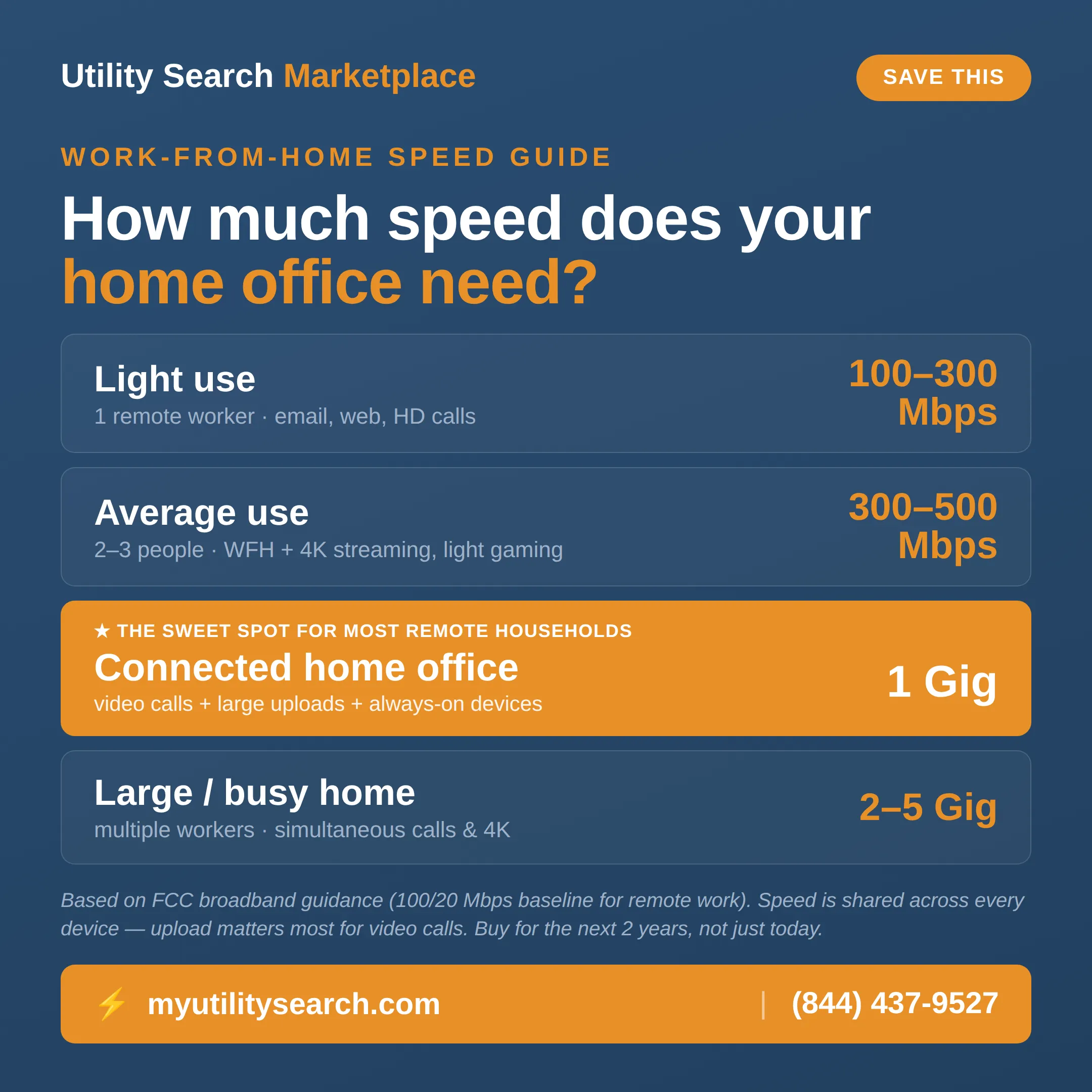
When choosing among the best internet providers 2026, think about your usage habits. Remote workers and households streaming 4K content on multiple devices need at least 300 Mbps for a comfortable experience. Gamers should prioritize low latency (under 20ms) over raw download speed. For light use (email, social media, one HD stream), 100 Mbps from any of the best internet providers 2026 will be more than enough. Always check availability at your specific address — advertised speeds can vary dramatically by neighborhood even within the same city. Use our comparison tool at MyUtilitySearch.com to enter your ZIP code and see which of the best internet providers 2026 actually serve your home, along with real customer-reported speeds in your area.
Final Verdict
Finding the best internet providers in 2026 starts with checking what’s actually available in your area.
The best internet providers in 2026 offer fast speeds, reliable uptime, and transparent pricing.
Best Internet Providers 2026: Final Recommendations
Best internet providers 2026 — our analysis covers all the key factors to help you make the best decision for your home.
Go Deeper: More Internet Guides
- Starlink vs T-Mobile Home Internet 2026 — best options for rural areas
- How to Lower Your Internet Bill Without Canceling — 8 proven strategies
More Internet Provider Guides
Find the Best Internet Plan in Your Area — Free
Not sure which internet provider is right for you? Shop internet plans on MyUtilitySearch.com to compare speeds, prices, and availability in your area — or call a Utility Search expert at (844) 437-9527 for personalized guidance.
Ready to Start Saving on Utilities?
Compare energy rates and internet plans side by side — free, in minutes.
Best internet plans 2026: the questions people ask, answered
What people type when they are comparing plans, in their own words, answered as of October 25, 2026.
What are the best internet plans in 2026?
For most addresses: a fiber plan at 300 to 500 Mbps for $45 to $55 (AT&T Fiber 300, Frontier Fiber 500, Verizon Fios 300) if fiber is serviceable; a $30 cable plan (Spectrum Internet 100, Xfinity NOW 100, Astound 300) if you want the lowest bill; and T-Mobile 5G Home Internet at $50 with a five-year price guarantee if neither reaches you. Those seven plans cover the best choice for roughly nine out of ten households; the table above shows what each costs after the promo, which is the number that matters in year two.
What are the top internet plans in my area?
The only way to know is an address check, because every provider’s footprint stops and starts street by street: a ZIP code can have AT&T Fiber on one side of a road and only cable on the other. Enter your address above and you will see every plan serviceable at your home, ranked by price, with the promo and post-promo rates side by side. Lists of ‘top plans in [city]’ on search engines show providers in the metro, not at your house.
Is the fastest advertised internet plan always the best choice for a household?
No. A household of four streaming in 4K, gaming and working from home uses well under 100 Mbps at peak; a 300 Mbps plan is more than enough for almost everyone, and a gigabit plan mostly buys headroom you will not notice. The factors that matter more than headline speed are upload speed (fiber’s symmetrical upload is the real upgrade for video calls and cloud backups), latency and reliability (fiber and cable beat 5G and satellite), data caps, the price after the promotional period ends, and whether the plan requires a contract. Pick the cheapest plan with at least 100 Mbps down and 10 Mbps up that is wired, then spend extra only for symmetrical upload.
How do I compare internet plans in my area for 2026?
Compare four numbers for every serviceable plan, not one: the promo price, the price after the promo, the upload speed and any data cap. Then check the contract term and the equipment fee. The address check on this page lays those out side by side for every provider at your home; the comparison usually comes down to a fiber plan versus the cheapest cable plan, and the fiber plan wins if it is within $10 to $15 a month because of the upload speed and the smaller post-promo step.
What are the best internet plan deals in 2026?
The deals worth taking are the ones that do not step up: Xfinity NOW Internet at $30 flat, Xfinity 300 Mbps at $40 with a one- or five-year guarantee, Verizon Fios with a two- or three-year price lock, T-Mobile 5G Home at $50 with a five-year guarantee, and Astound’s Price for Life gig plan at about $45. Mobile-bundle discounts ($15 to $20 off with a Verizon, T-Mobile or Xfinity Mobile line) are real savings if you already have that carrier. The deals to be careful with are 12-month promos on legacy cable tiers, which step up $20 to $30 at month 13.
Who is the fastest broadband provider in 2026?
On raw advertised speed, the multi-gig fiber tiers: AT&T Fiber 5 Gig, Frontier Fiber 7 Gig, Ziply Fiber 10 and 50 Gig in the Northwest, and Google Fiber 8 Gig. On real-world median speed across the country, fiber providers as a group (AT&T, Verizon Fios, Frontier, Google Fiber) lead, followed by cable (Xfinity, Spectrum, Cox), then 5G home internet, then satellite. The fastest plan at your address is whichever fiber provider reaches it; if none does, cable’s gigabit tiers are the next fastest, though with much slower upload.
Which internet provider is best for a home with several people working remotely?
A fiber plan at 500 Mbps or 1 Gig, because the limiting factor with several simultaneous video calls is upload, and only fiber uploads at the same speed it downloads. AT&T Fiber, Frontier Fiber and Verizon Fios all sell a 500 Mbps or 1 Gig symmetrical tier at $65 to $80. If fiber is not available, a cable gigabit plan (Xfinity, Spectrum, Cox) works but uploads at 35 to 100 Mbps, which handles two or three calls at once; 5G home internet is the fallback and can stutter on upload at peak hours.
What is the best home internet plan for seniors or a one-person household?
A 100 Mbps plan at $30 from Spectrum or Xfinity NOW, or the entry fiber tier at $30 to $50 where available, is more than enough for streaming, video calls and a home phone, and there is no reason to pay for faster. Low-income tiers (Xfinity Internet Essentials $14.95, Spectrum Internet Assist $25) are the cheapest plans sold if you qualify through SNAP, SSI or Medicaid. Avoid 12-month promos that step up sharply, and avoid satellite unless nothing else reaches the address.
Also searched as: best internet plans 2026, best internet providers 2026, top internet plans in my area 2026, best home internet plans 2026, best internet service providers 2026 and best broadband providers 2026. They all mean the plans in the table above, filtered to your address.
Frequently asked questions
What is the best internet provider in 2026?
There’s no single best provider — it depends on what’s available at your address. Fiber providers like AT&T, Verizon Fios, and Google Fiber offer the fastest, most reliable service with symmetrical speeds, so check fiber availability first before comparing cable options like Xfinity and Spectrum.
What is the best internet provider in my area?
The best provider varies by region and address, so start by checking fiber availability — AT&T, Verizon Fios, or Google Fiber if offered — then compare cable providers such as Xfinity and Spectrum. Fiber’s symmetrical upload/download speeds make it almost always worth choosing when available.
Who is the best internet provider for my area?
Compare by what actually reaches your address: fiber (AT&T, Verizon Fios, Google Fiber) for the fastest symmetric speeds, then cable (Xfinity, Spectrum) as a widely available alternative. Availability is the deciding factor, so a national “best” list only helps once you filter to your location.
How do I find the best internet provider for my area?
Check fiber availability first (AT&T, Verizon Fios, Google Fiber), then compare cable options like Xfinity and Spectrum on price, speed, and reliability for your address. Because coverage differs block by block, always confirm which providers serve your specific home before deciding.
What is the best internet provider for gaming?
For gaming, prioritize fiber like AT&T, Verizon Fios, or Google Fiber because symmetrical speeds and low, consistent latency matter more than headline download numbers. If fiber isn’t available at your address, a strong cable connection from Xfinity or Spectrum is the next best option.
Compare internet providers by city
Browse our full internet providers by city directory — coverage, plans, and prices for 300+ U.S. cities — or jump to a popular metro:
Los Angeles · San Diego · San Francisco · Sacramento · Fresno · Oakland · Long Beach · Phoenix · Mesa · Tucson · Denver · Seattle · Portland · Las Vegas · Orlando · Tampa · Jacksonville · Atlanta · Charlotte · Raleigh · Nashville · Memphis · Indianapolis · Columbus · Cleveland · Cincinnati · Detroit · Milwaukee · Minneapolis · Kansas City · St Louis · Oklahoma City · Tulsa · New Orleans · Salt Lake City · Louisville · Omaha · Virginia Beach · Richmond · Honolulu · Buffalo · Brooklyn · Queens
Compare major providers: Xfinity · Spectrum · Verizon Fios · Cox · Google Fiber · Optimum · Frontier · HughesNet · Viasat.
Also compare energy, home security and home warranty at your address
Electricity plans in 14 deregulated states. Security and warranty nationwide.
Are you a commercial customer?
Business internet, phones and IT for an office, store or multi-site location are quoted by address, not from a posted rate. Call our business internet desk at (866) 328-7973, or use BOX by TechGuidance to see every serviceable business connection at your location.