Blog
Business Phone Service: Proven Plans From $10 — and the Billing Trap That Adds 50%

Updated on October 28, 2026
10 min read
Last updated October 18, 2026 · Every price below was read from the provider’s own pricing page on October 18, 2026. Prices are per user (or per line) per month, before taxes and regulatory fees.
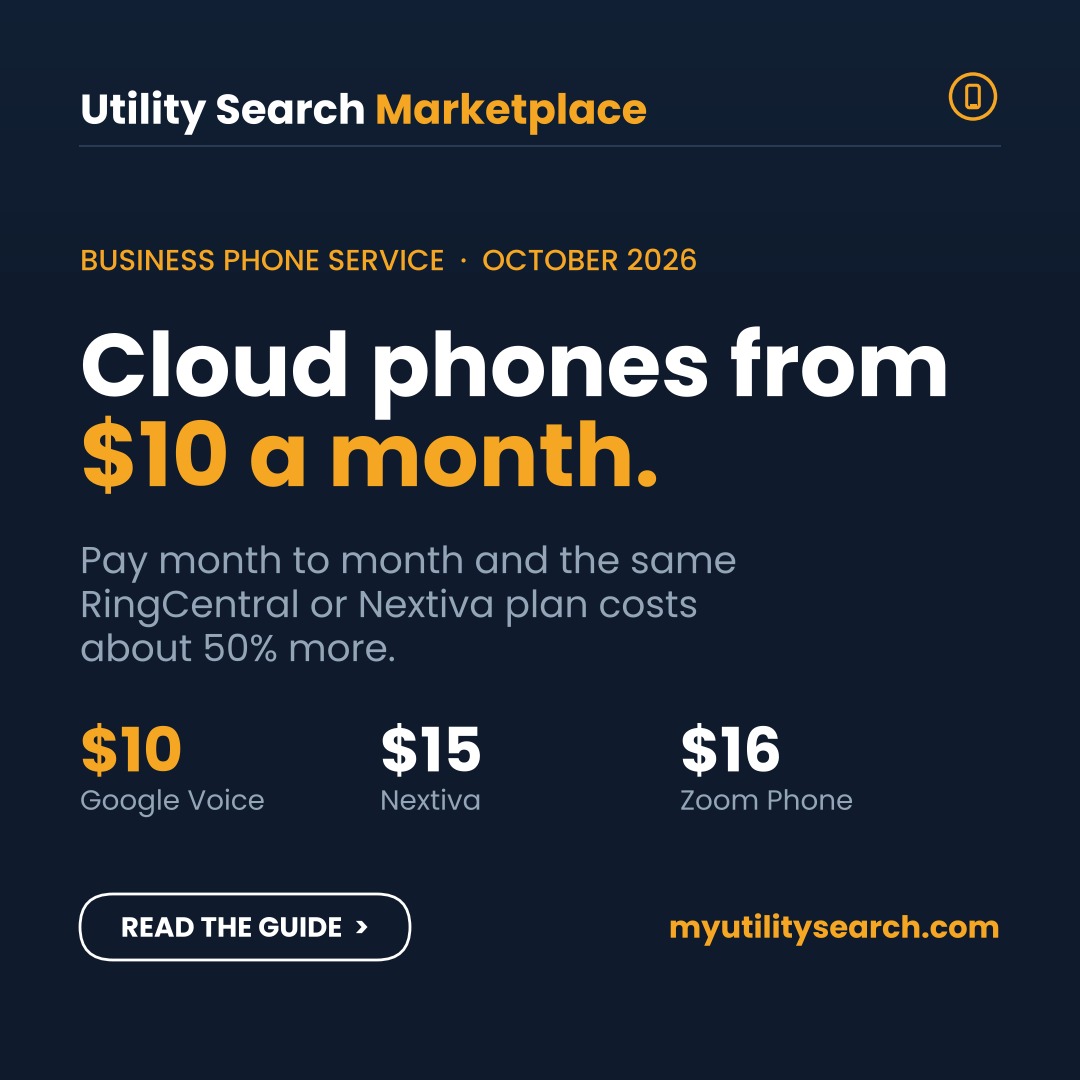
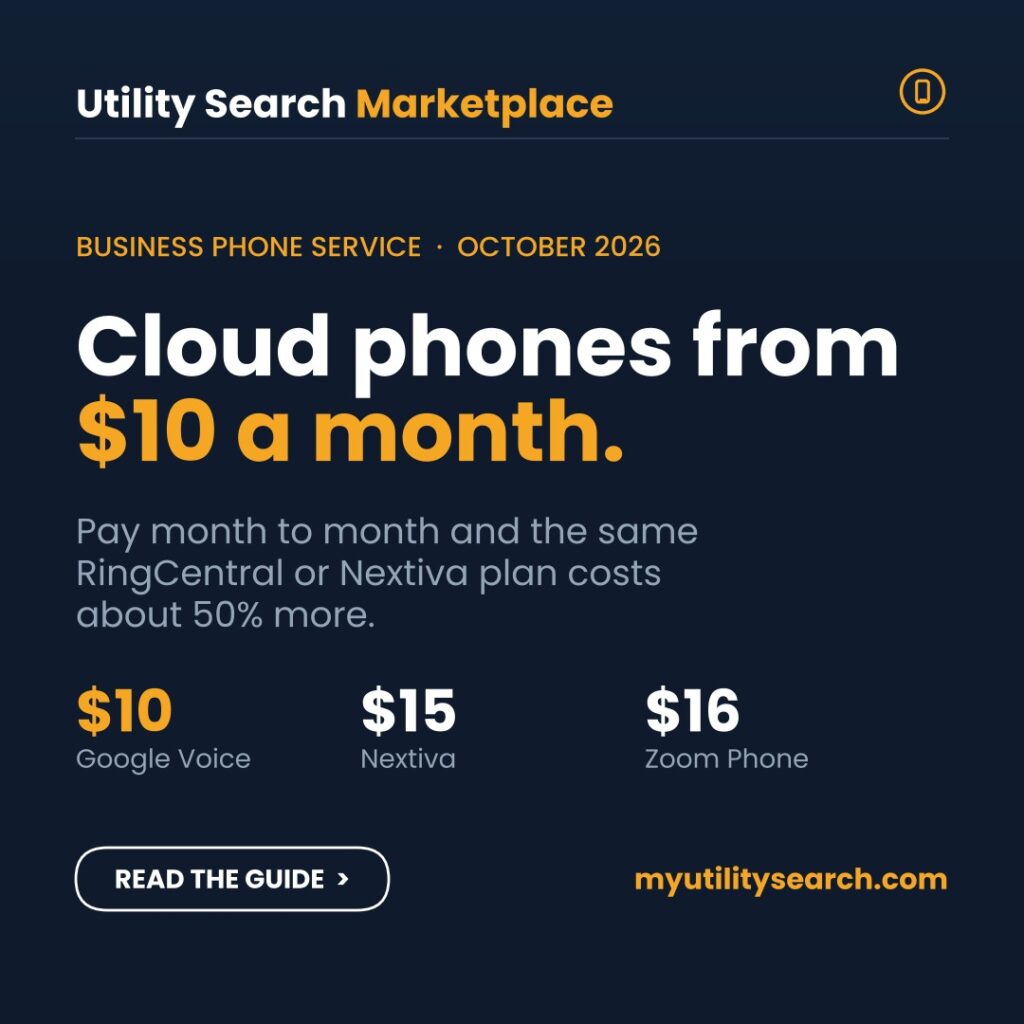
Business phone service costs $10 to $30 per user a month in October 2026 for a cloud phone system with unlimited U.S. calling. Google Voice starts at $10, Nextiva at $15 and Zoom Phone at $16 on annual billing. The catch most buyers miss: pay month to month and the same RingCentral or Nextiva plan costs about 50% more.
TL;DR: business phone service, October 2026
- Cheapest real phone system: Google Voice Starter at $10 a month, but auto attendants (the “press 1 for sales” menu) need the $20 Standard plan.
- Best value for most small offices: Nextiva Core at $15 per user and Zoom Phone at $16, both on annual billing.
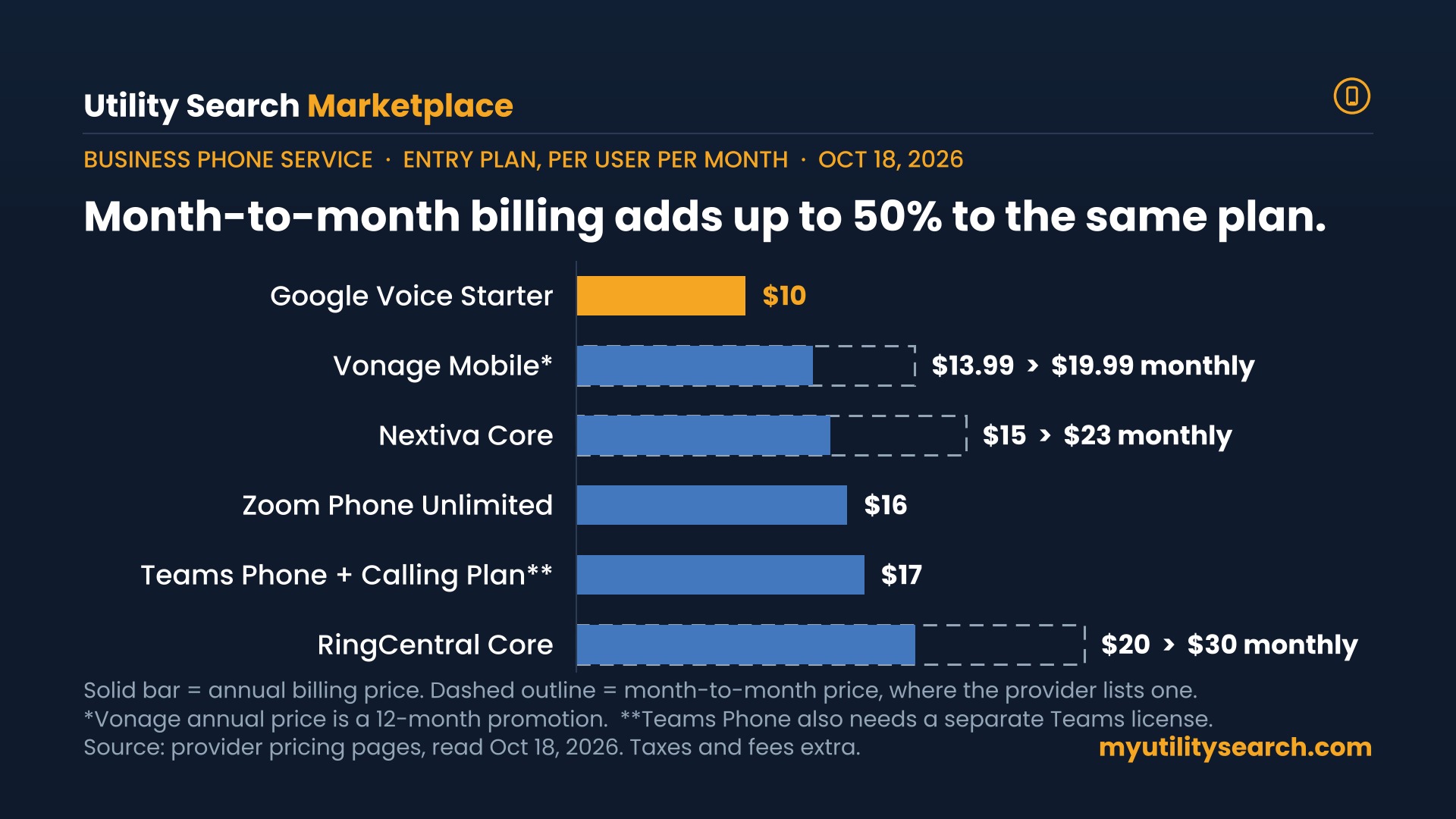
- The billing trap: RingCentral Core is $20 on an annual plan and $30 month to month. Nextiva Core is $15 versus $23.
- Promo pricing: Vonage’s $13.99 Mobile plan is a 12-month promotion. The list price is $19.99.
- Copper landlines are going away. If you still pay for a POTS line, plan the move to VoIP before your carrier forces it.
What is business phone service?
Business phone service is the line, numbers and calling features a company uses to talk to customers. In 2026 almost all of it runs over the internet as VoIP (voice over IP), not over copper wire. You get local or toll-free numbers that ring desk phones, mobile apps and laptops at the same time.
Definitions: POTS, VoIP and UCaaS
POTS (“plain old telephone service”) is the traditional copper landline. Carriers are retiring it.
VoIP carries calls as data over your internet connection. A VoIP line can be one number on one desk phone.
UCaaS (unified communications as a service) bundles VoIP calling with video meetings, team chat and business texting in one app. RingCentral, Nextiva, Zoom and Teams are UCaaS platforms.
For a small business the practical difference is simple. A VoIP line replaces a phone. A UCaaS plan replaces the phone, the conference-call service and the chat app, usually for $5 to $10 more per user.
How much does business phone service cost in 2026?
Business phone service costs $10 to $30 per user a month for an entry plan with U.S. calling, and $25 to $75 for plans with call centers, analytics and AI features. These are the published prices on October 18, 2026.
| Provider | Entry plan | Annual billing | Month to month | Next tier up | Fine print |
|---|---|---|---|---|---|
| Google Voice | Starter | $10 | $10 | Standard $20 ($10 on current promo) | Auto attendants start at Standard |
| Nextiva | Core | $15 | $23 | Engage $25 ($50 monthly) | Annual price needs a 12-month term, 1 to 100 employees |
| Zoom Phone | US & CA Unlimited | $16 | Not listed | With Workplace Pro $20.50 | Metered plan $10.50 plus per-minute charges |
| Microsoft Teams Phone | With Calling Plan | $17 | Annual only | Domestic + international $34 | Needs a separate Teams license on top |
| Vonage | Mobile | $13.99 promo | $19.99 | Premium $20.99 promo ($29.99) | Discount is a 12-month promotion |
| RingCentral RingEX | Core | $20 | $30 | Advanced $25 ($35 monthly) | 25 business texts per user a month on Core |
| Spectrum Business Voice | Phone line | From $20 (first year) | No contract | Business Connect (RingCentral) | $20 for one year, with Spectrum Business Internet |
Source: each provider’s pricing page, read October 18, 2026. Taxes, regulatory fees and desk phones extra. GoTo Connect now prices by sales quote only, so it is not listed.
Which business phone service is cheapest?
Google Voice is the cheapest business phone service from a major brand, at $10 a month for its Starter plan. It covers a business number, unlimited U.S. calling and texting, call recording, desk phone support and 24/7 support.
What it skips is the phone tree. Auto attendants and call routing start on Google Voice Standard, which lists at $20 (half off on a current promotion). If callers need “press 1 for service,” budget for Standard.
The next tier is a tight race. Nextiva Core is $15 per user on an annual small business agreement, and Zoom Phone’s unlimited U.S. and Canada plan is $16 billed annually. Nextiva Core includes calling, business texting, video meetings and call routing. Zoom’s plan adds unlimited calling to the Zoom apps many offices already use.
Microsoft Teams Phone looks cheap at $10 for Teams Phone Standard, but that license makes no outside calls by itself. The realistic price is $17 for Teams Phone with a Calling Plan, plus the Microsoft 365 or Teams license you need underneath it.
The billing trap: annual vs. month-to-month pricing
The headline price on most business phone service sites assumes you sign for a year. Here is what the same plans cost if you want to leave whenever you like:
- RingCentral Core: $20 annual, $30 month to month. That is $120 a year more per user.
- Nextiva Core: $15 annual, $23 month to month. Nextiva’s annual price also requires 1 to 100 employees and a 12-month minimum term.
- Nextiva Engage: $25 annual, $50 month to month, double the price.
- Vonage Mobile: $13.99 is a 12-month promotional rate on annual billing. The regular price is $19.99 per line.
For a 10-person office, the gap between annual and monthly RingCentral Core is $1,200 a year. Take the annual plan only if you are sure about the provider. A short monthly trial first is cheap insurance.
Compare internet, energy & home security at your address
VoIP, UCaaS or a landline: which business phone service fits?
Three kinds of business phone service are on the market. The right one depends on how many people answer calls and whether you still need a copper line for an alarm, elevator or fax.
| Question | Copper landline (POTS) | VoIP line | UCaaS platform |
|---|---|---|---|
| What you get | One number, one wire | Numbers, voicemail, call forwarding | Calling, video, chat and texting in one app |
| Works in a power outage | Usually yes | Only with battery backup | Yes on mobile; desk phones need backup |
| Future | Being retired by AT&T, Verizon and others | Stable | Where most providers are investing |
| Best for | Alarm panels, elevators, fax until replaced | A shop with one or two lines | Any team of 3+ or anyone working remotely |
If a copper line is still on your bill, read our guide to the AT&T copper line shutdown before you switch. Alarm panels and elevator phones need a specific replacement, not just a new number.
Should you buy business phone service from your internet provider?
Sometimes. Cable and fiber companies bundle business phone service with internet, and the bundle price can be hard to beat for one or two lines. Spectrum Business phone service starts at $20 a month for one year when bundled with Spectrum Business Internet, with no contract.
The trade-off is flexibility. A bundled line is tied to that internet account and address. Spectrum’s own UCaaS product, Spectrum Business Connect, runs on RingCentral, so for a team that needs apps and call routing you may be buying RingCentral through your cable company anyway.
A standalone cloud phone system moves with you. If you change internet providers or open a second location, the numbers, phone tree and apps stay put. That portability is the main reason growing businesses buy business phone service separately from internet.
What features does a small business actually need?
Most entry plans now include the basics. Check for these before you compare prices:
- Unlimited U.S. calling. Zoom’s $10.50 Metered plan charges by the minute; most others include unlimited domestic calls.
- An auto attendant. The recorded menu that routes callers. Missing from Google Voice Starter.
- Business texting. Registered business SMS is how customers confirm appointments now. RingCentral Core includes 25 texts per user a month; heavy texters need a higher tier.
- A mobile app. So your business number rings your cell without giving out your personal number.
- Call recording and voicemail-to-email. Useful for training and disputes. Check state consent laws before recording.
- Toll-free numbers. Often an add-on. Nextiva includes toll-free minutes starting with Engage.
Features you can usually skip at first: AI receptionists ($39 a month add-on at RingCentral), conversation analytics and contact center queues. Add them when call volume justifies it.
How much internet does business phone service need?
A single VoIP call uses about 100 Kbps in each direction. Ten people on the phone at once need roughly 1 Mbps of upload, which any modern business connection handles easily.
Bandwidth is rarely the problem; stability is. Jitter and packet loss make calls choppy even on fast plans. Fiber’s symmetrical upload helps, which is one reason we compare business fiber internet prices before recommending a phone system.
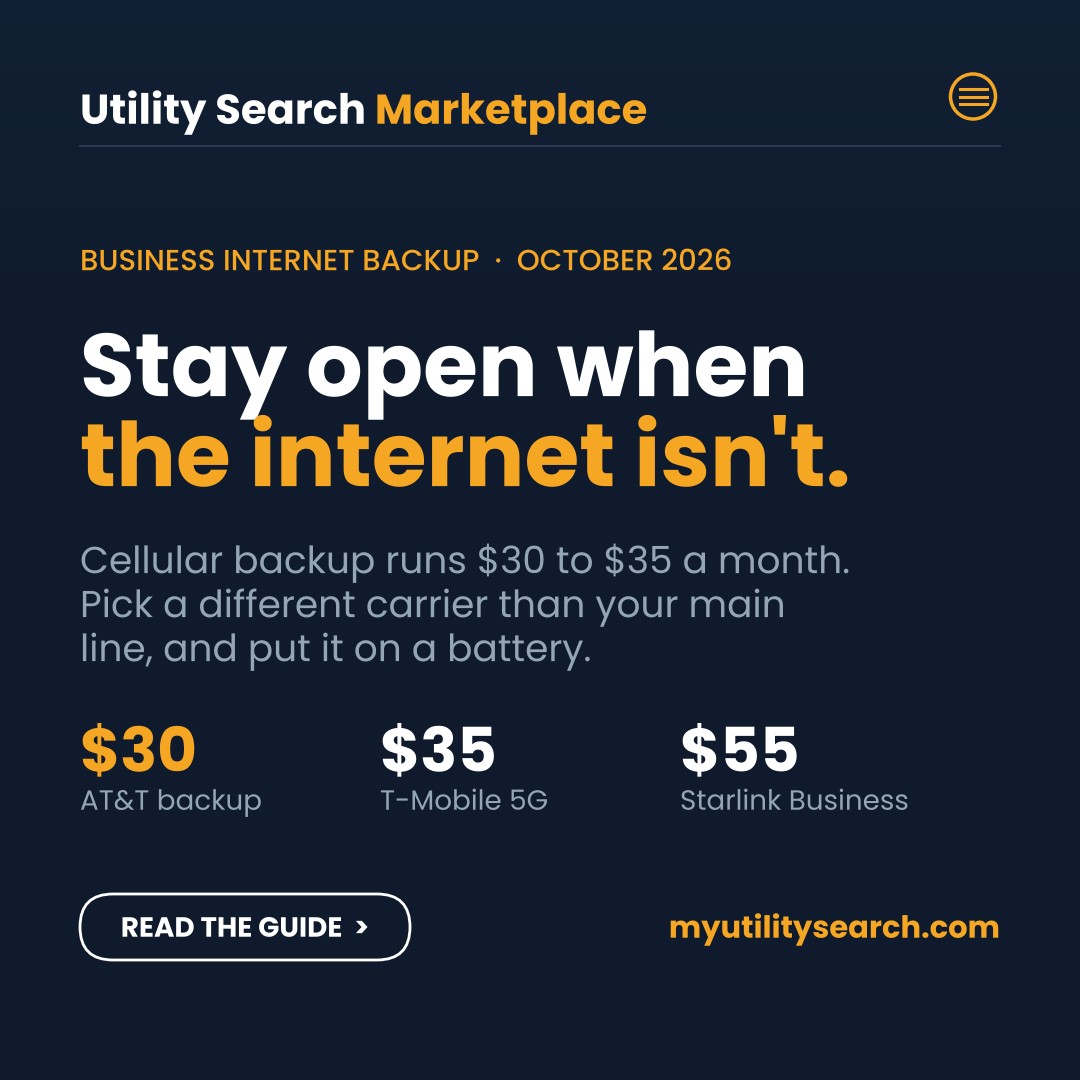
Two habits prevent most call-quality complaints. Turn on quality-of-service (QoS) in your router so voice traffic goes first. And add a backup connection, because when the internet drops, so does business phone service. Our business internet guide covers 5G and fixed-wireless backup lines.
911 and number porting: the rules that protect you
Two federal rules matter when you set up business phone service. Under Kari’s Law, a multi-line phone system must let anyone dial 911 directly, with no “9” prefix. Under RAY BAUM’S Act, 911 calls must send a dispatchable location, such as the street address plus floor or suite.
Cloud providers handle this through an emergency address you register for each user or desk phone. Update it every time someone moves offices or works from home.
You can keep your existing number. The FCC requires carriers to let you port a number to a new provider. Do not cancel your old service before the port finishes, or you can lose the number.
What owners like and dislike about business phone service
What owners like: answering the business line from a cell phone without sharing a personal number, setting holiday hours from an app, and paying one predictable per-user price instead of per-minute long-distance bills.
What frustrates them: pricing that changes with the billing term, promotional rates that expire after 12 months, and add-ons for things they assumed were included, like extra texts or a toll-free number. The other common complaint is call quality on a weak internet connection, which the phone company cannot fix for you.
How to switch business phone service in 6 steps
- Count the users and lines. Include shared lines like a front desk, a fax and any alarm or elevator lines.
- Check your internet. Run a speed test at peak hours and look at upload and jitter, not just download.
- Price annual and monthly. Compare at least two providers on the same billing term.
- Request the port. Have your latest bill and account PIN ready. Keep the old service active until the port is complete.
- Register 911 addresses for every user and desk phone before go-live.
- Build the call flow. Set hours, the auto-attendant menu and voicemail before you announce the switch.
Frequently asked questions
How much does business phone service cost per month?
In October 2026, business phone service costs $10 to $30 per user a month for an entry cloud phone plan with U.S. calling. Google Voice Starter is $10, Nextiva Core $15 and Zoom Phone $16 on annual billing; month-to-month plans cost up to 50% more.
What is the cheapest business phone service?
Google Voice Starter, at $10 a month, is the cheapest business phone service from a major provider. It lacks an auto attendant; Google Voice Standard adds call routing at a $20 list price.
Is VoIP the same as business phone service?
VoIP is how most business phone service works today. It carries calls over the internet instead of copper wire. UCaaS platforms add video meetings, chat and texting to VoIP calling.
Can I keep my business phone number if I switch?
Yes. FCC rules let you port your number to a new provider. Keep your old service active until the port is complete, or you risk losing the number.
Does Microsoft Teams Phone include calling?
Not on its own. Teams Phone Standard at $10 needs a calling plan or another carrier to reach outside numbers. Teams Phone with a domestic Calling Plan is $17 per user, and a separate Teams license is also required.
Bottom line on business phone service
Business phone service has never been cheaper, with real cloud phone systems from $10 to $20 per user. Pick the features you need, price the plan on the billing term you will actually sign, and make sure your internet connection, and a backup, can carry the calls.
Compare internet, energy & home security at your address
Sources
- Google Voice plans (read Oct 18, 2026)
- Nextiva plans and pricing (read Oct 18, 2026)
- Zoom Phone pricing (read Oct 18, 2026)
- Microsoft Teams Phone pricing (read Oct 18, 2026)
- Vonage business phone plans (read Oct 18, 2026)
- RingCentral RingEX plans and pricing (read Oct 18, 2026)
- Spectrum Business phone (read Oct 18, 2026)
- FCC: Kari’s Law and RAY BAUM’S Act 911 requirements
- FCC: keeping your phone number when you change providers
Talk to a business internet specialist
For quotes on business fiber, backup connections, phones and IT at your location, call (866) 328-7973 or use BOX by TechGuidance to pull every serviceable connection for your address.
Are you a residential customer?
Shopping for home internet instead? Compare home internet plans at your address or call our residential team at (844) 437-9527.
Keep going
- AT&T copper line shutdown: what businesses replace them with
- Business fiber internet prices compared
- Business internet providers compared: fiber, cable and fixed wireless
- What business internet costs, by provider and speed
- Business utilities checklist for a new location
- How to find every business internet provider at your address