Blog
ComEd Rate Increases Are Squeezing Illinois Businesses — Why We’d Lock a Fixed Rate Now

The ComEd rate increase facing Illinois businesses is really two problems stacked on top of each other: volatile supply costs today and rising delivery costs tomorrow. In May 2026, ComEd’s default-service supply charge spiked about 65% in a single month, and the utility’s proposed $15.3 billion grid plan would push delivery charges higher from 2028. Our position is simple: if your business is still on ComEd default service, this is the moment to compare suppliers and lock a fixed rate.
How we make money: MyUtilitySearch is a utility marketplace and may earn a commission when an Illinois business switches suppliers through us. We only make money if switching actually benefits you — so the numbers below are the real ones, from ComEd and independent sources.
Our take on the ComEd rate increase
- The problem: businesses on default service face a volatile monthly PEA plus rising grid-plan delivery charges.
- What you control: the supply half of your bill — by leaving default service for a fixed-rate competitive supplier.
- Our recommendation: compare Illinois business electricity offers and lock a fixed rate before the next PEA swing.
What’s behind the ComEd rate increase
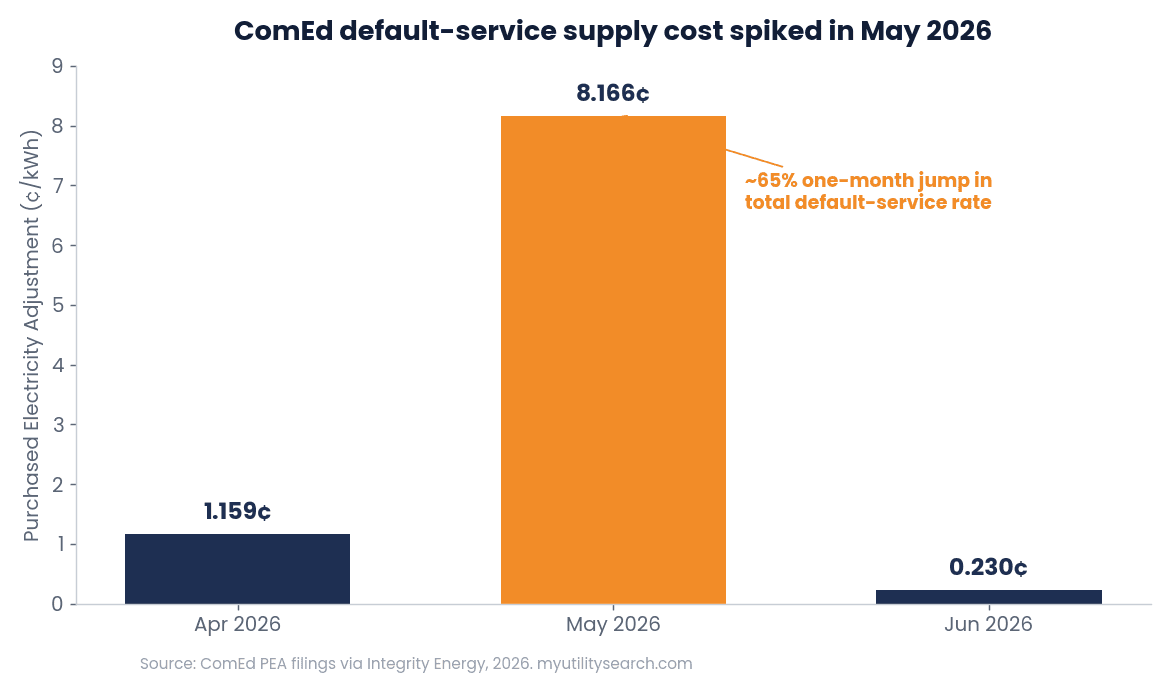
Two forces are pushing ComEd bills up at once. The first is supply-cost volatility. ComEd doesn’t profit on the electricity itself — it passes the cost through as the Purchased Electricity Adjustment (PEA). In April 2026 the PEA was 1.159¢/kWh; in May it jumped to 8.166¢/kWh, nearly four times larger than any PEA ComEd had recorded, sending the total default-service rate up roughly 65% for the month before falling back to 0.230¢ in June. That whipsaw is exactly what a business budget can’t plan around.
The second force is the $15.3 billion grid plan ComEd filed with the Illinois Commerce Commission in January 2026. Spread over four years (2028–2031), it funds new substations and capacity to serve surging demand — ComEd says data centers alone account for more than 47% of new substation demand, alongside electric vehicles and electric home heating. Those are delivery costs, and they land on every bill in ComEd territory.
Why the ComEd rate increase hits Illinois businesses hardest
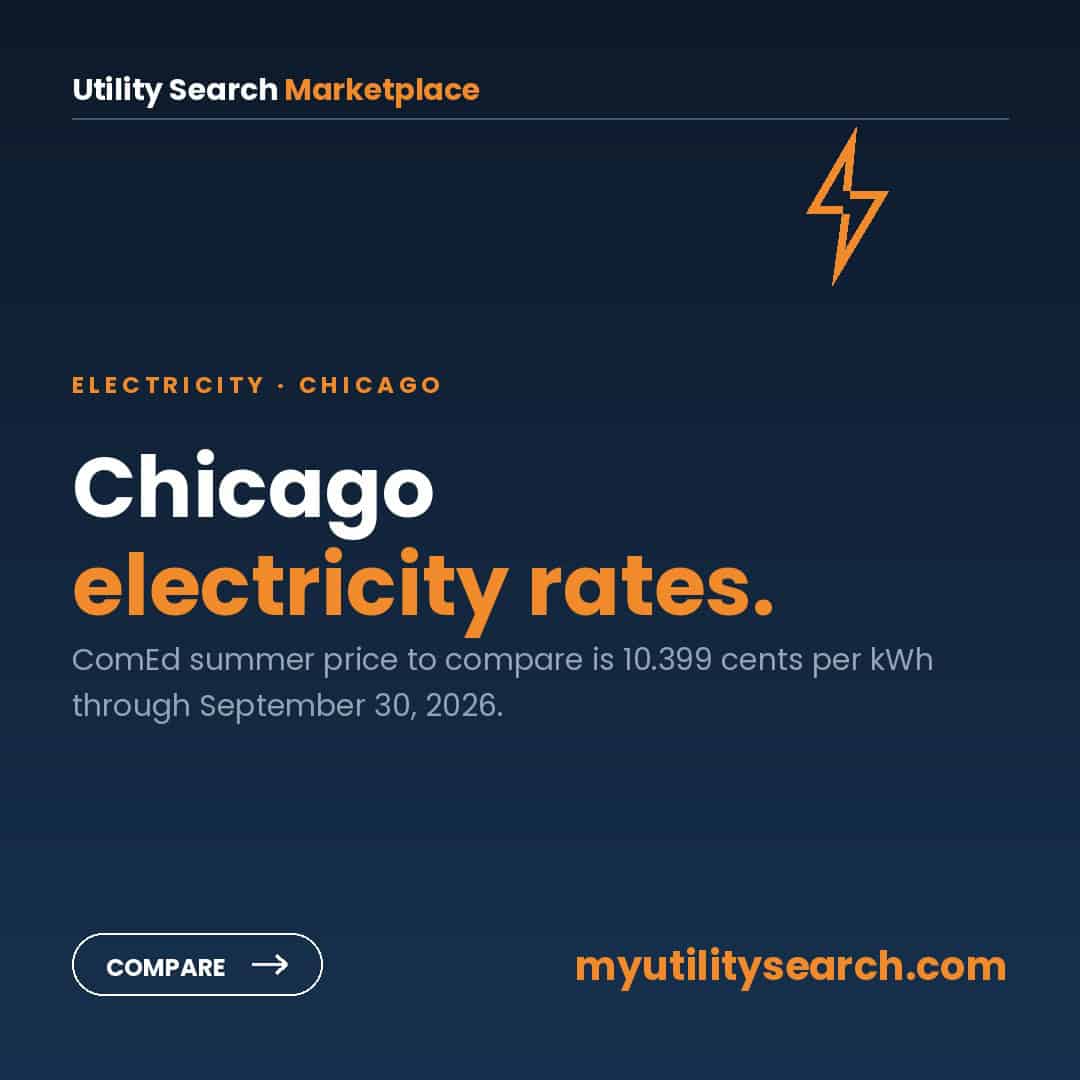
Here’s the part most coverage misses: small commercial and industrial customers on ComEd default service were subject to the same May 2026 PEA spike as households — but for a higher-usage operation, a 7¢/kWh swing on thousands of kilowatt-hours is a materially bigger hit. Worse, the PEA is not included in the ComEd price to compare, so a business that benchmarks offers against the headline supply rate can badly underestimate what default service actually costs during a spike. In practical terms, the ComEd rate increase is most dangerous to the businesses that assume they’re already getting a fair deal by default.
Delivery vs. supply: what you can and can’t control
Every Illinois electric bill splits into two halves, and the ComEd rate increase hits them differently. Understanding the split is what turns this from bad news into an action plan.
| Bill component | What it covers | Can you shop it? |
|---|---|---|
| Delivery (ComEd) | The poles, wires, and substations — funded by the $15.3B grid plan | No — fixed by ComEd and the ICC |
| Supply (energy) | The electricity itself — ComEd default service (PEA) or a competitive supplier | Yes — this is the lever |
You can’t opt out of the grid-plan delivery increases. But the supply half is fully shoppable in ComEd’s deregulated territory, and that’s where a business escapes the PEA.
Why we’d lock a fixed rate now
Our position on the ComEd rate increase is that fixed-rate supply is the right move for most Illinois businesses right now. A competitive fixed-rate contract does two things default service can’t: it removes the monthly PEA volatility that produced the May spike, and it locks your supply cost for the term so a budget actually holds. It won’t shield you from the delivery-side grid-plan increases — nothing will — but it takes the half of the bill you can control off the table. The one caveat: a fixed rate is a commitment, so compare current offers against your real all-in cost, not just the price to compare, before you sign.
How Illinois businesses shop ComEd for a better rate
Turning the ComEd rate increase into savings is a short checklist:
- Confirm you’re on default service. Check a recent bill — if there’s no third-party supplier listed, ComEd is supplying your energy and you’re exposed to the PEA.
- Find your price to compare, then remember it excludes the PEA — your true default cost is higher during spikes.
- Compare fixed-rate offers from licensed Illinois suppliers for your usage class and term.
- Lock the rate that beats your all-in default cost, and set a reminder before the term ends so you don’t roll back to default.
Compare fixed-rate Illinois business rates →
What to watch: the ICC decision
The $15.3 billion plan isn’t final. The Illinois Commerce Commission has an 11-month review, and the Citizens Utility Board has already called it “another bloated, expensive grid plan” and is filing opposing testimony, while the Attorney General’s office has objected in related federal proceedings. The approved number — and the exact delivery increase — could shift. But the supply-side volatility driving today’s ComEd rate increase is already here, which is why we wouldn’t wait on the ICC to act.
ComEd rate increase FAQ
Is ComEd raising rates in 2026?
Yes, from two directions. ComEd default-service supply costs have been volatile — the Purchased Electricity Adjustment hit 8.166¢/kWh in May 2026, pushing the total default rate up roughly 65% for that month — and ComEd’s proposed $15.3 billion grid plan would raise delivery charges starting in 2028.
How much is the ComEd rate increase for businesses?
It varies with usage. Small commercial and industrial customers on default service were hit by the same May 2026 PEA spike as residential customers, and higher-usage operations felt it more. The grid plan adds an estimated $2.50–$3 per month in delivery costs for a typical residential bill from 2028; commercial impact scales with consumption.
What is driving the ComEd rate increase?
New electricity demand — ComEd says data centers account for more than 47% of new substation demand, alongside electric vehicles and electric home heating. The $15.3 billion grid plan funds new substations and capacity to serve that load.
Can Illinois businesses avoid the ComEd rate increase?
You cannot avoid the delivery (grid) charges — every ComEd customer pays those. But you can control the supply portion of your bill by leaving default service for a fixed-rate competitive supplier, which sidesteps the volatile monthly PEA.
What is the ComEd price to compare?
It is the per-kWh supply rate ComEd charges default-service customers, used to benchmark competitive offers. Important: the PEA is not included in the price to compare, so a competitive offer that looks similar on paper can still save you money during PEA spikes.
Should Illinois businesses lock a fixed electricity rate now?
In our view, yes for most — a fixed-rate contract removes the monthly PEA volatility and locks your supply cost ahead of the grid-plan increases. The trade-off is committing to a term, so compare offers before signing.
When will the ICC decide on the ComEd grid plan?
The Illinois Commerce Commission has an 11-month review window. Consumer groups including the Citizens Utility Board are filing testimony opposing the plan, so the final approved figure could change.
Does the ComEd rate increase affect deregulated (choice) customers?
Delivery charges from the grid plan apply to everyone in ComEd territory. But choice customers on a fixed-rate supply contract are shielded from the monthly PEA swings that hit default-service customers, which is the main reason to switch.
The bottom line
The ComEd rate increase is a two-part squeeze: volatile default-service supply now, and rising grid-plan delivery from 2028. Illinois businesses can’t control the delivery side, but they can take the supply side off the table by leaving default service and locking a fixed rate. If you’re still on ComEd default service, compare offers today.
Compare Illinois business electricity rates →
Sources & further reading
- WTTW News — ComEd files $15.3B grid plan (Jan 2026)
- Illinois Commerce Commission — grid plan review
- Plug In Illinois — ComEd price to compare
- Citizens Utility Board — consumer watchdog