Blog
Illinois Electricity Rates: ComEd vs Ameren Price to Compare 2026


Updated on September 6, 2026
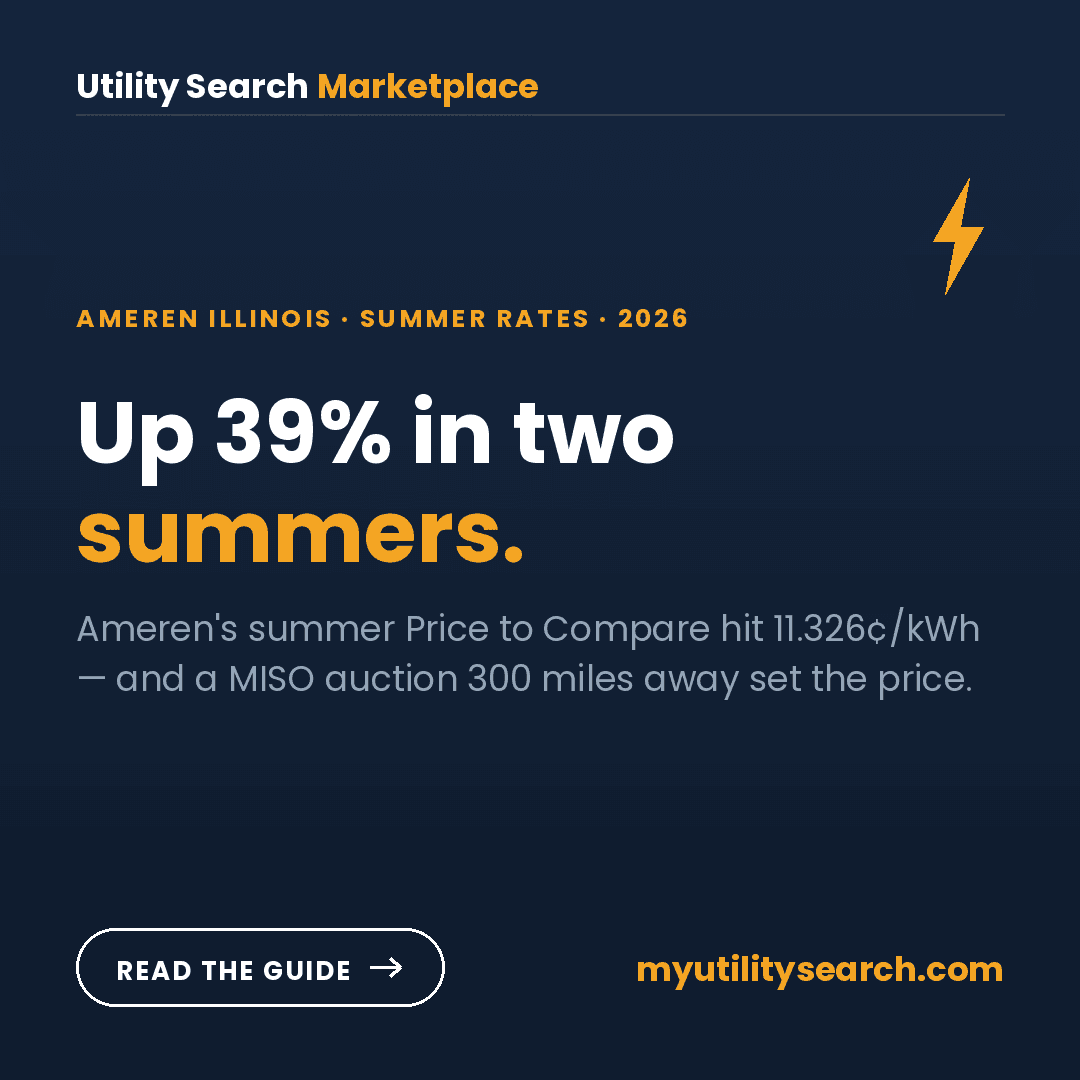
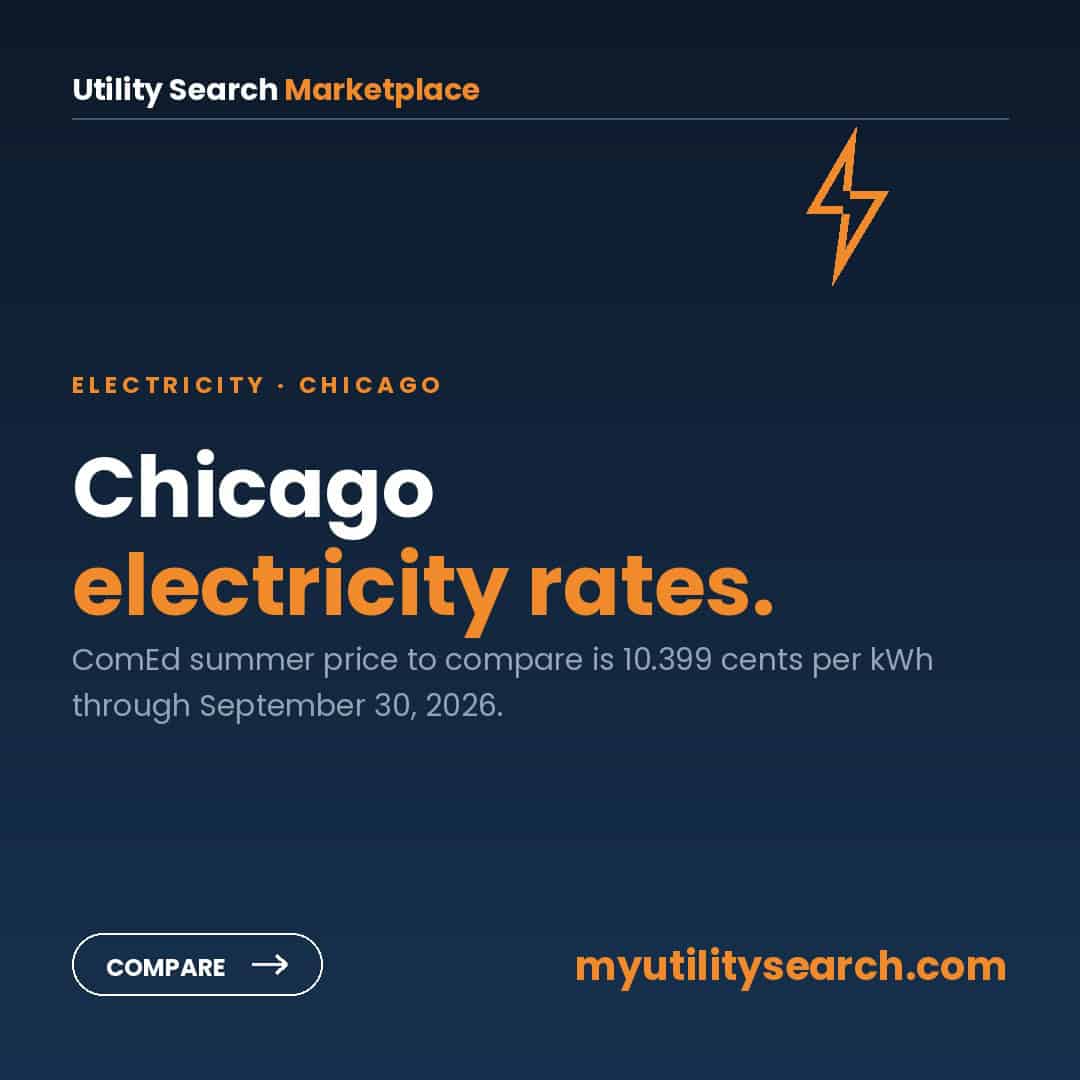
There is no single number for Illinois electricity rates — the state runs on two grids. Northern Illinois is ComEd territory on the PJM grid, where the summer 2026 price to compare is 10.399¢/kWh. Central and southern Illinois are Ameren territory on the MISO grid, where it is about 11.33¢/kWh. Both rose on June 1, but by very different amounts, and both are shoppable because Illinois has retail electric choice.
TL;DR — Illinois electricity rates, summer 2026
- ComEd (northern IL): 10.399¢/kWh — 8.677¢ supply + 1.722¢ transmission.
- Ameren (central/southern IL): ~11.33¢/kWh for the first 800 kWh.
- Ameren customers now pay more than ComEd customers — the opposite of what most people assume.
- The increases were not equal: Ameren jumped roughly 29%, ComEd about 9%.
- The cause is capacity costs, set in separate MISO and PJM auctions.
- Both rates reset October 1. Summer pricing is seasonal, not permanent.
Why Illinois electricity rates depend on which half of the state you live in
Illinois electricity rates are split between two investor-owned utilities that sit on two different regional grids. That is unusual, and it is the reason a single statewide rate figure is misleading.
ComEd serves Chicago and the northern counties and belongs to PJM Interconnection, the grid stretching east to the Atlantic. Ameren Illinois serves the center and south — Springfield, Champaign, Peoria, Carbondale — and belongs to MISO, which runs north to south through the middle of the country. Each grid procures capacity separately, in its own auction, on its own schedule. When those auctions produce different results, Illinois electricity rates diverge even though the state’s law and regulator are the same.
That is exactly what happened this year, and it produced a result most residents would not predict.
ComEd vs Ameren: what each pays this summer
| ComEd (northern IL) | Ameren Illinois (central/southern IL) | |
|---|---|---|
| Grid operator | PJM | MISO |
| Summer 2026 price to compare | 10.399¢/kWh | ~11.33¢/kWh (first 800 kWh) |
| Components | 8.677¢ supply + 1.722¢ transmission | ~8.2¢ supply + 0.308¢ adjustment + 2.765¢ transmission |
| Approximate increase June 1 | ~9% | ~29% |
| Rate period | Jun 1 – Sep 30, 2026 | Jun 1 – Sep 30, 2026 |
| Major cities | Chicago, Evanston, Naperville area | Springfield, Champaign, Peoria, Carbondale |
The headline is counterintuitive: downstate customers are paying more per kWh this summer than Chicago-area customers. Illinois electricity rates are usually discussed as if the metro is the expensive market. For summer 2026, the supply side of the bill says otherwise.
One caveat worth stating plainly: the price to compare is the supply-and-transmission benchmark, not your total bill. Delivery charges, taxes, and riders differ between the two utilities as well, so the gap in what you actually pay per month will not match the gap in these two numbers exactly.
What actually caused the June 1 increase?
Capacity costs — payments generators receive for promising to be available on peak-demand days, separate from the electricity they actually generate. Think of it as a standby fee the grid pays to guarantee supply on the hottest afternoon of the year.
MISO’s summer capacity auction cleared at $666.50 per MW-day, against roughly $30 per MW-day the previous year — an increase of about 2,122%. That result is the single biggest driver behind the Ameren side of Illinois electricity rates this summer. PJM’s auction also cleared higher, but the pass-through to ComEd customers was far more moderate, which is why northern Illinois saw roughly 9% rather than 29%.
Two structural forces sit behind both auctions: older generation retiring faster than new capacity is being built, and demand rising from data centers and electrification. Neither is a short-term condition, which is why capacity costs are worth understanding rather than treating as a one-off. The U.S. Energy Information Administration publishes state-level price history if you want to see how Illinois compares nationally over a longer window.
What’s next: ComEd’s $15.3 billion grid plan (and your bill)
The bigger story for ComEd customers is still ahead. In January 2026, ComEd filed a $15.3 billion grid-modernization plan covering 2028–2031 with the Illinois Commerce Commission (ICC), which has up to 11 months to review it. The plan funds reliability upgrades, three new Chicago substations plus two more elsewhere, and capacity upgrades at 70+ existing substations — driven largely by soaring demand, with data centers accounting for roughly 47% of the new substation demand, plus EV growth (Illinois targets 1 million EVs by 2030) and home electrification.
What it means for your bill: if approved as filed, the grid plan would add about $2.50–$3 per month starting in 2028 — on top of a separate ~$3/month bump from a $243 million rate increase already approved. ComEd’s average residential bill is around $106/month today. The Citizens Utility Board (CUB) is pushing back on what it calls “wasteful, inefficient” spending — in 2023 it helped cut a similar ComEd request by about 25%. Because these are delivery charges (not the supply price you can shop), the final figure may land lower after the ICC review, but the direction is up.
See how Illinois compares nationally in our commercial electricity rates by state tracker — Illinois businesses pay about 11.81¢/kWh today, below the U.S. average, which is exactly why locking in favorable supply terms before delivery costs climb is worth doing now.
Can you shop your supplier in Illinois?
Yes — Illinois electricity rates are shoppable in both utility territories. Illinois has had retail electric choice since the late 1990s, and residential customers can select a competitive supplier for the supply portion of the bill. Your utility continues to own the wires, read the meter, send the bill, and restore power after a storm — switching suppliers changes none of that.
The official comparison tool is Plug In Illinois, run by the Illinois Commerce Commission. It lists only certified suppliers and presents offers in a standardized format, which makes it considerably more useful than a broker site that earns a commission on the enrollment.
There is a third category worth knowing about. Many Illinois communities run municipal aggregation, negotiating a supply rate on residents’ behalf and enrolling households automatically unless they opt out. If your town does this, you may already be on an aggregation rate rather than the utility default — which means the price to compare is not your benchmark. Check the supply line on your bill before shopping.
And a handful of Illinois municipalities own their own electric utilities entirely. Those residents cannot shop supply at all, regardless of what a marketer claims at the door.
What’s the best electricity plan in Illinois?
The best of the Illinois electricity rates offers is the one that beats your actual benchmark on a fixed term without recovering the difference in fees. Four tests before you sign:
- Confirm which utility quotes the offer. A supplier comparing against ComEd’s 10.399¢ is not making a relevant claim to an Ameren customer, and vice versa.
- Fixed rate, stated term. Variable pricing in a year of elevated capacity costs is a poor bet.
- Compare across the whole term, not today. Illinois electricity rates reset October 1, so a 12-month lock should be judged against expected annual pricing rather than the summer peak.
- Check monthly fees and cancellation terms. A one-cent gain on 800 kWh is about $8 a month — real, but easily erased by a $9 service charge.
Illinois also has an unusually active consumer advocate in the Citizens Utility Board, which publishes independent analysis of supplier offers and utility rate filings. Checking an independent source before enrolling costs nothing.
Three mistakes that cost Illinois households money
- Letting a fixed contract roll to variable. This is the most common way Illinois electricity rates quietly climb. Most suppliers move you to month-to-month pricing when a term ends rather than renewing the fixed rate. Diarize the end date the day you sign.
- Comparing against the wrong benchmark. If your community runs aggregation, an offer that beats the utility default may still be worse than what you pay now.
- Enrolling at the door. Verify any supplier is certified on the state site before handing over an account number. Legitimate offers survive a day’s delay.
If you believe you were switched without clear consent, the Illinois Commerce Commission accepts and investigates complaints. Keeping the enrollment paperwork makes that process much easier.
Compare Illinois Electricity — And Internet While You Are At It
Check supply offers against the price to compare for your utility, not a statewide average — and see which internet providers actually reach your address.
Compare electricity rates → Compare internet plans →FAQ
What are Illinois electricity rates right now?
For summer 2026, ComEd’s price to compare is 10.399 cents per kWh and Ameren Illinois’ is about 11.33 cents per kWh for the first 800 kWh. Both run June 1 through September 30, 2026.
Why do ComEd and Ameren charge different rates?
They sit on different regional grids. ComEd is part of PJM and Ameren Illinois is part of MISO. Each grid runs its own capacity auction, and those separate results produce different supply rates even within the same state.
Do Chicago residents pay more than downstate Illinois?
Not on supply this summer. ComEd’s price to compare of 10.399 cents per kWh is lower than Ameren’s roughly 11.33 cents, which is the reverse of what many people assume.
Can I choose my electricity supplier in Illinois?
Yes. Illinois has retail electric choice in both ComEd and Ameren territory. Your utility still delivers the power, reads the meter, and handles outages no matter which supplier you pick.
Why did Illinois electricity rates rise on June 1, 2026?
Capacity costs. The MISO summer auction cleared at $666.50 per MW-day, up about 2,122% year over year, which drove Ameren’s increase of roughly 29%. PJM’s result passed through more moderately to ComEd, about 9%.
Where can I compare certified Illinois suppliers?
Plug In Illinois, operated by the Illinois Commerce Commission, lists certified suppliers and their offers in a standardized format.
Running a business in Illinois? Commercial accounts shop differently — see our business electricity guide for rate structures and contract terms.
Keep going
- Champaign electricity rates and the Ameren price to compare
- Columbus electricity rates and the price to compare
- Newark electricity rates and suppliers
- Best ways to lower your electric bill
- Why summer electric bills spike in the Northeast
- Best internet for college students
- Chicago electricity rates and the ComEd price to compare