Blog
Does Paying Utilities Build Credit? The Honest 2026 Answer

Updated on October 1, 2026
9 min read
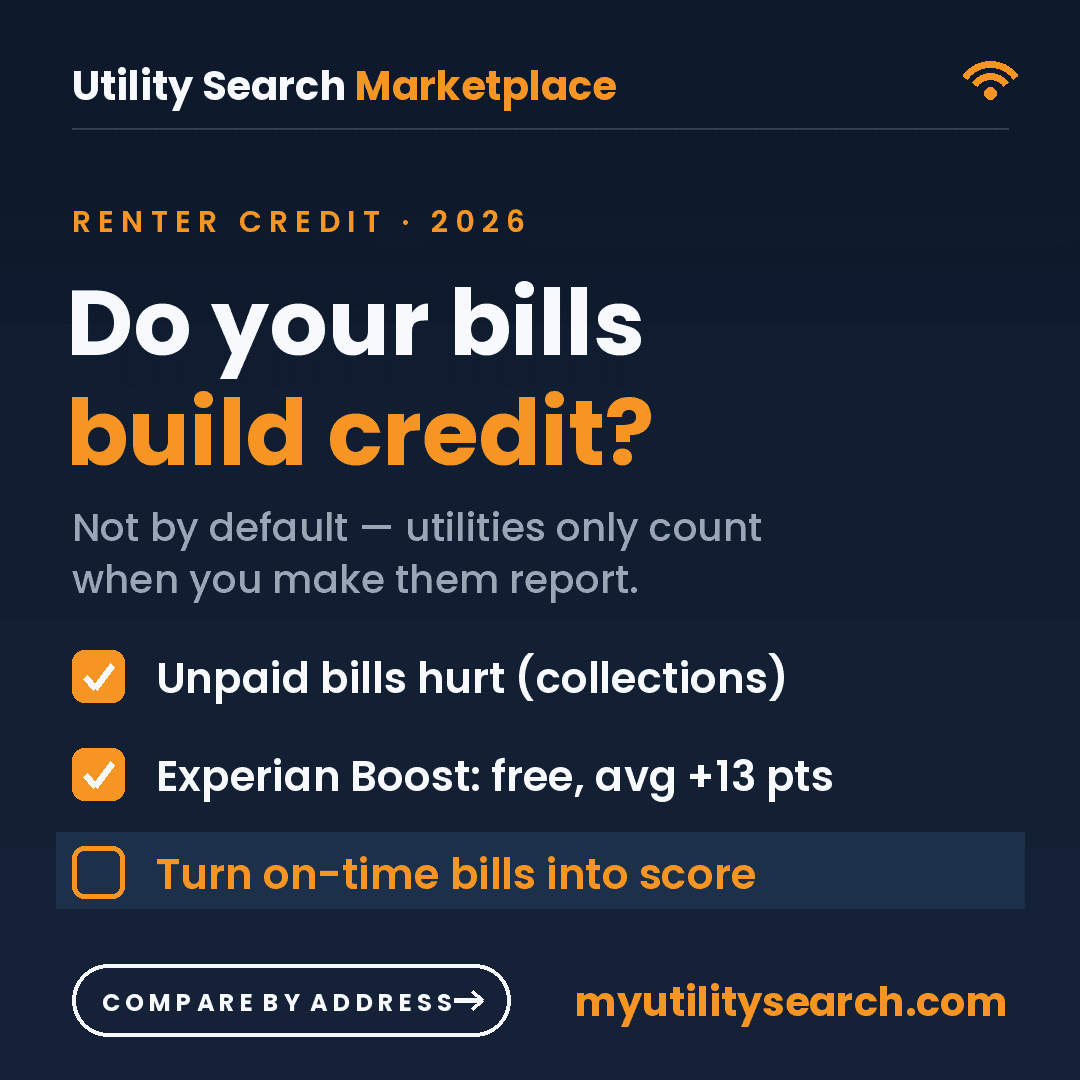
Does paying utilities build credit? By default, no — your on-time electric, water, and internet payments never reach the credit bureaus. But your bills can make utilities build credit if you opt in to free reporting tools like Experian Boost — while unpaid bills absolutely hurt, because collections report to all three bureaus. Here’s exactly how the system works and how renters make it work for them.
TL;DR — Key takeaways
- Utility companies don’t regularly report on-time payments to Experian, Equifax, or TransUnion — paying perfectly builds nothing by itself.
- The asymmetry is brutal: missed utility bills sent to collections DO report, to all three bureaus, for up to seven years.
- Opt-in tools flip the equation: Experian Boost is free, counts on-time utility, phone, streaming — and rent — payments, and lifted scores an average of 13 points among users who improved.
- Boost only affects your Experian file (FICO® Score 8); Equifax and TransUnion don’t see it, so a lender pulling those bureaus sees no change.
- Renters get a second lever: 12 months of on-time electricity payments earns a deposit-waiver letter in Texas — making your payment history literally worth cash.
Does Paying Utilities Build Credit by Default?
No. Electric, gas, water, trash, internet, and phone providers are billers, not lenders — and credit reports track credit accounts. Your fifteen years of flawless electric payments live in the utility’s own records and nowhere else.
That’s why the question “does paying utilities build credit” surprises so many first-time renters: the answer is no by default, yes by opt-in, and very yes in reverse when a bill goes unpaid.
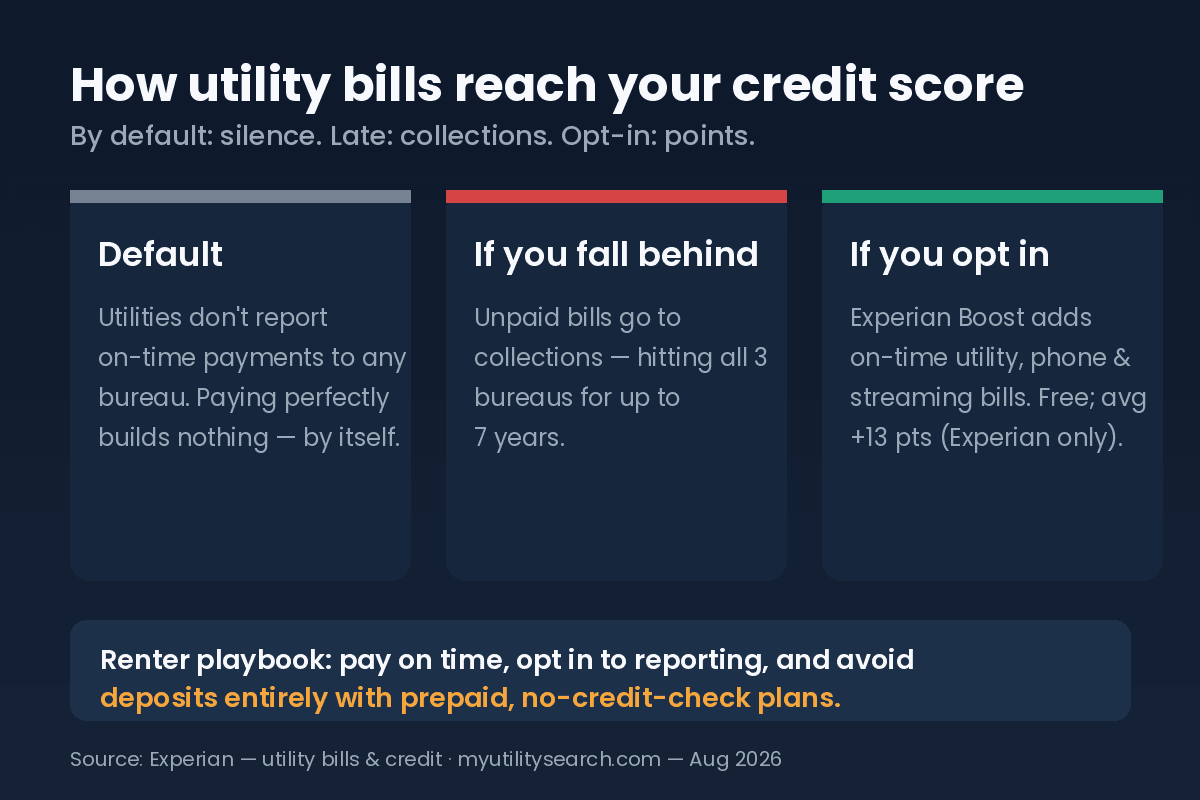
Stat block: Per Experian, utility companies “don’t regularly share your payment history with the credit bureaus” — but an unpaid bill sent to collections can sit on your credit report for seven years.
How Unpaid Utility Bills Hurt Your Credit
The reporting asymmetry is the part that catches people. Pay on time for a decade: silence. Leave a $180 final bill behind at an old apartment: a collections account that hits all three bureaus and drags your score for years.
The most common version isn’t deadbeat behavior — it’s the forgotten final bill after a move, mailed to the address you just left. When you move, close every account deliberately, confirm the final balance, and keep a forwarding address on file. Our utilities-to-cancel checklist walks the full shutdown order.
How to Make Utilities Build Credit: 3 Opt-In Paths
If you want your utilities build credit story to be more than a shrug, you have three real options — and only one of them is truly free and instant:
| Tool | What it reports | Which bureau/score | Cost |
|---|---|---|---|
| Experian Boost | On-time utility, phone, streaming — and qualifying rent — payments found in your linked bank account | Experian only (FICO® Score 8) | Free |
| Rent-reporting services (via landlord or third party) | Monthly rent payments | Varies — some reach all three bureaus | Free–$10/mo (check who pays) |
| Secured card / credit-builder loan paying your bills | The card’s own on-time payments (with utilities on autopay through it) | All three bureaus | Low; requires discipline |
The Boost mechanics, honestly: this is the fastest way to have utilities build credit. You link the bank account you pay bills from; Experian scans for recurring on-time utility payments and adds them to your Experian file.
Only positive history counts — a late payment simply isn’t added. Average lift is 13 points among users whose score improved, which matters most for thin-file and near-boundary scores (think 570 → 590, or 660 → 675). Rent counts too, if you’ve made at least three payments in six months with one in the last three.
The honest limitation: because Boost touches only Experian, a landlord or lender pulling Equifax or TransUnion sees nothing new. Treat having utilities build credit as one brick, not the wall — the all-bureau levers are still on-time credit accounts, low utilization, and time.
Compare internet, energy & home security at your address
The Renter’s Second Lever: Payment History as Cash
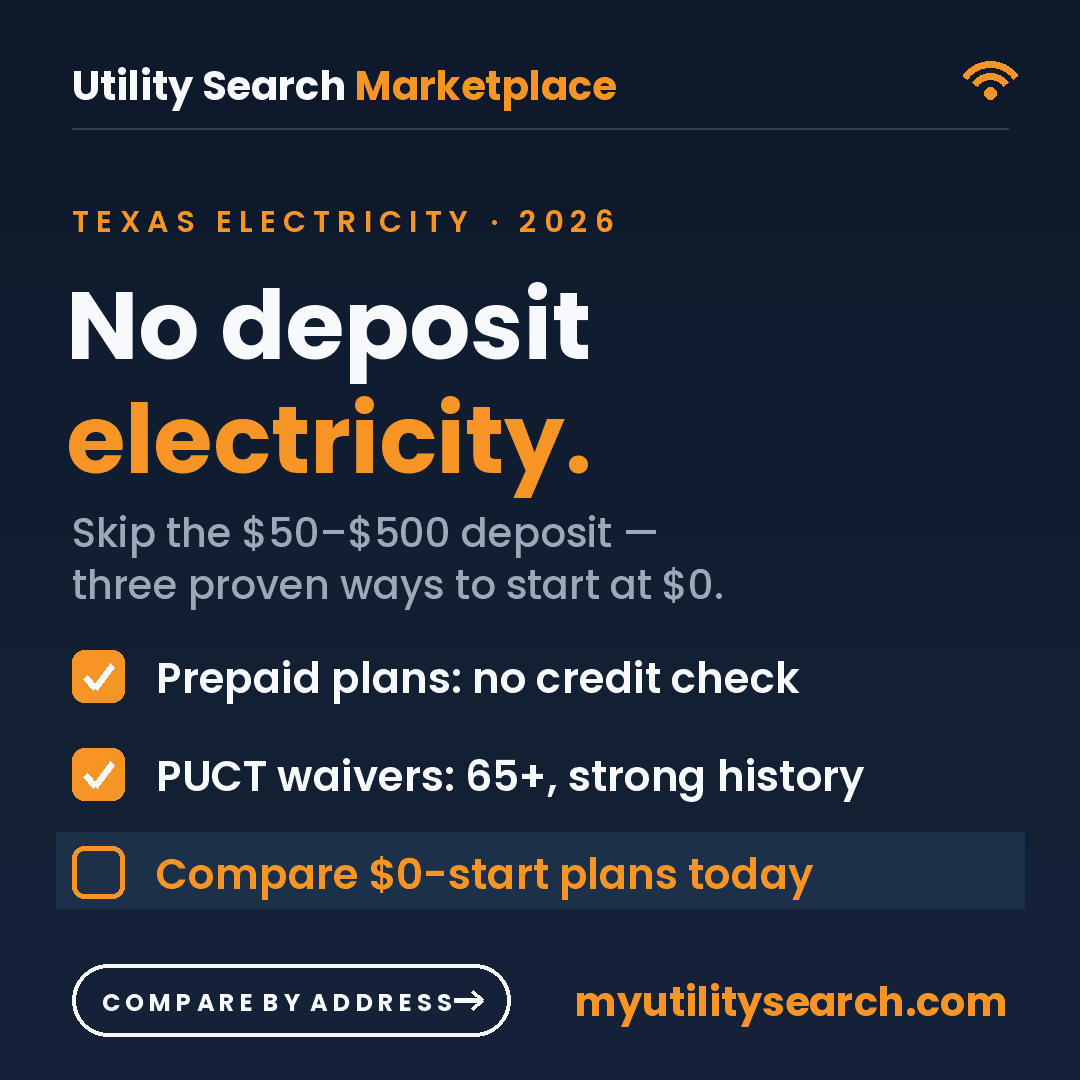
Here’s the part credit articles miss: in deregulated markets, utility payment history has a direct cash value that has nothing to do with FICO. In Texas, showing no more than one late payment in the last 12 months earns you a deposit waiver under PUCT rules — a letter from your current provider that makes your next electricity signup deposit-free.
Twelve on-time payments also trigger the refund (with interest) of any deposit you already paid. So the same discipline builds two assets at once: an Experian file that scores better, and a payment-history letter worth $50–$500 in avoided deposits.
If your credit isn’t there yet, prepaid plans skip the check entirely — our no deposit electricity guide maps every $0-start path while your history builds.
A 12-Month Plan: From No Credit to Credit That Pays
- Month 1: put every utility on autopay from one bank account — the account you’ll link to Boost. Autopay is what makes “on-time” automatic.
- Month 1: enroll in Experian Boost (free) and, if your landlord offers it, rent reporting. Check whether the rent reporter reaches all three bureaus before paying for it.
- Months 2–6: add one true credit account if you don’t have one — a secured card running a single small bill on autopay, paid in full monthly, reports to all three bureaus.
- Month 12: request your payment-history letter from your electricity provider, claim your deposit refund if you paid one, and re-shop your plan as a customer with proof of perfect history.
Stat block: The average Experian Boost user who improved gained 13 points — free — while 12 months of on-time electricity payments separately earns a Texas deposit waiver worth up to $500 in avoided deposits.
Which Utilities Build Credit Fastest?
Not every bill pulls equal weight when you opt in. Experian Boost detects recurring payments in your linked bank account, so the bills that make utilities build credit fastest are the ones that are (a) eligible categories and (b) paid in clean, recognizable, recurring transactions:
| Bill | Boost-eligible? | Notes |
|---|---|---|
| Electricity | Yes | The workhorse — large, monthly, easy to detect on autopay |
| Natural gas | Yes | Same mechanics as electric |
| Water / trash | Yes | Sometimes billed quarterly or through a landlord — only direct, recurring payments are detected |
| Internet & mobile phone | Yes | Reliable monthly signals; phone plans are the most commonly detected bill |
| Streaming (Netflix, Hulu, etc.) | Yes | Small but valid — the cheapest way to add a reportable payment |
| Rent | Yes, with rules | 3+ payments in 6 months, 1 in the last 3; bank-paid rent detects best |
| Utilities inside your rent (all-bills-paid) | No | The landlord pays the provider — there’s no bill in your name to report |
That last row matters for renters weighing bundle deals: in an all-bills-paid unit, none of your utility spending can build credit, because none of it happens in your name. It’s one more quiet cost of giving up your own accounts.
Three Myths About Whether Utilities Build Credit
- “I’ve paid my electric bill for years, so my credit must be great.” Unless you opted in to reporting, those years never reached a bureau. Payment history only counts where it’s recorded.
- “Boost will fix my score everywhere.” It touches one bureau (Experian) and one score model (FICO® 8). Helpful — especially for thin files — but invisible to a lender pulling TransUnion.
- “Utility companies check credit, so they must report it.” Backwards: providers often check credit to set deposits, but checking isn’t reporting. The relationship is one-way unless you make it mutual with an opt-in tool — which is the entire trick to making utilities build credit.
Do Internet, Phone, and Streaming Utilities Build Credit Too?
Same rules, same tools. Internet and phone providers don’t report on-time payments by default either, but both count in Experian Boost — and both punish you through collections if a final bill slips.
Streaming subscriptions (Netflix, Hulu, and similar) also qualify for Boost, which makes them the cheapest “reportable” recurring payments most people already have. And if a credit check is blocking the account itself, prepaid home internet works exactly like prepaid power: no check, no deposit, service today.
FAQ
Does paying utilities build credit?
Not automatically — utility companies don’t routinely report on-time payments to the credit bureaus, so on their own, utilities build credit for no one. Utilities build credit only when you opt in to a reporting tool like Experian Boost (free, Experian only) or a rent/bill reporting service. Unpaid utility bills, however, hurt automatically once they reach collections.
Do unpaid utility bills affect your credit score?
Yes. A utility bill left unpaid for months is typically sold to a collection agency, and that collections account reports to all three bureaus and can remain for up to seven years. The forgotten final bill after a move is the most common cause.
How many points does Experian Boost add?
Among users whose score improved, the average lift is 13 points on the Experian FICO® Score 8. Results vary — thin files see the most movement, and scores at Equifax and TransUnion don’t change at all.
Does paying rent build credit?
Only if it’s reported. Experian Boost now counts qualifying rent payments (three payments within six months, one in the last three), and dedicated rent-reporting services — some landlord-provided — can reach all three bureaus. Unreported rent, like unreported utilities, builds nothing.
Can renters make utilities build credit without a credit card?
Yes — that’s exactly the thin-file case where utilities build credit matters most. Linking your bank account to Experian Boost turns existing on-time bills into reportable history with no new account, no inquiry, and no card required. A secured card simply accelerates it across all three bureaus.
Can I get utilities with no credit history?
Yes. Prepaid electricity and prepaid internet plans skip the credit check entirely, and Texas renters can avoid deposits through PUCT waivers — age 65+, a strong 12-month payment history, or qualifying certifications. See our no deposit electricity guide for every path.
Compare internet, energy & home security at your address
The Bottom Line on Making Utilities Build Credit
Utilities build credit only when you route them somewhere a bureau can see — that’s the whole answer. Put the bills on autopay so on-time is automatic, opt in to Boost so the history counts, add one all-bureau account so the wall gets built brick by brick, and cash in the Texas payment-history letter at month twelve.
Free tools, bills you already pay, and a year of patience: that’s how renters turn the utilities they were paying anyway into both a better score and cheaper power.
Keep going
Build the history, then make it pay:
- No Deposit Electricity: Every Way to Skip the Deposit — what your payment history is worth in Texas.
- Payless Power Review: Prepaid Plans & Is It Good? — the no-credit-check bridge while you build.
- Prepaid Home Internet: No-Contract, No-Credit-Check Plans — the same playbook for your connection.
- Utilities Included Apartments: What’s Covered & What You Can Still Choose — when the bills aren’t in your name at all.
- Utilities to Cancel When Moving Out — the checklist that prevents the collections surprise.
- Deregulated Energy: Compare Suppliers by State — shop your rate once the history is yours.
- Utility deposit credit check — why old charge-offs now trigger deposits, and how to avoid one
Sources: Experian (“How Utility Bills Could Boost Your Credit Score,” Experian Boost program details); PUCT Substantive Rule §25.478 (deposit waivers and refunds). Program terms change — verify at enrollment.