Blog
Storage Unit Prices Are Finally Falling: What Every Size Costs in 2026

8 min read
Last updated: November 12, 2026
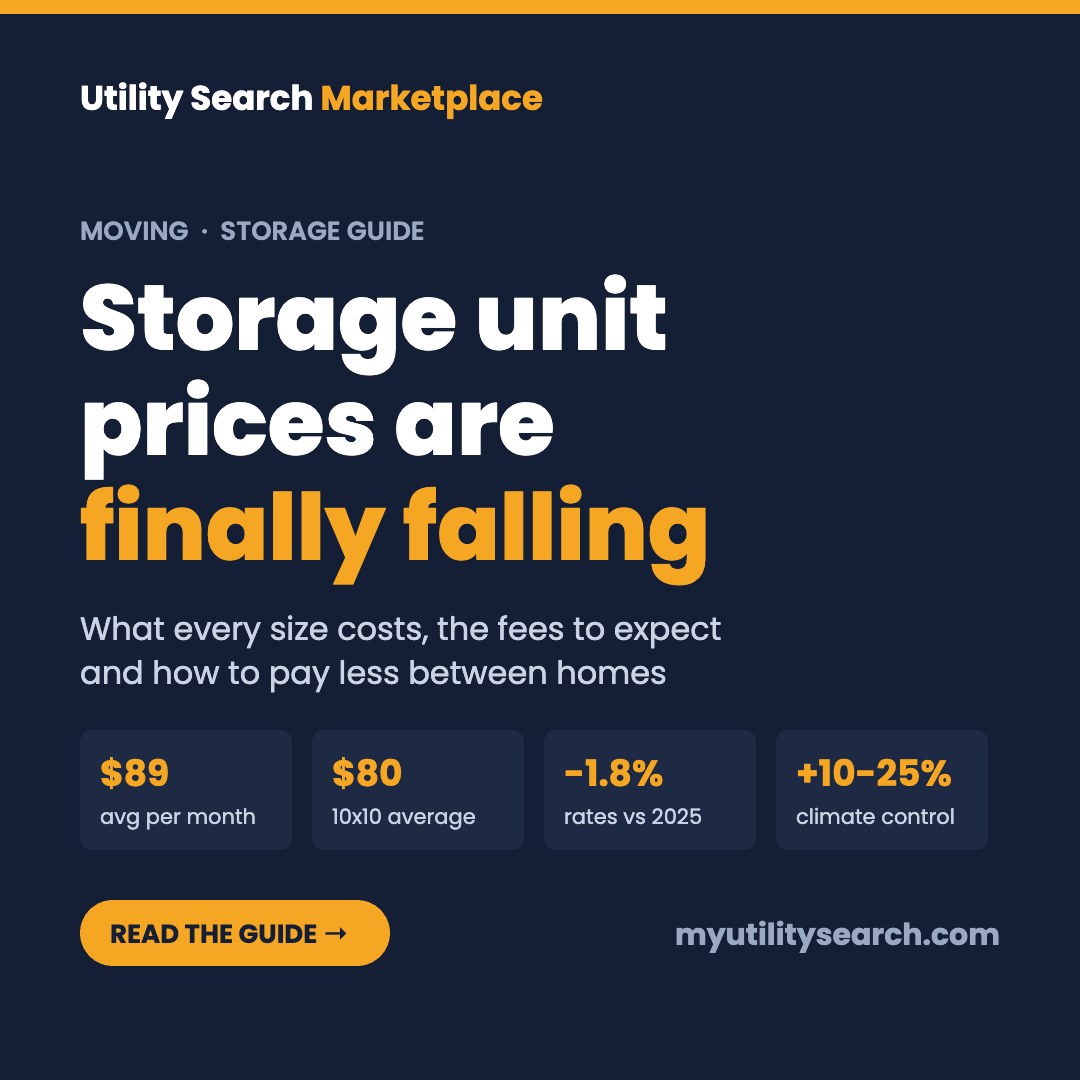
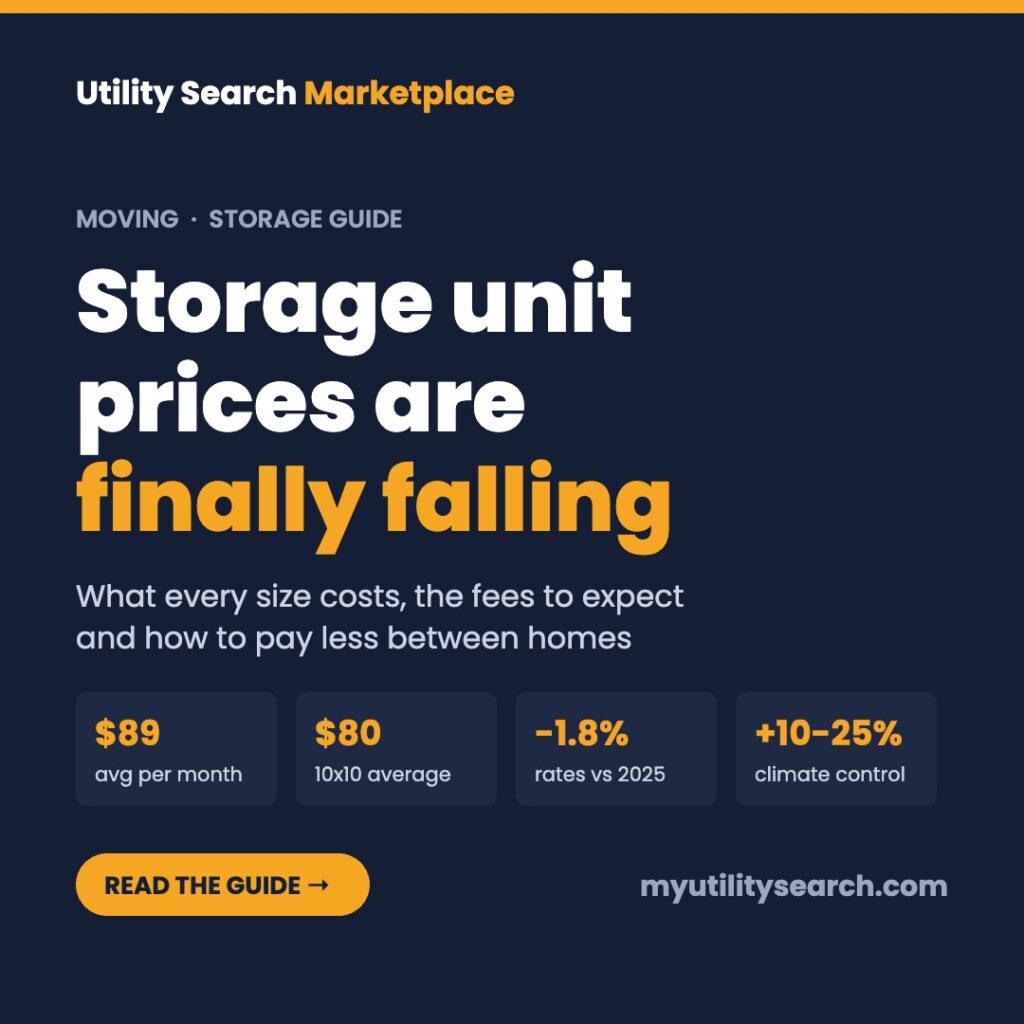
Average storage unit prices run about $89 a month nationally, according to SpareFoot data from May 2026. A small 5×5 unit averages about $35, a 10×10 about $80 and a 10×20 about $130. Climate control usually adds 10% to 25%. Rates are softening: Yardi Matrix found advertised rates down 1.8% from a year earlier in September 2026.
Storage unit prices in 30 seconds
- National average: about $89 a month across all sizes (SpareFoot, May 2026).
- Most common size: a 10×10 averages about $80 and holds a one-bedroom apartment.
- Climate control: typically 10% to 25% more than a standard unit.
- Extra costs: admin fees of about $10 to $25, plus insurance of about $10 to $25 a month.
- Good timing: rates are falling. Big operators cut advertised rates 3.3% over the past year.
A storage unit is often the bridge between two homes. You close on one house before the other is ready, a lease ends early, or you are downsizing. This guide breaks down storage unit prices by size, type and fee, so you can budget the gap and not overpay for space you don’t need.
How much is a storage unit per month?
Storage unit prices depend mostly on size. These are national averages for standard units from SpareFoot’s May 2026 data:
| Unit size | Square feet | Average per month | What it holds |
|---|---|---|---|
| 5×5 | 25 | $34.89 | Boxes, seasonal items, a few small pieces |
| 5×10 | 50 | $50.92 | A studio apartment, bikes, sports gear |
| 10×10 | 100 | $80.43 | A one-bedroom apartment |
| 10×15 | 150 | $109.03 | A two-bedroom apartment, large appliances |
| 10×20 | 200 | $130.14 | A full household or a small vehicle |
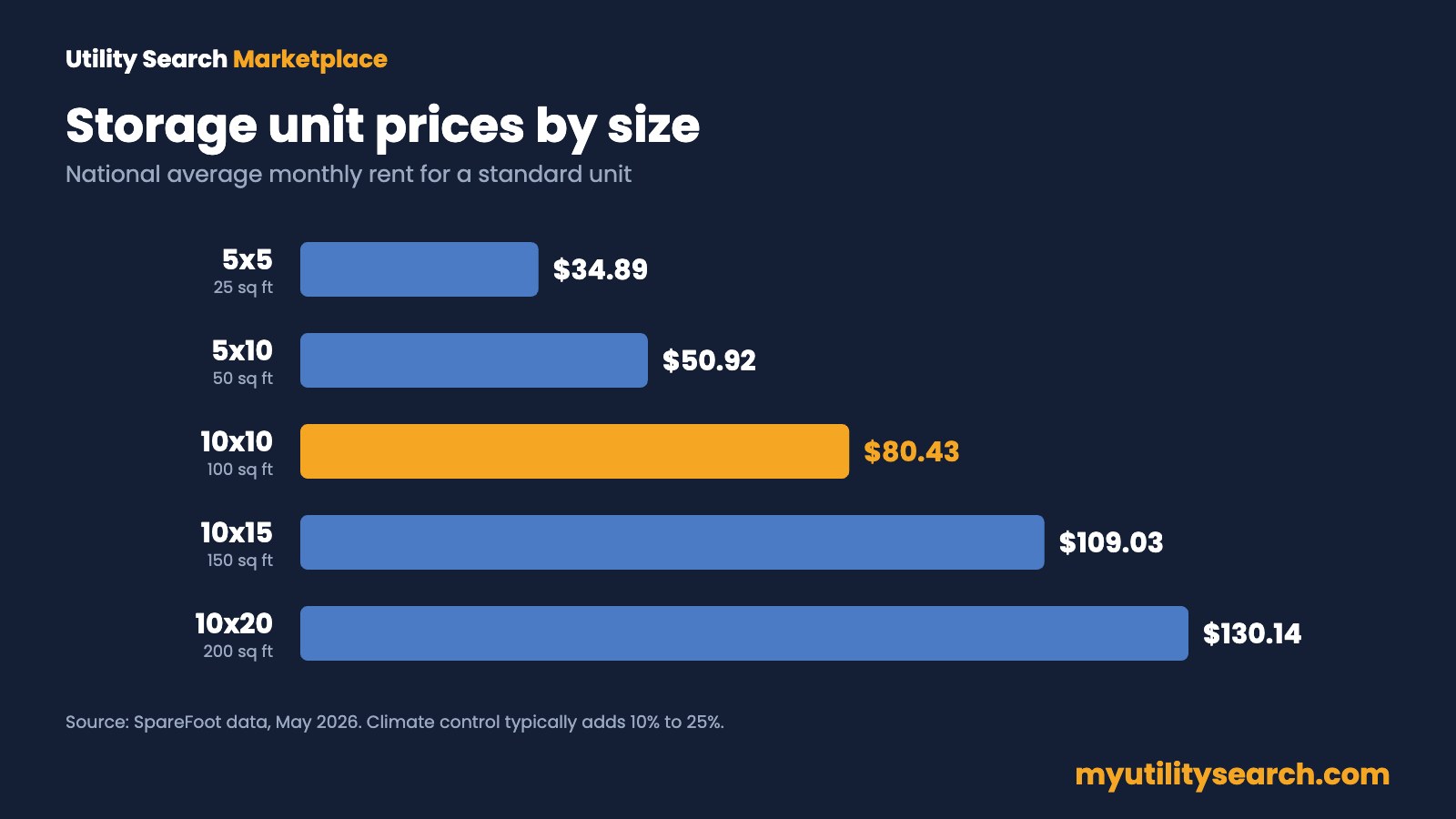
These are averages. Storage unit prices in big coastal metros run well above them, and small-town facilities often come in lower. A local quote is the only exact number, but the table tells you whether a quote is in the normal range.
What drives storage unit prices up or down
Five things set the storage unit cost you are quoted. Size is the biggest, but the others can move the price by a third or more.
- Size: each step up adds roughly $20 to $30 a month at the national averages.
- Climate control: heated and cooled units typically cost 10% to 25% more.
- Access type: drive-up units on the ground floor usually cost more than indoor units on upper floors.
- Location: facilities in dense cities charge more than suburban and rural ones.
- Occupancy: a full facility has no reason to discount. One with empty units runs move-in specials.
Climate-controlled storage unit cost
Climate control keeps a unit within a set temperature range, and sometimes a humidity range too. It typically costs 10% to 25% more than a standard unit. On a 10×10, that works out to roughly $88 to $101 a month instead of about $80.
It is worth paying for in hot or humid places, and for wood furniture, electronics, photos, documents, musical instruments and anything with fabric. It is usually not worth it for garden tools, bikes, or plastic bins stored for a few weeks.
Storage Star, one operator, publishes a wider national range: $150 to $210 a month for a climate-controlled 10×10 against $90 to $140 for a standard indoor one. Operator ranges like that run higher than the SpareFoot averages, so check both against your local quotes.
Fees that add to storage unit prices
The advertised monthly rate is the floor. These charges are added on at most facilities:
- Admin or setup fee: a one-time charge of about $10 to $25.
- Insurance or protection plan: about $10 to $25 a month. Most facilities require it, but many accept proof from your homeowners or renters policy instead.
- Lock: a disc lock if you don’t bring one.
- Late fees: charged when rent is missed, with auction rules if a balance goes unpaid for long enough.
- Taxes: some states and cities tax storage rent.
Add those to the monthly rate when you compare storage unit prices. A $1 first month is a real discount, but the admin fee and insurance still apply.
Storage unit prices are falling in 2026
This is a renter’s market. Yardi Matrix found national advertised storage rates down 1.8% from a year earlier in September 2026, and every one of the 30 big metros it tracks posted a monthly decline. Large public operators cut advertised rates by 3.3%, against 1.0% for smaller operators.
The big operators’ own results show the same picture. In the third quarter of 2026, Public Storage reported same-store occupancy of 92.5% and lower realized rent per square foot. Extra Space reported 94% occupancy and CubeSmart 89%. A facility with empty units is more likely to discount, so ask.
New supply is slowing, with about 2.1% of existing space under construction at the end of September. That could firm up storage unit prices later, so a falling-rate window may not last.
What a storage unit really costs: three examples
Monthly storage unit prices hide the full bill. These examples use the national averages above, a $20 admin fee and $15 a month for protection.
| Situation | Unit and time | Rent | Fees | Total |
|---|---|---|---|---|
| College summer break | 5×5, 3 months | $105 | $65 | $170 |
| Gap between two homes | 10×10, 2 months | $161 | $50 | $211 |
| Downsizing, long term | 10×15, 12 months | $1,308 | $200 | $1,508 |
The last row is the one to think hard about. A year of storage unit prices for a 10×15 is more than many people would get for the furniture inside it. Before you store for the long term, compare the bill to the cost of replacing what you are keeping.
Storage unit prices for common moving situations
Most storage rentals start with a move. Here is how storage unit prices fit the most common ones.
- Buying and selling at once: if your closing dates don’t line up, a 10×10 or 10×15 for one or two months covers the gap. Ask for month-to-month terms.
- Students: a 5×5 or 5×10 for the summer is the classic use. Split it with a roommate to halve the cost.
- Military moves: ask facilities near bases about military discounts, and check whether your move entitlement covers storage first.
- Remodels: a container in the driveway may beat storage unit prices, since you skip the trips back and forth.
- Downsizing: decide what you will really use within a year. Storage unit prices add up quickly when the unit becomes permanent.
Which storage unit size do you need?
Most people rent a size too big. Use the table above as a guide, and measure the large pieces before you book.
- 5×5: a closet’s worth. Boxes, holiday decorations, a small dresser.
- 5×10: a walk-in closet. A studio or the overflow from a one-bedroom.
- 10×10: a small bedroom. A one-bedroom apartment with furniture.
- 10×15: a large bedroom. A two-bedroom apartment.
- 10×20: a one-car garage. A three-bedroom home, or a car.
Stack boxes to the ceiling and stand mattresses and sofas on end. Packed well, you can often drop one size and save $20 to $30 a month.
How to get the best storage unit prices
- Compare three facilities within a few miles. Storage unit prices vary more between neighbors than most people expect.
- Ask about move-in specials, such as a first month for $1 or a percentage off for the first few months.
- Ask how often rent goes up after move-in. The opening rate is not always the rate you keep.
- Use your own insurance. Renters and homeowners policies often cover stored items, which can save the monthly protection fee.
- Skip climate control for items that don’t need it.
- Pay ahead if the facility discounts for prepaying several months.
- Go smaller and pack tighter, once you have measured.
Storage unit vs. moving container storage
If you are moving, a storage unit is not the only option. A portable container can be loaded once at your old home, stored at the company’s facility, then delivered to your new one. That saves loading a truck twice.
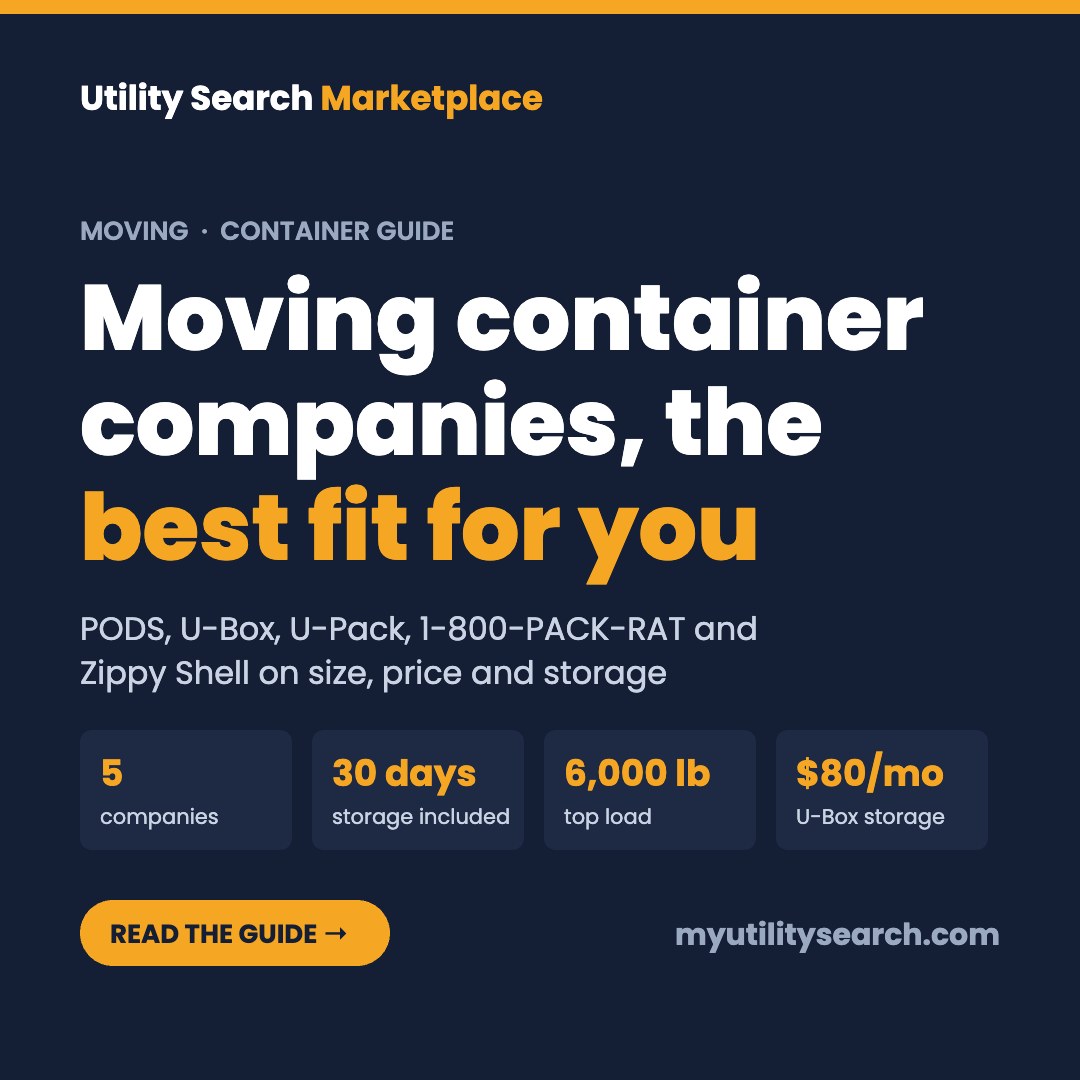
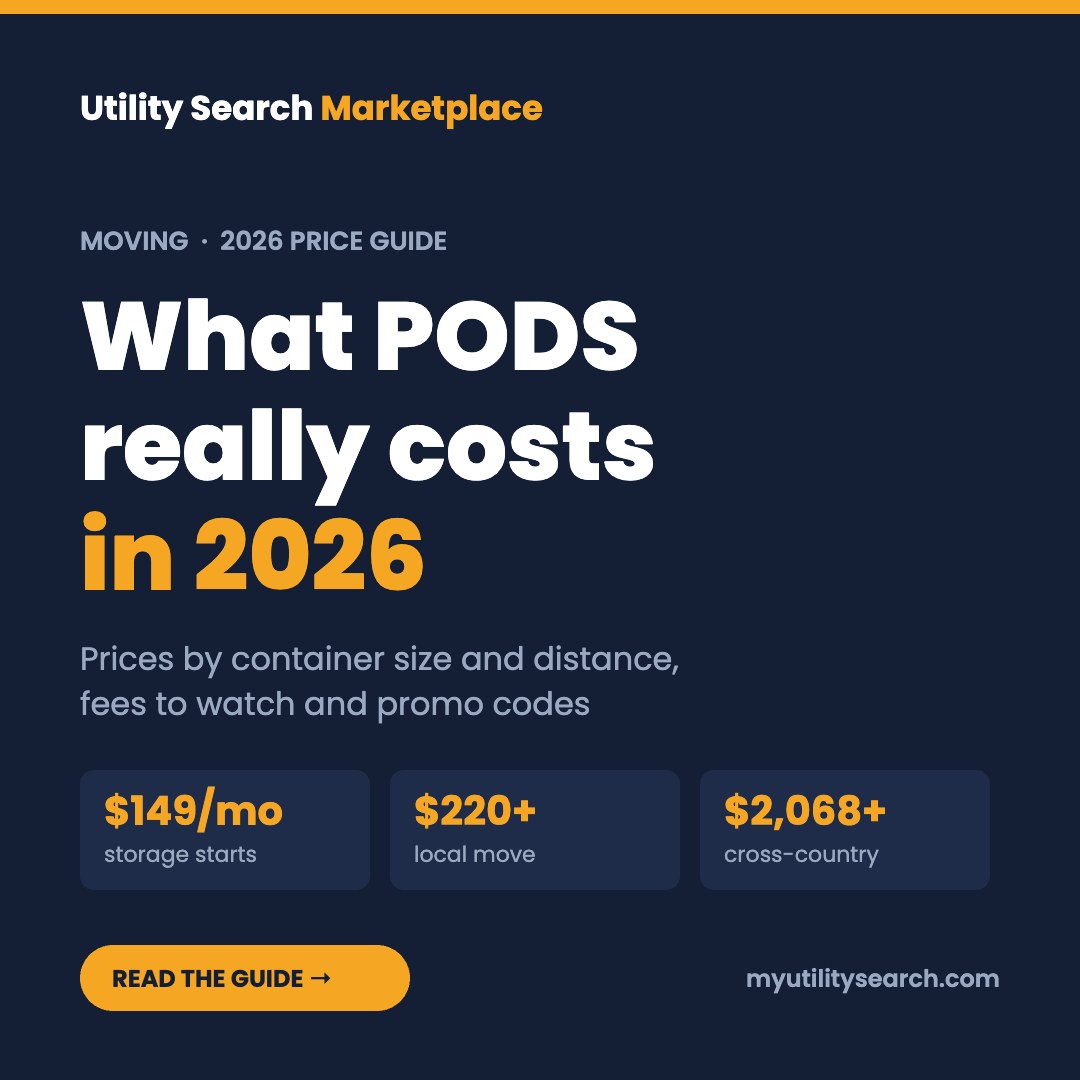
Container storage is priced per container. PODS storage starts at $149 a month, a U-Haul U-Box rents from about $80 a month, and U-Pack charges from $150 per ReloCube after the first 30 days. Our guide to moving container companies compares them, and the PODS cost guide shows container prices by size. For short gaps of a month or two, a container often costs about the same as a storage unit plus a truck rental, with less lifting.
If you plan to load a unit yourself, our moving truck rental guide compares U-Haul, Penske and Budget.
Don’t forget the utilities at your new address
Storage covers your things during the gap. Your new home still needs internet and power the day you move in. Order internet about two weeks out, since installs can book a week or more ahead in busy months. Our moving checklist lays out every step, and our guide on how to transfer utilities when moving covers every call in order.
Moving to Texas, Ohio, Pennsylvania or Illinois? There you choose your own electricity company, so compare plans before move-in day in our electricity rate tool.
Storage unit prices FAQ
How much is a storage unit per month?
About $89 a month on average across all sizes, according to SpareFoot data from May 2026. A 5×5 averages about $35, a 10×10 about $80 and a 10×20 about $130.
How much does a 10×10 storage unit cost?
A standard 10×10 averages about $80 a month nationally. Climate control typically adds 10% to 25%, or roughly $88 to $101 a month.
Is climate-controlled storage worth the extra cost?
For wood furniture, electronics, documents, photos and instruments, usually yes, especially in hot or humid areas. For tools, bikes and plastic bins, usually no.
Are storage unit prices going down?
Yes. Yardi Matrix found national advertised rates down 1.8% from a year earlier in September 2026, and large operators cut rates by 3.3%.
What fees come with a storage unit?
Expect a one-time admin fee of about $10 to $25 and insurance of about $10 to $25 a month. Many facilities accept proof of your own renters or homeowners coverage instead.
Also compare energy, home security and home warranty at your new address
Electricity plans in 14 deregulated states. Security and warranty nationwide.
Sources
- RecNation: Guide to storage costs (SpareFoot national averages, May 2026)
- Modern Storage Media: Yardi Matrix October 2026 self-storage national report (September 2026 data)
- Yardi Matrix: Self storage national report, October 2026
- Inside Self Storage: Self-storage REITs’ third-quarter 2026 results
- Storage Star: How much do storage units cost? (operator price ranges and fees)
- U-Haul: Portable storage container cost
Keep going
- Moving checklist — every step from 8 weeks out to your first month in
- Moving container companies — PODS, U-Box, U-Pack, PACK-RAT and Zippy Shell compared
- PODS cost 2026 — container prices by size and distance
- Moving truck rental — U-Haul vs Penske vs Budget
- Moving with College HUNKS — movers and junk removal
- How to transfer utilities when moving