Blog
Why Your Energy Bill Jumped in 2026 — the Shocking Iran War Connection, and What You Can Actually Control

By The Utility Search Marketplace Team · 20+ years in consumer home services
Last updated: May 29, 2026
Why did my energy bill double in 2026? If your electric and gas bills feel higher this year, you’re not imagining it — and the answer reaches a lot further than your local utility. A conflict in the Middle East has disrupted global oil supply, energy was the single biggest driver of U.S. inflation this spring, and electricity prices are up about 6% over the past year. You can’t fix the war, but you can fix what you pay: in most states you can shop your supply rate, lock it in, and cut the usage that’s actually in your control — usually in about five minutes, with no deposit or SSN required to compare.
The 30-second version (for anyone still Googling “why did my energy bill double in 2026”)
Energy prices are spiking for a reason that has nothing to do with you: a war disrupting global oil. That part is out of your hands. What’s in your hands is your supply rate and your usage — and in deregulated states, comparing a fixed-rate plan against your utility’s default is the fastest way to protect your budget before peak summer. It’s free, it doesn’t change who keeps your lights on, and it takes minutes.
What actually happened to energy prices in 2026?
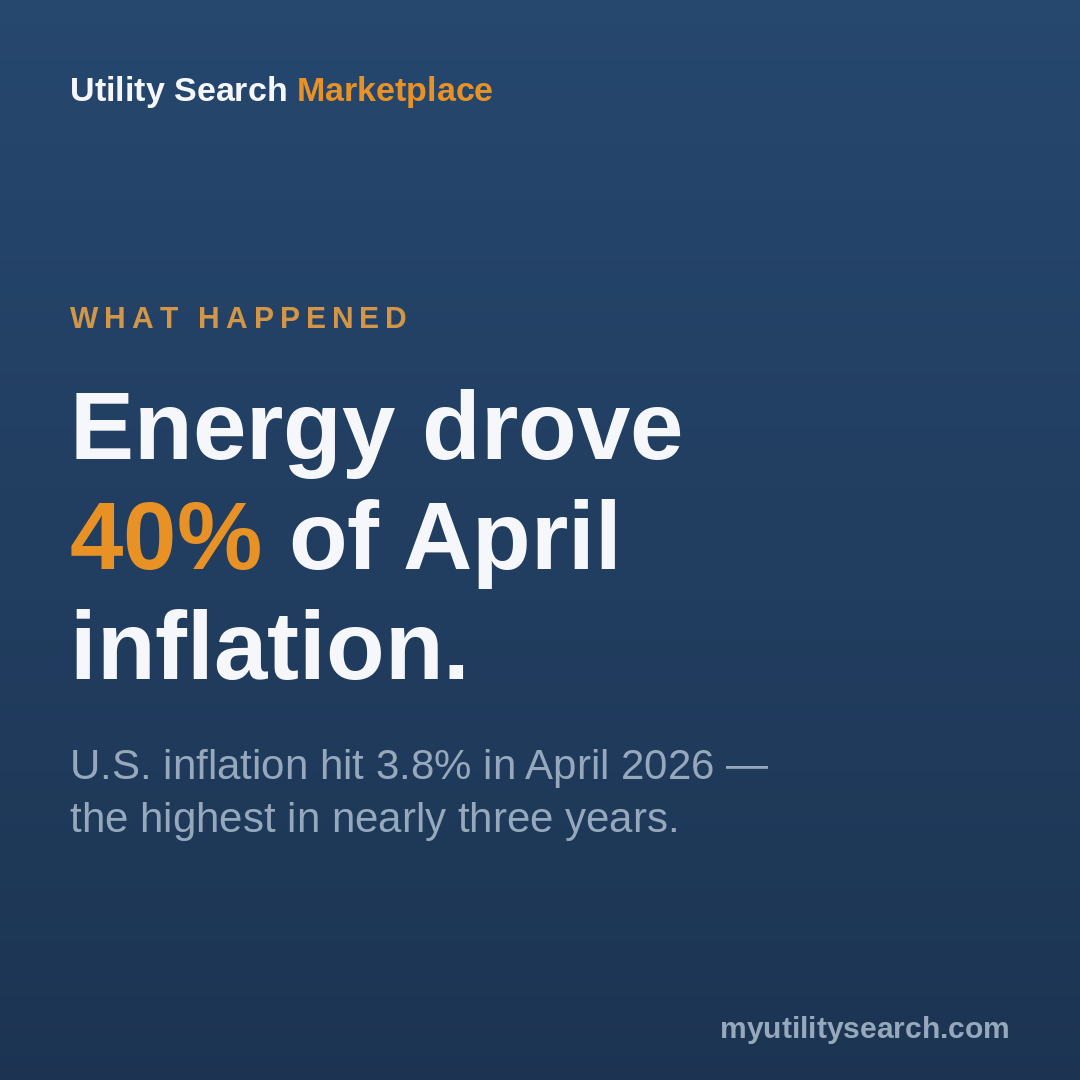
In April 2026, understanding why did my energy bill double in 2026 starts here: U.S. inflation hit 3.8% — the highest in nearly three years — and energy alone accounted for more than 40% of that increase. Electricity prices rose about 6% over the year, while the broader energy index (which includes gasoline and home heating fuels) climbed roughly 18%. In plain terms: nearly every form of energy a household buys got more expensive at once, and it happened fast. If you’ve been wondering why your energy bill is so high in 2026, these numbers are your answer — and they explain why the question is trending nationwide.
This matters because energy isn’t a line item you can skip. Unlike discretionary spending, you can’t simply stop heating, cooling, or powering your home — so when energy spikes, it hits every budget directly and there’s no easy way to opt out. That’s exactly why it’s worth knowing which parts you can influence.
Why is a war pushing up my electric bill?
The spike traces back to conflict near the Strait of Hormuz — one of the world’s most important oil shipping routes — which disrupted global oil supply and sent energy prices climbing across the board.
When oil supply is threatened, prices rise not just at the gas pump but across the energy system: fuel that power plants burn, heating oil, and the wholesale cost of electricity all move together. Those higher costs flow through to the rate you pay at home. So while the trigger is happening half a world away, the effect lands in your mailbox — and it stacks on top of the steady, separate climb in utility rates that was already underway before the conflict.
Two pressures, one bill — why did my energy bill double in 2026
Your 2026 energy bill is being squeezed from two directions at once: the slow, ongoing rise in regulated utility rates (driven by grid upgrades and surging data-center demand), and now a sharp, war-driven spike in fuel costs on top of it. The combination is why this year feels different from a normal rate increase.
How much is this really costing households?
A few percent may sound small, but Why did my energy bill double in 2026? Applied to a year of energy bills it adds up to real money — and that yearly figure is the reason it’s worth spending five minutes to act.
| If your monthly energy cost rises by… | That’s per year | What you can do about it |
|---|---|---|
| ~$8 / month | ~$96 / year | Shop a fixed supply rate below your default |
| ~$13 / month | ~$156 / year | Lock a rate before peak-summer demand |
| ~$20 / month | ~$240 / year | Compare all suppliers apples-to-apples |
These are illustrative figures; your actual change depends on your utility, your usage, and whether you’re on a default rate or a plan you already chose. The point isn’t the exact number — it’s that an increase you ignore quietly costs you for twelve straight months.
What can I actually control when energy prices spike?
You can’t lower the global price of oil, but you can control three things that directly shape your bill: your supply rate, the timing of when you lock it in, and the usage that’s genuinely within your power.
Here’s the honest, no-gimmicks way to lower your energy bill even when rates are rising:
- Shop your supplier rate — if you’re in a deregulated state. In states like Texas, Ohio, and many others, the supply (generation) portion of your bill is competitive. You can choose a supplier whose fixed rate beats your utility’s default and offset much of the increase.
- Lock a fixed rate before peak summer. With demand climbing into the hottest months and fuel costs elevated, a fixed-rate plan protects you from the next jump. Variable rates are exactly what you don’t want in a volatile year.
- Cut the usage you actually control. Thermostat setpoints, peak-hour heavy appliance use, and phantom loads are the levers that work. You don’t need to suffer through summer — small, consistent changes compound.
What’s shoppable and what isn’t
Your bill has two parts. Delivery (distribution) pays your utility to maintain the poles and wires — you can’t shop this, and it’s set by regulators. Supply (generation) pays for the electricity itself — in deregulated states, this part is yours to shop. The energy spike hits both, but the supply side is where you can fight back by switching.
Already reviewing your bills? Don’t stop at electricity
A nationwide energy spike is the natural moment to revisit every household expense. If why did my energy bill double in 2026 led you here, the same five-minute check that fixes your electricity rate can reveal savings on internet and home security too. Look at everything you pay for at home, not just power. The same households watching their electric bill climb this summer are often overpaying on internet — sitting on an expired promo rate or hidden equipment and data fees — and many have never priced home security at all. Sorting all three in one sitting is where the real monthly savings tend to add up. And if you heat or cook with gas, supplier choice may apply there too — Georgia’s natural gas market is the clearest example, where households shop gas suppliers the way Texans shop electricity.
The bottom line on why did my energy bill double in 2026: a combination of global conflict and long-term grid investment has pushed rates higher than they’ve been in years. If the question ‘why did my energy bill double in 2026’ brought you here, the best next move is a free comparison. That’s the whole idea behind Utility Search Marketplace: it’s the single place to set up and compare every home service — electricity, internet, and security — side by side, instead of chasing three different sites. While you’re locking in a better electric supply rate, it takes only a few extra minutes to see whether your internet and security are still competitive too.
Compare your real options in about 5 minutes — free.
myutilitysearch.com or call (844) 437-9527
100% free to you — providers pay us, never you. No SSN required to compare.
Paying Too Much for Electricity?
Rates change constantly, and loyalty rarely pays. Compare electricity plans available at your address — fixed-rate, variable, and green options, side by side.
Frequently asked questions
Why did my energy bill double in 2026?
Energy prices spiked in 2026 largely because a Middle East conflict near the Strait of Hormuz disrupted global oil supply, pushing up fuel, heating, and electricity costs. Energy accounted for more than 40% of April’s U.S. inflation, with electricity up about 6% over the year and the broader energy index up roughly 18%. If you’re still asking “why did my energy bill double in 2026” after reading this — this is the core reason.
Can I lower my electric bill if the increase is driven by a global event?
Yes. Even when the cause is global — one of the key reasons why did my energy bill double in 2026 — in deregulated states you control the supply portion of your bill. Comparing and switching to a fixed-rate supplier below your utility’s default can offset much of the increase, and it’s free to compare.
Will switching electricity suppliers interrupt my power?
No. Your utility still owns the lines, delivers your power, and handles outages and repairs. Switching only changes the supply charge on your bill — there’s no interruption and no new equipment.
Should I choose a fixed or variable rate during an energy spike?
In a volatile year, a fixed rate generally protects you better. A variable rate can rise with the next fuel-cost jump, while a fixed rate locks your supply price for the full term — which is exactly the protection you want heading into peak-demand summer.
Do I need to give my Social Security number to compare energy plans?
No. You can compare supply rates without an SSN. Comparing is free, and on Utility Search Marketplace the providers pay us — never you.
Sourcing note: Inflation and energy figures reflect the U.S. Bureau of Labor Statistics Consumer Price Index report for April 2026 (headline CPI 3.8% year over year; energy index accounting for over 40% of the monthly increase; electricity up about 6% year over year; total energy index up roughly 18% year over year), as widely reported in late May 2026. Dollar examples are illustrative; confirm your exact rate on your bill or with your utility.
Keep going
- Energy hub: how to compare electricity rates and switch suppliers
- Moving this summer? The Moving Day Utility Checklist
- How we make money (and why our service is free to you)
myutilitysearch.com · (844) 437-9527 · Free to you — providers pay us