Blog
What Uses the Most Electricity in Your Home? (2026)

Updated on August 17, 2026
Wondering what uses the most electricity in your home? It’s heating and cooling — your HVAC system and air conditioner account for about 52% of a typical home’s electricity use, more than everything else combined. Water heating is a distant second at roughly 18%, followed by lighting, laundry, and the refrigerator. Knowing what uses the most electricity is the key to lowering your bill: a few changes to the biggest users save far more than unplugging small gadgets. Here’s the full breakdown, based on U.S. Energy Information Administration data.
TL;DR
- #1 by far: heating & cooling — ~52% of home electricity use.
- #2: water heating — ~18%.
- The rest: lighting (~9%), laundry (~6%), fridge (~4%), TV/electronics (~4%), oven, dishwasher.
- Modern wild card: an EV can add 250–350 kWh/month — rivaling your AC.
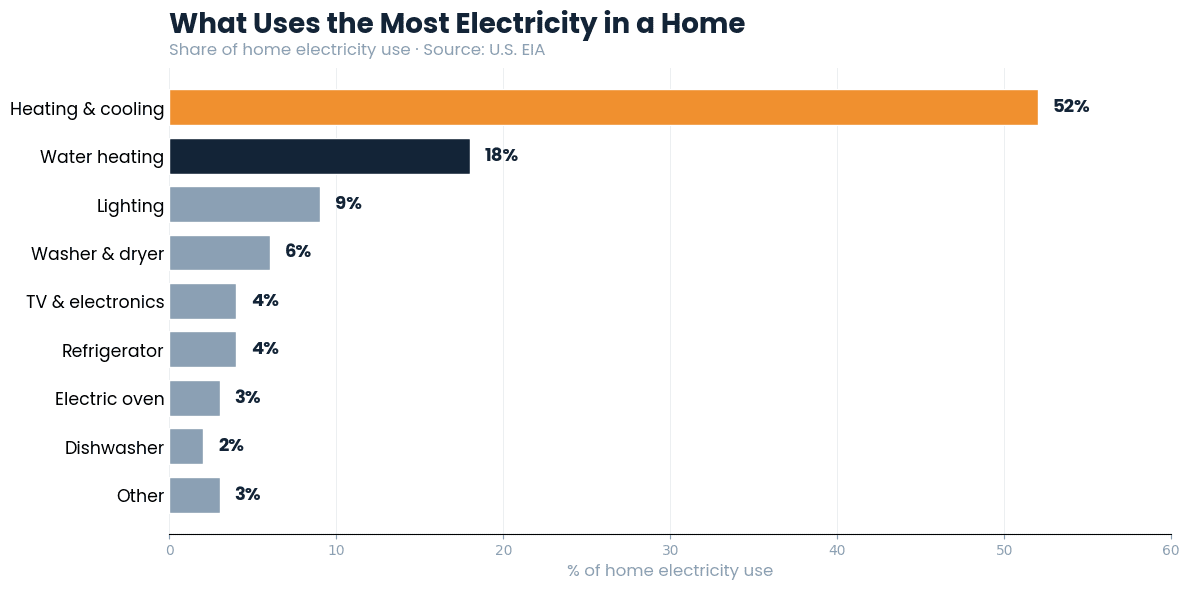
What uses the most electricity in a home?
Across a typical U.S. household — which uses about 899 kWh per month — heating and cooling is what uses the most electricity by a wide margin. Climate control runs long hours, draws heavy power, and scales with the weather, so it dominates the bill in both hot summers and cold winters. Everything else is secondary. That’s the single most useful fact for cutting costs: if you want a lower bill, start with the thermostat, not the phone chargers.
The full home electricity breakdown
Here’s what uses the most electricity in a typical home, by share of total use and approximate monthly kWh (on an ~899 kWh/month average):
| Category | % of electricity use | ~kWh / month |
|---|---|---|
| Heating & cooling (HVAC/AC) | ~52% | ~467 kWh |
| Water heating | ~18% | ~162 kWh |
| Lighting | ~9% | ~81 kWh |
| Washer & dryer | ~6% | ~54 kWh |
| TV & electronics | ~4% | ~36 kWh |
| Refrigerator & freezer | ~4% | ~36 kWh |
| Electric oven & range | ~3% | ~27 kWh |
| Dishwasher | ~2% | ~18 kWh |
| Other appliances & electronics | ~3% | ~27 kWh |
#1: Heating and cooling (~52%)
Your central AC, heat pump, or electric furnace is what uses the most electricity in nearly every home. A central air conditioner can pull 3,000–5,000 watts while running, and in a Texas or Southern summer it runs for hours a day. Because it’s tied to the weather, this is also the category with the most swing — which is exactly why a smart thermostat, a clean filter, and good insulation deliver the biggest savings of any home upgrade.
#2: Water heating (~18%)
An electric water heater is usually the second-largest load. It reheats a tank throughout the day to keep water hot, so it draws power even when no one’s using it. Lowering the thermostat to 120°F, insulating the tank, and shorter showers all trim this line item.
What about EV charging and modern loads?
The classic breakdown predates widespread electric vehicles, and an EV changes the picture. Charging a typical EV driven ~1,000 miles a month adds roughly 250–350 kWh — enough to rival or exceed your air conditioner as what uses the most electricity in your home. Heat pumps for heating, pool pumps, and home offices with multiple monitors also push usage up. If you’ve added any of these, your personal breakdown may look very different from the average.
How to cut what uses the most electricity
Target the big users first — that’s where the savings are:
- Tune your heating & cooling. A programmable/smart thermostat, a couple of degrees of setback, clean filters, and sealing leaks hit the 52% category directly.
- Tame the water heater. Set it to 120°F, add a tank blanket, and fix drips — easy wins on the #2 load.
- Shift and upgrade. Run the dryer and dishwasher off-peak, switch to LED lighting, and replace aging appliances with efficient models.
- Lower your rate. Efficiency cuts how much you use; in a deregulated state you can also cut the price per kWh by comparing electricity plans and locking a competitive fixed rate.
How to find your own biggest electricity users
The averages are a great starting point, but your home is unique. To see what uses the most electricity under your roof, check your utility’s online portal — many show usage by hour and day, so you can spot the AC’s summer spike or the water heater’s daily pattern. A $20–$30 plug-in energy monitor reveals what individual appliances draw, and a whole-home monitor tracks everything in real time. Comparing a summer bill to a spring one also isolates cooling: the difference is almost entirely your AC. Once you know your own top users, you can target them directly instead of guessing.
Cut the price side of your bill
Efficiency lowers how much you use. In a deregulated state, comparing plans lowers what you pay per kWh — enter your ZIP to see rates.
What uses the most electricity: FAQ
What uses the most electricity in a home?
Heating and cooling — your HVAC and air conditioning — use the most electricity, about 52% of a typical home’s total. It’s more than water heating, lighting, and appliances combined.
Does air conditioning use a lot of electricity?
Yes. A central AC can draw 3,000–5,000 watts and runs for hours in summer, making it the single biggest driver of what uses the most electricity in most homes and the top reason bills spike in hot months.
What is the second-biggest electricity user?
Water heating, at roughly 18% of home electricity use. An electric water heater reheats its tank around the clock, so it draws power even when you’re not using hot water.
Do appliances on standby use much electricity?
“Phantom” standby loads exist but are small — a few percent of the bill combined. They’re worth trimming, but they’re not what uses the most electricity; heating, cooling, and water heating dwarf them.
How much electricity does an EV use?
Charging an EV driven ~1,000 miles a month adds about 250–350 kWh, which can rival your air conditioner. For EV owners, charging is often what uses the most electricity in the home.
Does a refrigerator use a lot of electricity?
A modern refrigerator uses about 4% of home electricity — steady but modest. Older units use more, so replacing a 15+ year-old fridge with an efficient model can help.
What’s the fastest way to lower my electric bill?
Target the biggest users: adjust your thermostat, maintain your HVAC, and lower the water-heater temperature. In a deregulated state, also compare electricity plans to reduce your rate per kWh.
How many kWh does the average home use per month?
About 899 kWh per month (roughly 10,800 kWh a year), though it varies widely by home size, climate, and whether you have an EV or electric heating.
Keep going
- What is the average electric bill? By state & home size
- Texas electricity rates: compare by city & provider
- Cheapest electricity in Texas: how to find it
- Green energy plans: how renewable electricity works
- How to switch electricity providers in Texas
- Deregulated energy: which states let you choose
Reviewed by the Utility Search Marketplace team. Methodology: category shares are based on U.S. Energy Information Administration residential end-use data; monthly kWh are estimates on an ~899 kWh/month average and vary by home. Last updated July 2026.