Blog
What Happened to Pulse Power? Status, the NRG Move & Alternatives (2026)


Updated on September 28, 2026
6 min read
Pulse Power is no longer enrolling new customers. The Texas retailer was acquired by Shell Energy in 2021; Shell then exited the Texas retail electricity business in 2024 and sold its customers to NRG Energy. If you were a Pulse Power customer, your account is now served under NRG and you likely receive a bill from Discount Power. We re-verified on September 4, 2026: pulsepowertexas.com states plainly that “Pulse Power is no longer accepting new enrollments,” its customer service has been cut to weekday business hours (8 a.m.–5 p.m. Mon–Fri), and the brand lists zero plans on Power to Choose.

TL;DR
• Pulse Power is not signing up new customers anymore — its own site says so, verified September 4, 2026.
• Shell Energy acquired Pulse Power in 2021, then exited Texas retail in 2024.
• NRG Energy took over the customers; billing moved to Discount Power (an NRG brand).
• To shop a new Texas plan, compare active providers below.
What happened to Pulse Power?
Pulse Power built a following in Texas with straightforward fixed-rate plans, but ownership changed twice. Shell Energy bought Pulse Power in 2021 as part of its U.S. retail push. When Shell decided to exit the Texas retail electricity market in 2024, it sold those customers to NRG Energy, the parent of Reliant, Green Mountain, Cirro, and Discount Power. As a result, the Pulse Power brand is winding down and no longer marketed to new shoppers.

Is Pulse Power going out of business?
As a retail storefront, effectively yes — but in an orderly wind-down, not a collapse. The signals, all checked on September 4, 2026: pulsepowertexas.com is closed to new enrollments in its own words, customer support has shrunk to weekday business hours, and Pulse lists no plans on Power to Choose (we confirmed its absence there on August 30 as well). At the same time, nothing about this is a bankruptcy: the company still holds PUCT certificate #10259, the payment portal still works, and existing customers keep their electricity without interruption because the book is served under NRG’s Discount Power. If you liked Pulse’s value pricing, Discount Power is the closest living relative — or compare the whole market at your address below.
Why am I getting a bill from Discount Power?
Because NRG moved former Pulse Power accounts onto Discount Power, one of its Texas retail brands. Your service didn’t get interrupted — the company sending your bill changed. Review your current plan’s rate and term, since a transferred plan may not be the cheapest option available to you now.
Best alternatives to Pulse Power
If you’re shopping a new Texas electricity plan, compare active, established providers on price at your typical usage. Strong options include Reliant, TXU Energy, and Gexa Energy, all of which offer fixed-rate plans you can enroll in today.
Compare internet, energy & home security at your address
Verify any Texas plan against the official sources rather than a marketing page. Power to Choose is the comparison site operated by the Public Utility Commission of Texas, and the PUCT itself publishes complaint records and certification status for retail electric providers. Always read the Electricity Facts Label, which states the average price at 500, 1,000 and 2,000 kWh — the advertised rate usually reflects only one of those usage levels.
Pulse Power for business: small commercial under 50 kW and larger accounts
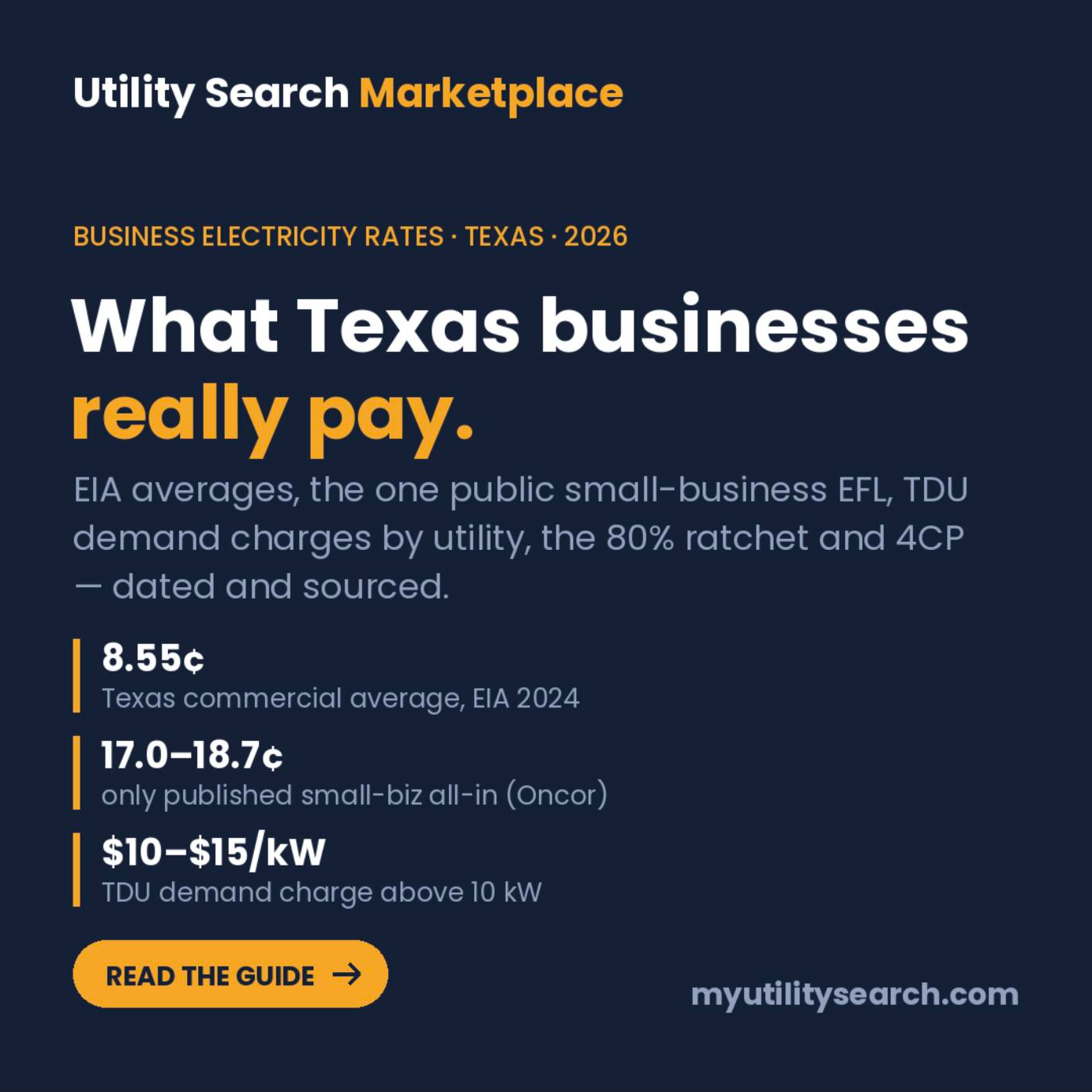
Pulse Power (PUCT license #10259) sells business electricity in two tracks: small commercial, for customers whose peak demand across all facilities was under 50 kW in the last 12 months, and a standard commercial agreement for larger loads. As of September 28, 2026 its published small-commercial agreement summary shows a $0.00 base charge per billing cycle, TDU delivery, PUCT assessments, ERCOT fees and taxes passed through, deposits set by business credit and capped at the greater of two months’ estimated billing or one-fifth of a year, consolidated billing for multiple locations, and an early-termination fee tied to annual usage: $50 per remaining month under 100,000 kWh, $100 from 100,000 to 249,999 kWh and $200 above 250,000 kWh (agreement version 090119TX). Rates are quoted through the business form or at 833-785-7797; Pulse also publishes its small-commercial holdover rates, which apply after a contract expires. Hold the quote against Champion’s public 9.7¢ energy charge on Oncor.
| Business product | Price | Terms |
|---|---|---|
| Small commercial (< 50 kW peak demand) | Quoted; 833-785-7797 | $0 base charge; ETF $50/$100/$200 per remaining month by annual kWh; deposits by credit |
| Commercial (larger loads) | Quoted | Commercial Energy Services Agreement; consolidated billing |
| Small-commercial holdover rates | Published on pulsepowertexas.com | Apply after expiry — renew before the term ends |
Source: the company’s own business pages (and NRG Business’s Texas small-commercial terms of service, REP #10011, for the NRG brands; Pulse Power small-commercial agreement summary Ver 090119TX), read September 28, 2026. Commercial electricity is priced per meter; treat these as the published starting points.
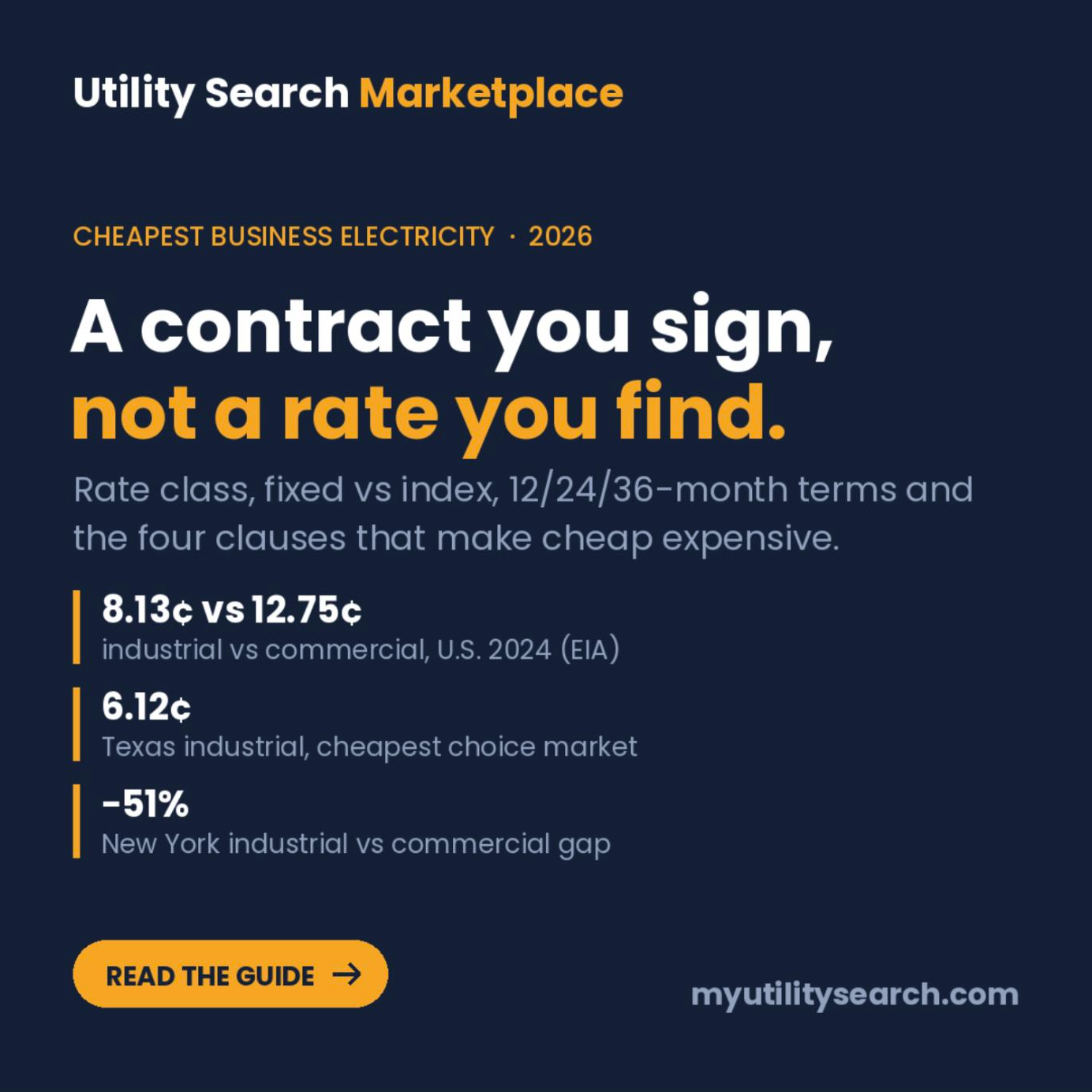
What a commercial contract adds over the residential plan on this page: a price built from your meter’s 12-month usage and load factor rather than a published rate card, term choices from 12 to 36 months or longer, a base charge and pass-through structure that differ from the residential EFL, and exit terms that scale with the months remaining. Compare every business quote as an all-in price at your real usage — the method is in our cheapest business electricity guide and the supplier field is compared in business electricity providers.
Business shopper? Compare business electricity providers, read how the cheapest business contracts are built, or talk to a commercial specialist.
Frequently asked questions
Is Pulse Power still in business?
Pulse Power is no longer enrolling new customers — its own website says so (verified September 4, 2026) and support now runs weekday hours only. Its accounts were transferred to NRG Energy after Shell Energy exited the Texas retail market in 2024, and it still holds PUCT certificate #10259.
Who owns Pulse Power now?
Pulse Power’s customers are served under NRG Energy, with billing handled through NRG’s Discount Power brand. Shell Energy previously owned Pulse Power from 2021 to 2024.
What happened to my Pulse Power plan?
Your service continued under NRG, but the billing brand changed to Discount Power. It’s worth comparing your transferred rate against current market plans to make sure you’re not overpaying.
Why did I get a bill from Discount Power instead of Pulse Power?
NRG placed former Pulse Power accounts on its Discount Power brand after acquiring the customer book. Same power, different retailer name on the bill.
What are the best alternatives to Pulse Power?
Compare active Texas retailers like Reliant, TXU Energy, and Gexa Energy on the all-in price at your typical monthly usage before you switch.
Does Pulse Power offer business electricity?
Yes. Pulse Power sells small-commercial electricity for businesses under 50 kW peak demand and standard commercial agreements for larger loads in Texas, quoted at 833-785-7797 as of September 28, 2026. Its published small-commercial terms show a $0 base charge, pass-through delivery and an early-termination fee of $50 to $200 per remaining month depending on annual usage.
Compare internet, energy & home security at your address
Keep going
- NRG Energy: every brand it owns — the parent company that now serves former Pulse Power customers, from Reliant to Vivint.
- Discount Power review — the NRG brand where Pulse Power accounts landed after the transfer.
- Reliant Energy review — NRG’s flagship Texas retailer if you want to stay in the family.
- TXU Energy review — live rates at 2,000 kWh and the fine print behind the teaser plans.
- Gexa Energy review — a non-NRG alternative worth pricing before you commit.
- Cheapest electricity in Texas — how to compare plans at your actual usage, not the advertised rate.
- How to switch electricity providers in Texas — the step-by-step if you’re moving on from a wind-down brand.