Blog
How Starlink Took Over the World: Government, Airlines & 100+ Countries

A Free Speech Friday deep-dive from Utility Search Marketplace · 100% free to you — providers pay us, never you.
As SpaceX heads into what is shaping up to be the largest IPO in history, it is worth stepping back to understand just how far Starlink has spread. In a few short years it has gone from a novel idea — beaming internet down from low-Earth orbit — to a global network woven into governments, militaries, airlines, and homes across more than 100 countries. This is a plain-English look at how Starlink built that reach, the deals behind it, and what the whole story means for everyday internet shoppers back on the ground. No stock tips, no hype — just the map of how one satellite network got everywhere.
The Backdrop: A Record-Setting IPO
SpaceX is preparing a public offering that targets a valuation around $1.75 trillion — a scale that would put it among the most valuable companies ever to list. Starlink is the engine behind that number, having grown to more than 10 million subscribers worldwide. The company has also signed eye-catching enterprise deals — including a multi-year agreement to provide compute capacity to Google worth roughly $920 million per month — that underline how far its ambitions now stretch beyond internet alone. But the heart of the story is connectivity, and that is where its reach is most striking.
Government and Defense: From Rural Agencies to the Space Force
Starlink has become deeply embedded in the public sector. On the civilian side, it offers priority service plans for federal, state, local, and international government agencies — providing both fixed-site and mobile connectivity for operations and emergency communications.
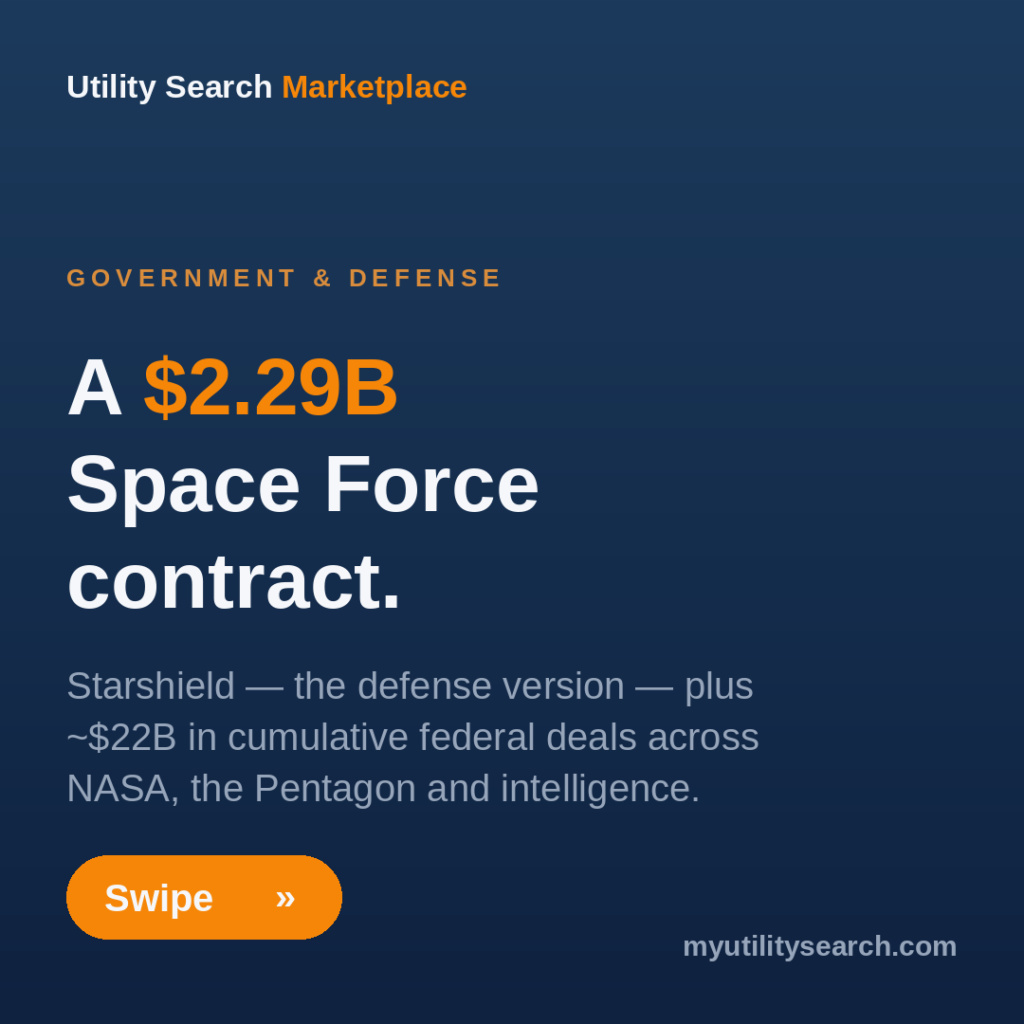
On the defense side, SpaceX runs a separate, hardened network called Starshield, built on Starlink technology but operated for national-security use. In May 2026 the U.S. Space Force awarded SpaceX a $2.29 billion contract to build the backbone of a next-generation military data network on the Starshield platform — one of the largest single defense awards the company has secured. SpaceX leadership has put the company’s cumulative federal contract value in the range of $22 billion across NASA, the Pentagon, the Space Force, and intelligence agencies.
The takeaway for a general reader: the same orbital network that might connect a rural farmhouse is also considered critical infrastructure by the U.S. government. That dual role is a big part of why Starlink is treated as a strategic asset, not just a consumer product.
Airlines: Free In-Flight Wi-Fi on 40+ Carriers
Perhaps the most visible expansion for everyday travelers is in the sky. Starlink in-flight Wi-Fi has been adopted by around 40 airlines worldwide, covering well over a thousand aircraft, with rollouts accelerating through 2026:
- United Airlines is equipping its entire 1,000-plus fleet, with 300+ planes already live and 800+ targeted by year-end — free for its loyalty members.
- American Airlines and Southwest have both selected Starlink for hundreds of aircraft, with Southwest launching in summer 2026.
- Lufthansa Group (Lufthansa, SWISS, Austrian, Brussels, ITA and others) is rolling Starlink across roughly 850 aircraft from the second half of 2026, free for frequent flyers.
- IAG (British Airways, Iberia, Aer Lingus, Vueling, LEVEL) is equipping 500+ aircraft starting in early 2026.
- Global flag carriers including Emirates, Qatar Airways, Air New Zealand, Korean Air, and WestJet have signed on, often offering the service free to passengers.
Because Starlink’s satellites sit far closer to Earth than traditional in-flight systems, the connection is fast and low-latency enough to stream and video-call even over oceans — a genuine leap over the slow, expensive Wi-Fi travelers grew used to.
100+ Countries and a Tiered Global Pricing Strategy

Starlink is now active in well over 100 countries across every continent, and its pricing reflects a deliberate market-by-market strategy:
- United States: roughly $55–$130 per month depending on plan and region.
- Developing regions: aggressive promotions as low as $25–$35 per month in markets like Nigeria and Botswana, often with discounted hardware, to win first-mover share.
- Other markets: priced to local conditions — for example, around $85 per month in Japan.
This tiered approach lets Starlink expand rural and underserved connectivity while competing hard against rivals like Viasat and Amazon’s satellite service, which is now entering the market. The result is a network that reaches places traditional providers never bothered to wire.
What Starlink Means Back Home
Starlink’s global story is a useful reminder of how fast the internet landscape is changing — and how much it now varies by exactly where you stand. The satellite network that connects an airliner over the Atlantic or a government field office is the same category of option a rural household might weigh against fiber or cable. More competition in orbit and on the ground generally means better choices and pricing for consumers over time.
For official details on Starlink’s service tiers, you can read the company’s own Starlink support documentation, and U.S. coverage and licensing details are filed publicly with the FCC.
And if all this has you wondering what’s actually available where you live — satellite, fiber, cable, or 5G home internet — you can always compare the providers serving your address for free. No SSN, no pressure. Just the lay of the land.
Is your plan keeping up?
If your results are lower than you’re paying for, you may have faster options at your address. Compare internet plans available where you live — fiber, cable, and 5G, side by side.
Frequently Asked Questions
How many countries is Starlink available in?
Starlink is active in more than 100 countries across every continent, with availability and pricing varying by market.
Which airlines have Starlink Wi-Fi?
Around 40 airlines have adopted Starlink, including United, American, Southwest, Lufthansa Group, IAG (British Airways, Iberia, Aer Lingus), Emirates, Qatar Airways, and more — often offering it free to loyalty members.
What is the difference between Starlink and Starshield?
Starlink is the commercial satellite internet service for consumers and businesses. Starshield is a separate, government-operated network built on the same technology for national-security and defense use.
Is Starlink involved in the SpaceX IPO?
Yes — Starlink is the primary revenue driver behind SpaceX, and its subscriber and contract growth is central to the company’s record-setting IPO valuation.
Does Starlink work for home internet?
Yes. Starlink offers residential plans and is often the best option for rural or underserved homes, though wired fiber usually wins on price and speed where it is available. Comparing options at your address is the only way to know.