






Blog
Best Xfinity Internet Plans 2026: Pricing, Speeds & Review


Updated on September 17, 2026
By the myutilitysearch.com editorial team · Last updated: September 1, 2026
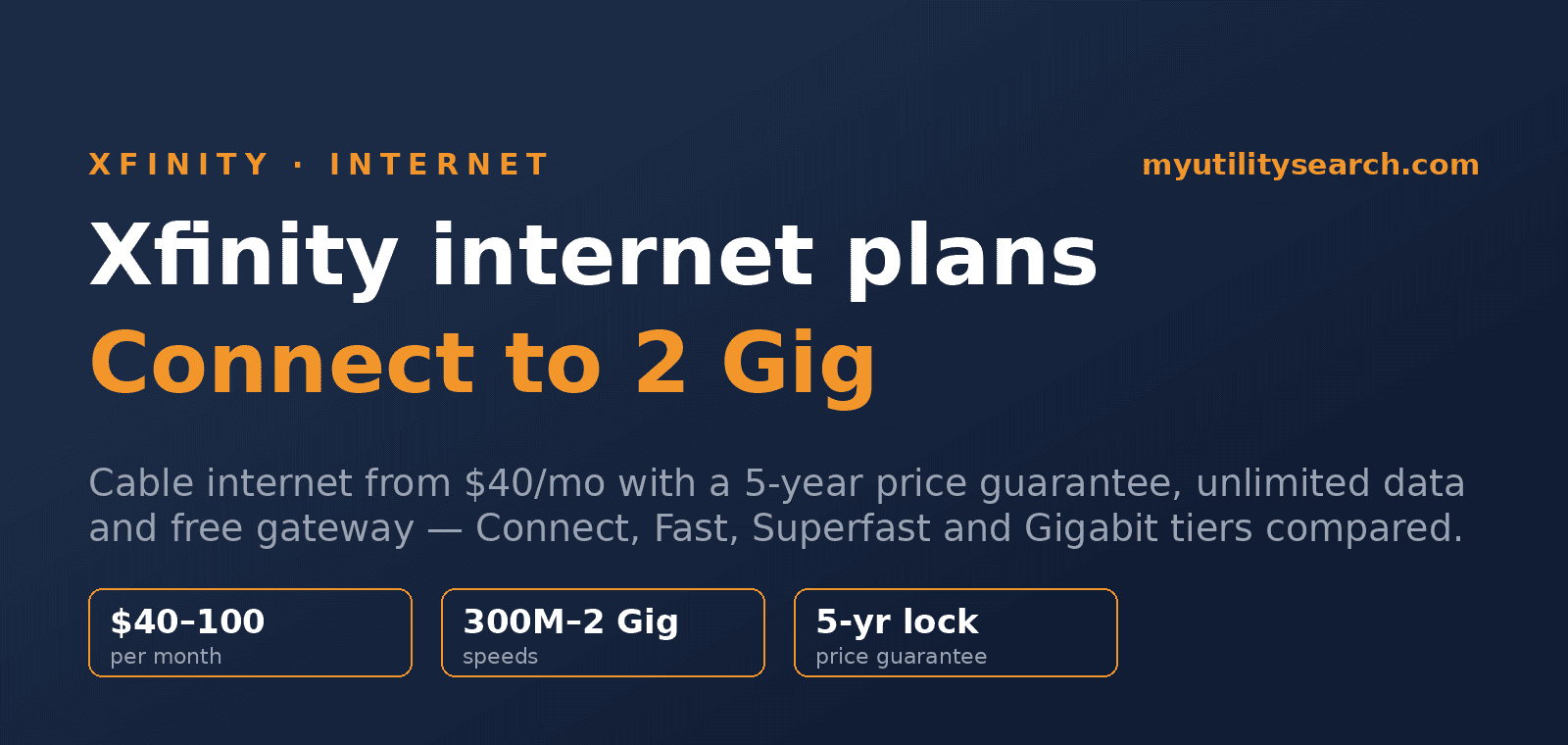
The best Xfinity internet plan for most homes is the 1 Gig tier at $50/mo, locked for 5 years — on a live Houston quote (September 1, 2026) it costs just $5/mo more than 500 Mbps and includes Peacock Premium for 2+ years. Xfinity internet plans start at $40/mo for 300 Mbps and run to $100/mo for 1.2 Gig (sold as 2 Gig in upgraded markets), all with the 5-year price guarantee, unlimited data and the Wi-Fi gateway included. Below we compare the full Xfinity internet plans lineup, explain which speed you actually need, and lay out where cable makes sense versus fiber — plus the fine print on the price guarantee.
Xfinity internet plans and pricing (2026)
Xfinity sells a tiered cable lineup, and pricing varies by region (Xfinity’s Northeast, Central, and West divisions price differently). These are representative 2026 rates — always confirm the offer at your address:
| Plan | Locked price (5 years) | Regular rate | Best for |
|---|---|---|---|
| 300 Mbps | $40/mo | $80/mo | 1-3 devices, light use |
| 500 Mbps | $45/mo | $95/mo | Most households on a budget |
| 1 Gig | $50/mo | $110/mo | The value pick — $5 over 500 Mbps, Peacock Premium 2+ years included |
| 1.2 Gig | $100/mo | $140/mo | Power users, big smart homes (Peacock included) |
Prices pulled from a live Xfinity quote for a Houston, TX address on September 1, 2026. Every tier includes unlimited data, the Wi-Fi gateway and Xfinity Cybersecure; advertised rates require autopay from a bank account plus paperless billing, taxes and fees extra. The current offer window is posted through September 8, 2026 — a rolling deadline Comcast keeps extending. Exact tiers vary by address: upgraded DOCSIS 4.0 markets sell 2 Gig where Houston shows 1.2 Gig.
The headline change for 2026 is the 5-year price guarantee: on qualifying Xfinity internet plans, Xfinity locks your rate for a full 60 months with no annual contract and unlimited data included. On the Houston quote, the regular rates behind those locks run $80–$140/mo, so the lock is worth $30–$60 a month from the first bill. That directly answers cable’s oldest complaint — the promo rate that jumps after 12 months. Higher tiers also bundle perks like Disney+, Hulu, or Peacock for a set period, plus a year of Xfinity Mobile on select plans.
Which Xfinity plan is best for you?
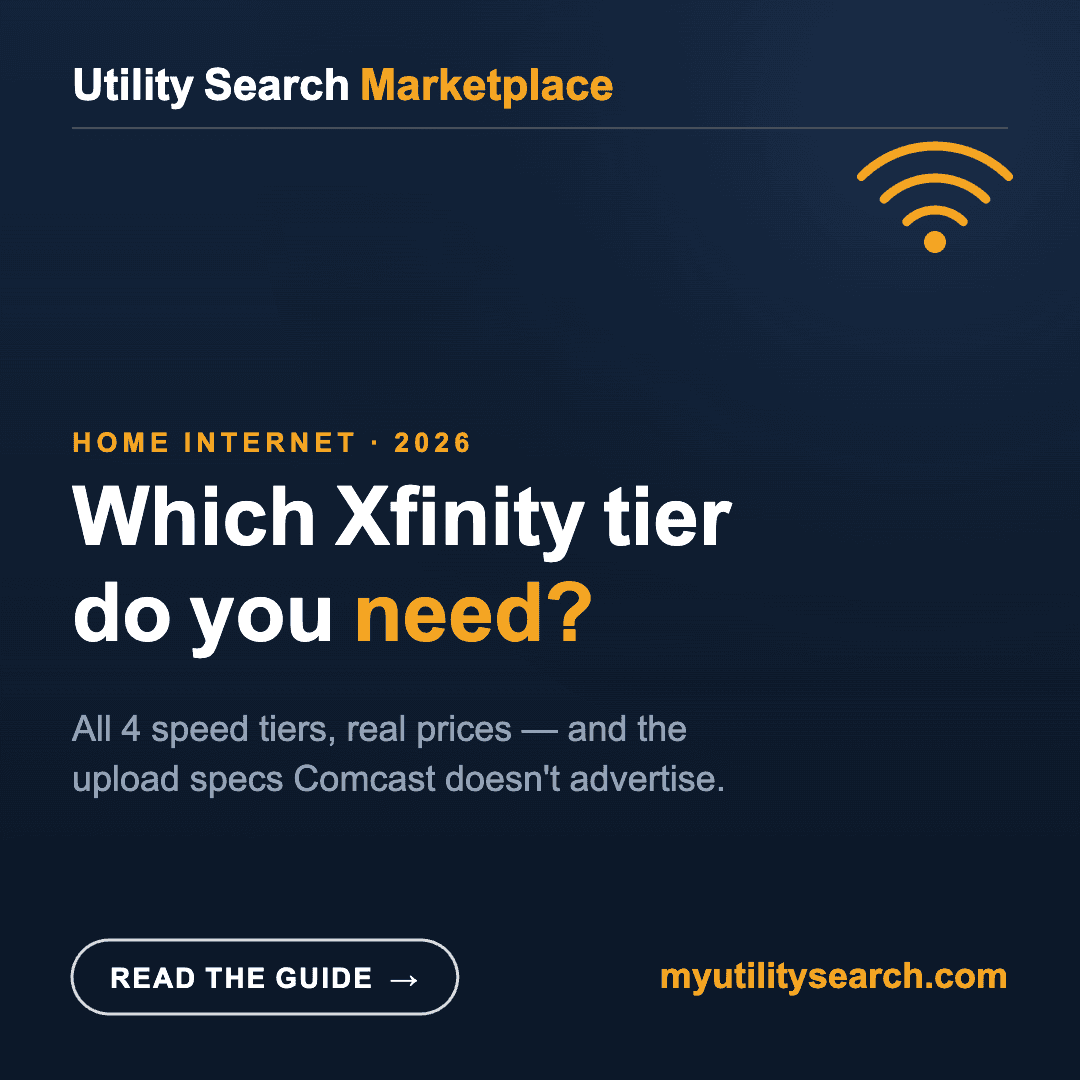
Match the tier to your household. (Xfinity is phasing in speed-based names at checkout — the legacy tier names below still appear on bills and in many markets; use the table above for current locked pricing.) Connect (300 Mbps) is fine for one or two people streaming and browsing. Fast (500 Mbps) is the sweet spot for most families, with headroom for 4K streaming on several screens plus video calls. Superfast (800 Mbps) and Gigabit (1,000 Mbps) suit larger households, heavy gamers, and homes with many connected devices, while the 2 Gig tier is more than almost anyone needs. One thing to weigh across all Xfinity internet plans: like most cable, upload speeds are far lower than download — typically 10-35 Mbps — so if you upload large files or stream out regularly, factor that in.
Stat: Xfinity’s 2026 five-year price guarantee locks your rate for 60 months — five times longer than the typical 12-month cable promo before prices jump.
Which Xfinity speed tier for your household size?
For most households the answer is simple: 1–2 people need Connect (300 Mbps), 3–4 people need Fast (500 Mbps), and anything bigger — or any home with two remote workers — is happier on Superfast (800 Mbps) or Gigabit. Match the tier to simultaneous use, not total devices:
| Household | Recommended tier | Why |
|---|---|---|
| 1–2 people, streaming + browsing | Connect (300 Mbps) | Covers two 4K streams and calls with headroom |
| 3–4 people, mixed use | Fast (500 Mbps) | The value pick — several screens + video calls |
| 4–6 people, or 2+ remote workers | Superfast (800 Mbps) | No slowdowns when meetings and streams overlap |
| 6+ people, big smart home | Gigabit (1,000 Mbps) | Dozens of devices without congestion |
| Creators / power users | Gigabit Extra–2 Gig | Only worth it for constant large transfers |
Xfinity for apartments, renters, and small households
For apartments and rentals, Connect (300 Mbps) or Fast (500 Mbps) with the free self-install kit is the play — no technician visit, no drilling, no annual contract on the 5-year-guarantee plans, so moving out doesn’t trigger a termination fee. Xfinity is already wired into most large apartment buildings in its footprint, which makes activation same-day in many cases. If you move within Xfinity’s coverage, the plan transfers with you. Renters who move often can also weigh prepaid home internet or 5G home internet as commitment-free alternatives.
Xfinity for remote work, students, and gaming
Remote workers should treat 500 Mbps as the floor and watch uploads, not downloads — like most cable, Xfinity uploads run roughly 10–35 Mbps, enough for video calls but tight for constant large-file uploads; two or more remote workers in one home are happier on Superfast (800 Mbps). For gaming, any tier from Fast up delivers the bandwidth — what matters is a wired connection and stable latency, and Gigabit mainly buys faster game downloads, not lower ping. For students, Connect covers a shared apartment; see our full guide to the best internet for college students.
Xfinity data caps vs T-Mobile and Verizon home internet
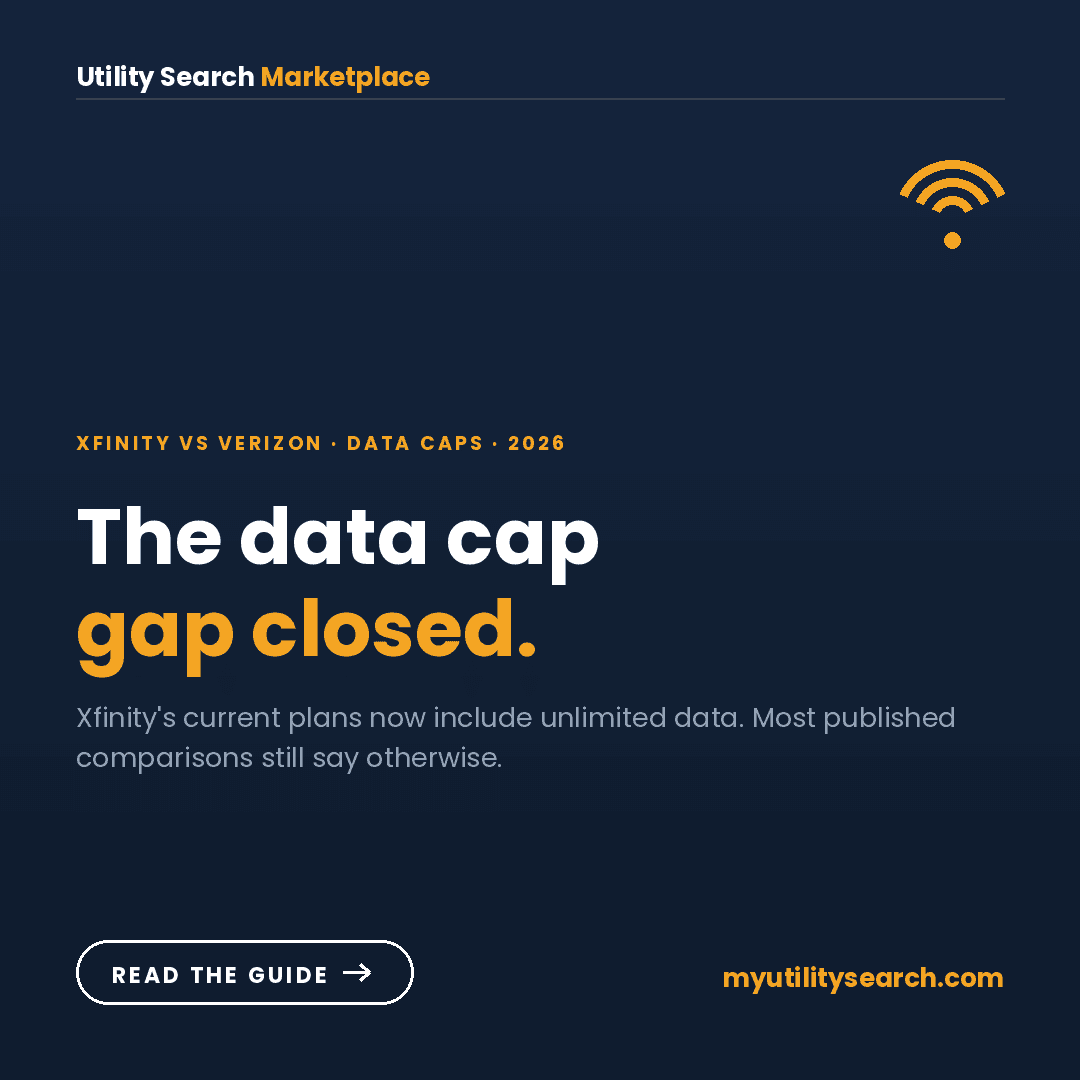
On Xfinity’s 2026 five-year-guarantee plans, unlimited data is included — the old 1.2 TB cap applies mainly to legacy plans in Central and West markets (Northeast markets have historically had no cap). T-Mobile 5G Home Internet and Verizon 5G Home Internet advertise no data caps, but both can slow speeds during network congestion because home internet traffic is deprioritized behind mobile phones. Cable doesn’t deprioritize — the trade is a possible cap on older plans vs. possible slowdowns at peak hours on 5G. Full breakdown: internet data caps and overage fees explained.
Xfinity vs. fiber internet
Cable and fiber are the two most common wired options. Here is how Xfinity compares to typical fiber service:
| Feature | Xfinity (cable) | Typical fiber |
|---|---|---|
| Download speed | 300 Mbps-2 Gbps | 300 Mbps-5 Gbps |
| Upload speed | 10-35 Mbps (most tiers) | Symmetrical |
| Availability | Very wide | Fiber footprint only |
| Price lock | 5-year guarantee (2026) | Varies by provider |
| Data caps | Unlimited on qualifying plans | None |
Xfinity’s big advantage is reach — cable is available almost everywhere, while fiber is not. Where fiber is offered, it usually wins on upload speed. But with the new price guarantee and unlimited data, the Xfinity internet plans are more competitive against fiber than cable has been in years.
Xfinity contracts, data caps, and the price guarantee
For 2026, qualifying Xfinity internet plans come with no annual contract, unlimited data, and the five-year price lock — a meaningful shift from Xfinity’s older plans, which often carried a 1.2 TB data cap and a promo rate that rose after a year. The included xFi Gateway handles modem and router duties, though you can use your own equipment to skip any rental fee. Self-installation is available on most plans, and professional installation is offered for a fee. As always, the exact tiers, price, and terms depend on your address and Xfinity region, so an address check is the only way to confirm what you will actually pay.
Is Xfinity internet worth it?
For a lot of homes, yes — especially where fiber is not available. Xfinity delivers fast download speeds, very wide availability, and, new for 2026, a genuine five-year price lock with unlimited data that removes cable’s biggest historical downsides. The trade-offs are lower upload speeds than fiber and pricing that still varies quite a bit by region. If AT&T Fiber or another fiber provider serves your address, compare the two on upload speed and price. If not, the Xfinity internet plans — particularly 1 Gig at its locked $50 rate — are among the most practical, widely available choices you can get.
What real customers say about Xfinity
Xfinity’s satisfaction scores sit below its fiber rivals. J.D. Power scored it 60 out of 100 in its 2025 residential internet study — versus the mid-80s for top fiber providers — and the ACSI places Xfinity mid-pack, around the ISP average. The themes behind that number:
What customers praise:
- Very wide availability — often the fastest option actually offered at an address. Our Xfinity internet review covers coverage and equipment.
- Fast download speeds across every tier.
- The new 2026 five-year price guarantee and unlimited data, which directly address old complaints. See how it stacks up in our internet price lock plans comparison.
Common gripes:
- The historical 1.2 TB data cap and $10-35/mo overage fees (now waived on qualifying unlimited plans).
- Equipment and modem-rental fees, and bills padded with add-ons.
- Promo pricing that jumped after 12 months, plus peak-hour slowdowns in busy areas.
Many of these complaints predate 2026 — the price guarantee and unlimited data on qualifying Xfinity internet plans address the two biggest ones, so confirm your plan includes them.
Compare internet, energy & home security at your address
Xfinity pricing is regional — enter your ZIP or address to see the exact Xfinity plans available to you and compare them against every other provider, side by side on price and speed.
Compare providers at my address →
Frequently asked questions about Xfinity internet plans
How much do Xfinity internet plans cost?
Xfinity internet plans run $40/mo (300 Mbps) to $100/mo (1.2 Gig), each locked for five years — a live Houston quote on September 1, 2026 priced 500 Mbps at $45/mo and 1 Gig at $50/mo. Prices and top tiers vary by address.
Do Xfinity internet plans have data caps or contracts?
Qualifying 2026 Xfinity plans include unlimited data with no annual contract and a five-year price guarantee. Some older or lower-tier plans may still carry a 1.2 TB cap, so confirm at checkout.
What is the best Xfinity internet plan?
For most households, 1 Gig at $50/mo locked for five years is the best value — just $5/mo more than 500 Mbps on a live September 2026 quote, with Peacock Premium included. Choose 300 Mbps for light use or 1.2 Gig for heavy, multi-device homes.
Is Xfinity better than fiber?
Xfinity has much wider availability, but fiber usually offers faster, symmetrical uploads. Where fiber is available, compare both; where it is not, Xfinity is often the best wired option.
Does Xfinity have a price guarantee?
Yes. In 2026 Xfinity introduced a five-year price guarantee on qualifying plans, locking your monthly rate for 60 months with no annual contract. The current offer window is posted through September 8, 2026 — a rolling deadline Comcast keeps extending.
Does Xfinity raise the price after 12 months?
Not on the 2026 five-year-guarantee plans — the rate is locked for 60 months with no annual contract. Legacy promo plans still step up after the promo term, which is the increase longtime customers see; moving to a current guarantee plan is the fix.
Which Xfinity plan is best for multiple remote workers?
Superfast (800 Mbps) is the sweet spot for two or more remote workers — enough downstream for overlapping meetings and streams, with Gigabit worth it only for constant large file transfers. Uploads are the real constraint on cable, so spread heavy uploads outside call hours.
Can I lock my Xfinity rate without signing a contract?
Yes — the five-year price guarantee applies without an annual contract on qualifying plans, so you keep month-to-month flexibility (no early-termination fee) while the price stays fixed for 60 months.
Compare internet, energy & home security at your address
Keep going
- Best AT&T Fiber plans — how fiber pricing and speeds compare to Xfinity.
- Best fiber internet near me — check whether fiber reaches your address.
- Best 5G home internet — the wireless alternative to cable.
- Best internet for working from home — why upload speed matters.
- Best cheap internet — the lowest-price plans from every provider.
- Do you actually need 1 gig internet?
- Internet providers in Denver compared
- Internet providers in Saint Paul compared
- Xfinity internet speed tiers explained — how much speed your household actually needs
Methodology: pricing and speeds are compiled from Xfinity’s published plans as of July 2026 and vary by region, division, and promotion. Always confirm the current offer and terms at your address before ordering.



One thought on “Best Xfinity Internet Plans 2026: Pricing, Speeds & Review”