Blog
SpaceX Moon Crash 2026: What It Means for Your Home Internet


On August 5, 2026, a discarded SpaceX Falcon 9 upper stage slammed into the Moon near Einstein Crater at about 5,400 mph, carving a fresh crater and posing zero risk to Earth. The SpaceX moon crash matters to your household for one reason: the same company runs Starlink, the satellite internet service that is now a real home-internet option for millions of U.S. addresses.
What actually happened in the SpaceX moon crash?
A spent SpaceX Falcon 9 second stage struck the Moon at roughly 2:35 a.m. EDT on Wednesday, August 5, 2026, near the Moon’s western limb close to Einstein Crater. The stage was left over from the Falcon 9 launched on January 15, 2025, which carried two commercial lunar landers — Firefly Aerospace’s Blue Ghost and Japan-based ispace’s Resilience. After releasing the landers, the upper stage drifted for about 18 months until solar pressure and gravity bent its path into the Moon.
Because the Moon has no atmosphere, nothing burned up on the way in — it struck the surface intact. The impact flash was too faint to see from Earth with the naked eye, but NASA’s Lunar Reconnaissance Orbiter is set to photograph the site before and after, and South Korea’s Danuri orbiter was positioned to observe. The trajectory was first calculated by astronomer Bill Gray of Project Pluto, who tracks deep-space debris. Roughly 3,000 human-made objects now litter the lunar surface, weighing a combined 209 tons — a reminder that the SpaceX moon crash is a space-junk story, not a mission gone wrong.
Is this the same SpaceX behind Starlink?
Yes. SpaceX — Elon Musk’s rocket company — is the same business that owns and operates Starlink. The Falcon 9 rockets that make headlines for Moon crashes and astronaut launches are the same rockets that carry Starlink internet satellites into low Earth orbit. So while the SpaceX moon crash is a space-debris headline, the company’s day-to-day business is increasingly about beaming internet down to homes.
What a rocket hitting the Moon has to do with your internet
More than it looks. The same low-Earth-orbit fleet that SpaceX launches on Falcon 9 rockets is what powers Starlink, and Starlink has quietly become one of the fastest-growing internet providers in the country. That means SpaceX is not just a space company in the news — it is a genuine option on your internet shopping list, especially if you live somewhere the big cable and fiber companies skipped.
If your address has fiber or cable, those are usually cheaper and faster. But if you are rural, semi-rural, or stuck with one slow provider, Starlink can be the difference between working broadband and none at all. That is the practical takeaway from the SpaceX moon crash: the company making space headlines might also be the one that finally gets your home online.
How much does Starlink home internet cost in 2026?
Starlink residential plans start around $50–$55 per month and scale up with speed and local congestion. Equipment is a one-time hardware purchase or a monthly rental.
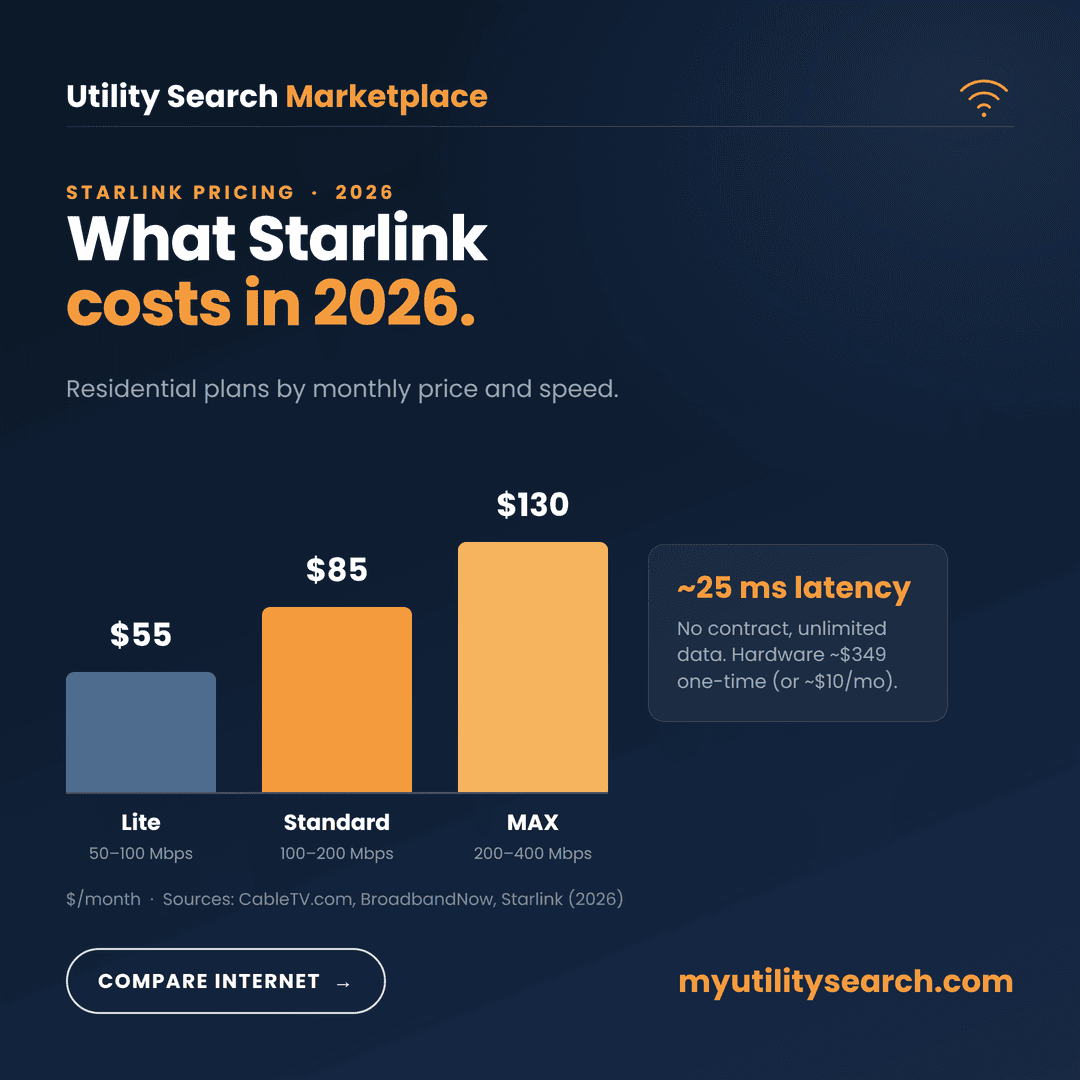
Prices do move — Starlink has adjusted rates in congested markets — so confirm the current number for your address before you commit. We track the changes in our Starlink price increase for 2026 breakdown.
Is Starlink worth it for your home?
Starlink is worth it if you are rural or have no fiber or cable option — at roughly $50–$130/month it costs more than most wired plans, but it beats having no real broadband. For a city or suburban address where fiber or cable is available, a wired plan is usually cheaper and faster, so Starlink is the backup, not the first choice.
The honest way to decide is to compare Starlink against what is actually wired to your street. Fixed wireless 5G home internet from T-Mobile or Verizon is often the other rural-friendly contender. We break those matchups down in best Starlink for rural areas and Starlink vs. T-Mobile home internet.
SpaceX, AI, and data centers: the bigger picture
The SpaceX moon crash landed during a bigger shift in how the internet is built and powered. Starlink is racing to wire hard-to-reach homes from orbit, while on the ground the artificial-intelligence boom is driving a historic surge in data-center construction — and in the electricity those data centers consume.
For households, both trends point to the same move: know your options and shop them. If you live in a deregulated energy state, rising data-center demand is exactly the kind of pressure that makes locking a competitive electricity rate worthwhile.
Compare internet, energy & home security at your address
How to check your real home internet options
Headlines about rockets and the Moon are fun, but the only number that matters for your household is what is actually available at your address. Compare Starlink side by side with every provider wired or beamed to your street, and confirm official coverage on the FCC’s National Broadband Map before you decide.
Frequently Asked Questions
What caused the SpaceX moon crash on August 5, 2026?
A spent Falcon 9 upper stage, left over from a January 2025 launch that carried two lunar landers, drifted in space for about 18 months until its orbit intersected the Moon. It hit near Einstein Crater at about 5,400 mph. It was uncontrolled space debris, not a planned mission.
Was the SpaceX moon crash dangerous to Earth?
No. The impact happened on the Moon, roughly 239,000 miles away, and posed no risk to people or property on Earth. The main concern experts raised is the growing amount of human-made debris around and on the Moon.
Could you see the SpaceX moon crash from Earth?
Not with the naked eye. The impact flash was too dim against the bright lunar surface, though the ejecta plume may have been detectable by advanced amateur astronomers with large telescopes. NASA’s Lunar Reconnaissance Orbiter and South Korea’s Danuri orbiter are capturing the crater for study.
Is the SpaceX that crashed into the Moon the same company as Starlink?
Yes. SpaceX operates both the Falcon 9 rockets and the Starlink satellite-internet network. The rockets that launch Starlink satellites are the same family of rockets involved in this Moon impact.
How much does Starlink internet cost per month?
Starlink residential service starts around $50–$55 per month for the entry tier and runs up to about $130 per month for the fastest MAX plan. Hardware is roughly $349 one-time, or about $10 per month to rent. Prices vary by location and congestion.
Is Starlink good for rural homes with no cable or fiber?
Yes — that is Starlink’s strongest use case. Where cable and fiber do not reach, Starlink can deliver real broadband speeds (typically 50–200+ Mbps) with latency around 25 ms, which is enough for streaming, video calls, and most gaming.
Is Starlink better than 5G home internet?
It depends on your address. Where T-Mobile or Verizon 5G home internet has a strong signal, it is often cheaper than Starlink. Where cellular coverage is weak but the sky is clear, Starlink usually wins. Comparing both at your location is the only reliable way to know.
How do I find out if Starlink or other providers serve my address?
Enter your address in our internet comparison tool to see every provider available at your home, including Starlink, cable, fiber, and 5G. You can cross-check official coverage on the FCC National Broadband Map.
Keep Going
- Best Starlink for rural areas: plans and cost
- Starlink vs. T-Mobile home internet (2026)
- What Starlink’s 2026 price increase means for you
- Best 5G home internet in 2026
- How Starlink took over the world
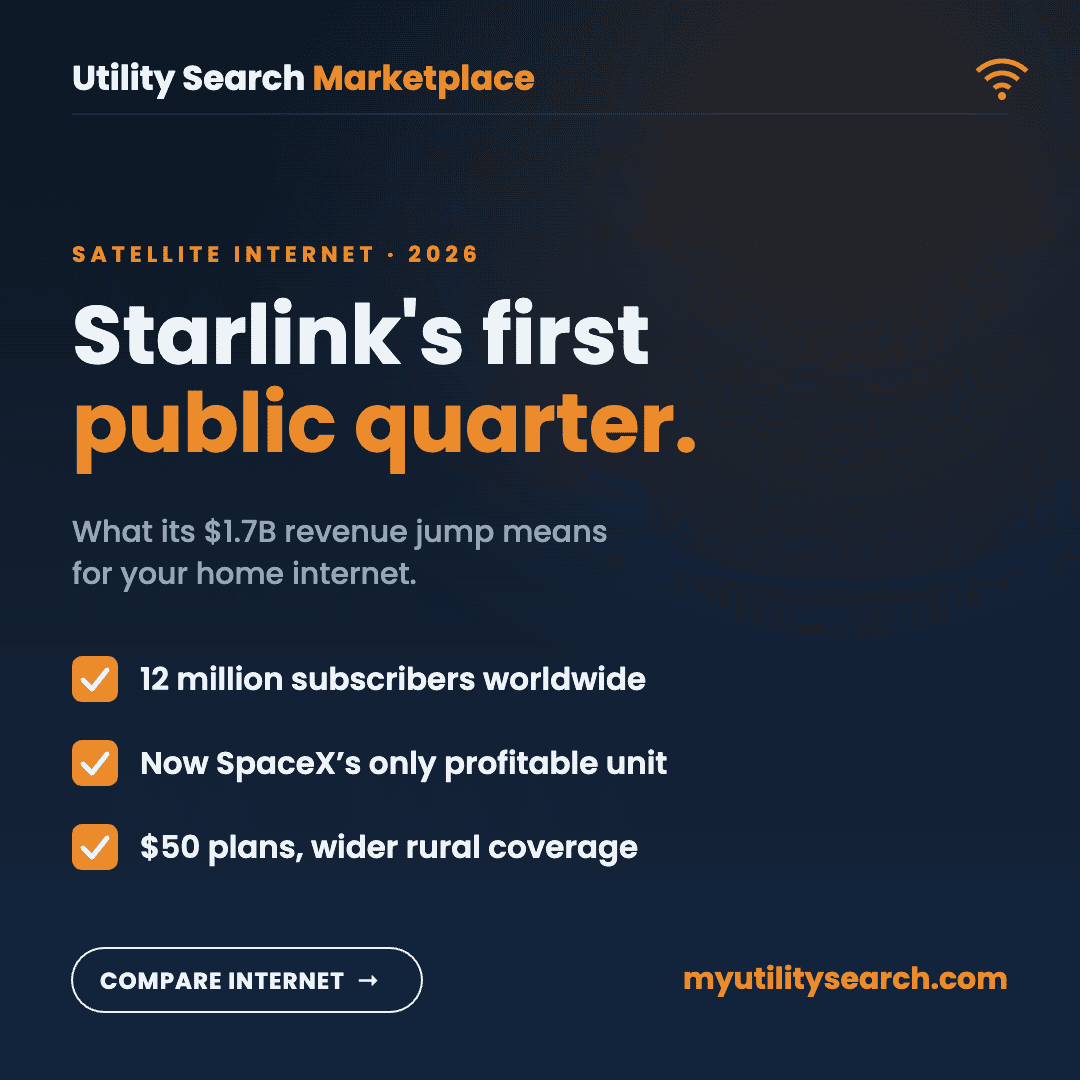
- Starlink’s first public quarter and market share
- Compare the best internet providers for 2026
- Find the best internet by address
Sources
- Space.com — SpaceX rocket to crash into the Moon
- Forbes — SpaceX rocket hits Moon as lunar junk tops 209 tons
- Wikipedia — 2026 SpaceX lunar impact
- Project Pluto (Bill Gray) — upper stage impact tracking
- CableTV.com — Starlink plans and pricing
By the Utility Search Marketplace team. Last updated August 5, 2026. Impact figures reflect reporting from NASA/LRO coverage, Space.com, Forbes, and Project Pluto; Starlink pricing from CableTV.com, BroadbandNow, and Starlink. Verify plan availability and pricing at your address before purchasing.