






Blog
Best 5G Home Internet in 2026: Top Plans, Prices & Speeds


Updated on September 17, 2026
By the myutilitysearch.com editorial team · Last updated: July 18, 2026 The best 5G home internet for most people in 2026 is T-Mobile 5G Home Internet — it’s the cheapest of the big three (from $50/mo, or $30/mo with a T-Mobile phone line), has the widest availability, and locks your price so it won’t creep up. If raw speed matters more than price, Verizon 5G Home Internet Ultimate reaches up to 1,000 Mbps. AT&T Internet Air is the pick if you’re already an AT&T wireless customer and want the bundle discount. But the real answer depends on one thing no roundup can tell you from a national average: which of these is actually available and fast at your specific address. Even the best 5G home internet performance swings block to block based on tower distance and congestion — so we’ll show you how to check what’s live where you live.Best 5G home internet at a glance (2026)
| Provider | Starting price | Top speed | Contract | Best for |
|---|---|---|---|---|
| T-Mobile 5G Home Internet | $50/mo ($30 w/ phone line) | Up to 498 Mbps | None · price lock | Most people — value + availability |
| Verizon 5G Home Internet | $60/mo (Ultimate $75) | Up to 1,000 Mbps | None | Raw speed — gigabit tier |
| AT&T Internet Air | $55/mo ($45 for AT&T wireless) | 50–225 Mbps | None | Existing AT&T customers |
What is the best 5G home internet provider?
For the typical household, T-Mobile 5G Home Internet is the best overall choice in 2026. It’s the most affordable of the three national carriers, it’s available in more places than Verizon or AT&T’s fixed-wireless service, and it carries an indefinite price-lock guarantee — the rate you sign up at is the rate you keep. It also posts the highest customer-satisfaction scores of the group. That said, the best 5G home internet is genuinely use-case dependent:- Best for value and availability: T-Mobile 5G Home Internet.
- Best for raw speed: Verizon 5G Home Internet Ultimate (up to 1 Gig).
- Best for AT&T loyalty households: AT&T Internet Air (bundle discount to $45/mo).
Is the best 5G home internet worth it?
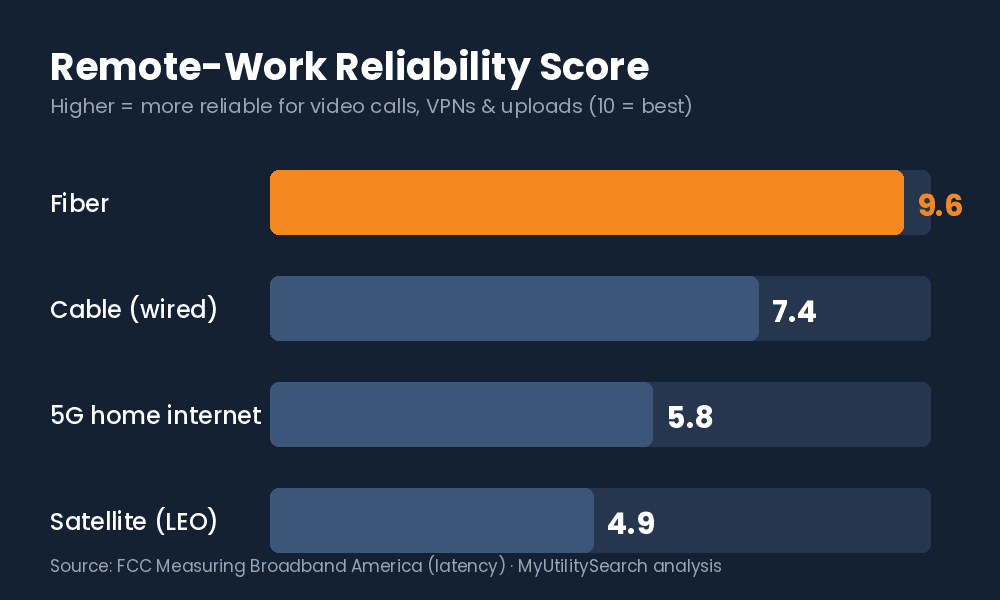
5G home internet is worth it when it’s available at your address, you want no-contract simplicity, and either fiber isn’t offered where you live or you’d rather avoid cable. It typically installs in minutes (plug in a gateway, no technician), has no data caps, and comes in flat monthly pricing with no equipment fees. The trade-off is consistency: because it rides the same mobile network your phone uses, real-world speeds depend on how far you are from the tower and how busy it gets at peak hours. For a renter, a small household, or a work-from-home setup that’s mostly video calls and browsing, it’s often the best-value option on the table. For a heavy-usage household doing 4K streaming on multiple TVs plus large uploads, fiber — where available — is still more consistent.Stat: 5G home internet plans from the major carriers carry no annual contract and no data caps, and most install in under 15 minutes with a self-setup gateway.
T-Mobile vs. Verizon vs. AT&T: best 5G home internet compared
T-Mobile 5G Home Internet — From $50/mo, or $30/mo bundled with a qualifying T-Mobile voice line. Speeds up to 498 Mbps. Widest availability of the three, no contract, price-lock guarantee. The default recommendation for most homes. Verizon 5G Home Internet — Standard plan starts around 300 Mbps for $60/mo; the Ultimate tier reaches up to 1,000 Mbps for $75/mo. If your address gets strong Verizon 5G Ultra Wideband signal, it’s the fastest fixed-wireless option here. Availability is narrower than T-Mobile’s. AT&T Internet Air — $55/mo, or $45/mo for existing AT&T wireless customers. Speeds run 50–225 Mbps depending on location. Most limited on availability and speed, so it makes the most sense as a bundle add-on for AT&T wireless households.Compare internet, energy & home security at your address
How to check the best 5G home internet at your address
Because 5G performance is hyper-local, the smartest move is to compare what’s actually live at your address before you commit. See how the technologies stack up in our Fiber vs. Cable vs. 5G Home Internet guide, then check which 5G, fiber, and cable providers reach your specific home — so you’re choosing the best plan for where you live, not the best plan on paper. For deeper testing data, see independent 2026 5G reviews.How much internet speed do you actually need?
5G home internet speeds vary by address, so it helps to know your target. Here is a rough guide to how much download speed different households need:| Household / use | Recommended speed |
|---|---|
| Browsing, email, one or two streams | 50–100 Mbps |
| Work from home plus video calls | 100–200 Mbps |
| 4K streaming on multiple TVs | 200–400 Mbps |
| Heavy household: gaming, big uploads, many devices | 400+ Mbps, or fiber |
What to expect when you install 5G home internet
Easy setup is one of 5G home internet’s biggest advantages. There is no technician visit and no drilling: the provider ships a gateway (a combined modem and Wi-Fi router), you plug it in, place it near a window or a high spot for the best signal, and activate it through an app in about 15 minutes. Most plans include the gateway at no extra cost, have no data caps, and let you cancel anytime with no contract — so you can test whether the speed at your address holds up during your busy hours and switch back if it does not.Is Your 5G Plan Keeping Up?
If your speeds are lower than you’re paying for, you may have faster options at your address. Compare internet plans available where you live — fiber, cable, and 5G, side by side.
See faster internet at my address →Before signing up for 5G home internet, confirm what actually reaches your address. The FCC’s National Broadband Map reports provider-claimed service by location, including fixed wireless, and it is a useful reality check against a carrier’s own coverage map. Fixed wireless performance depends heavily on distance to the tower and obstructions, so availability on paper and usable speed at your window are not always the same thing.
Frequently asked questions about the best 5G home internet
Which of the best 5G home internet plans is fastest?
Verizon 5G Home Internet Ultimate is the fastest, with speeds up to 1,000 Mbps where its 5G Ultra Wideband signal is strong. T-Mobile tops out around 498 Mbps and AT&T Internet Air at 225 Mbps.What is the cheapest of the best 5G home internet plans?
T-Mobile 5G Home Internet is the cheapest of the national carriers at $50/mo, dropping to $30/mo when bundled with a qualifying T-Mobile phone line.Does 5G home internet have data caps or contracts?
No. T-Mobile, Verizon, and AT&T 5G home internet plans have no annual contracts and no data caps, with flat monthly pricing and no equipment fees.Is 5G home internet good for working from home?
Yes, for most remote-work setups — video calls, browsing, and normal uploads run well. If your work involves constant large file transfers or a heavy-usage shared household, fiber (where available) is more consistent.How do I know if 5G home internet is available at my address?
Availability is address-specific. Check your ZIP or street address on a comparison tool to see which 5G providers reach your home before signing up, since coverage varies block to block.If T-Mobile also offers fiber at your address, compare the 5G plan against the T-Mobile Fiber plans and prices — fiber usually wins on upload speed.
Compare internet, energy & home security at your address
Keep going
- Midco internet — wired fiber and cable with a 3-year lock where 5G overlaps in SD, ND, MN, WI and KS
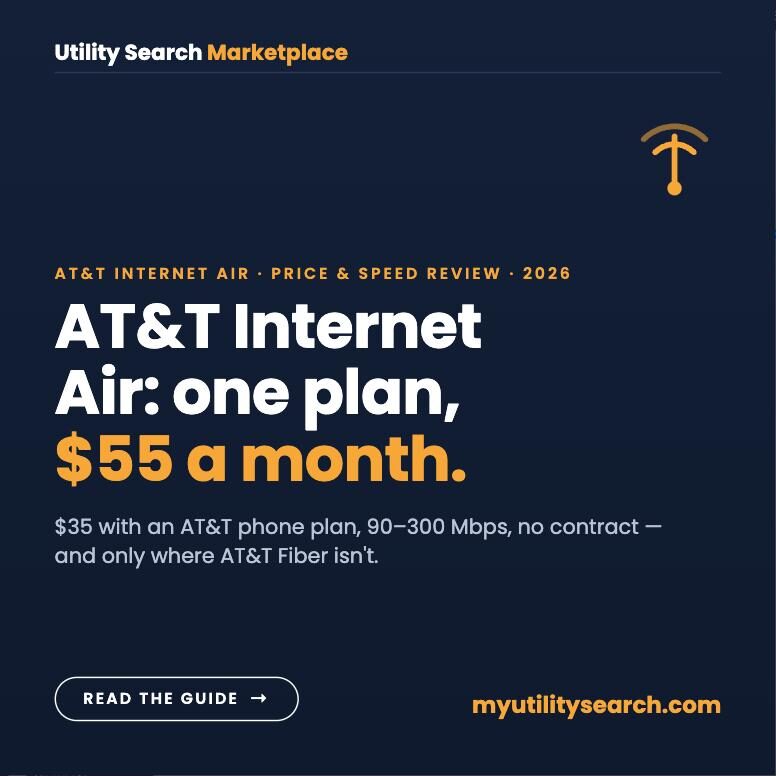
- AT&T Internet Air review — one plan at $55, $35 with an AT&T phone, and the speeds you actually get
- Verizon 5G Home Internet plans and prices — $35–$75 a month, three tiers, and the real speeds behind the up-to numbers
- Fiber vs. Cable vs. 5G Home Internet: which wins?
- How to find the best internet at your address
- Is 1-gig internet available at your address?
- Best internet for working from home
- Best internet for gaming
- Best internet for streaming
- Best internet for rural areas
- Satellite direct-to-device: a new connectivity option
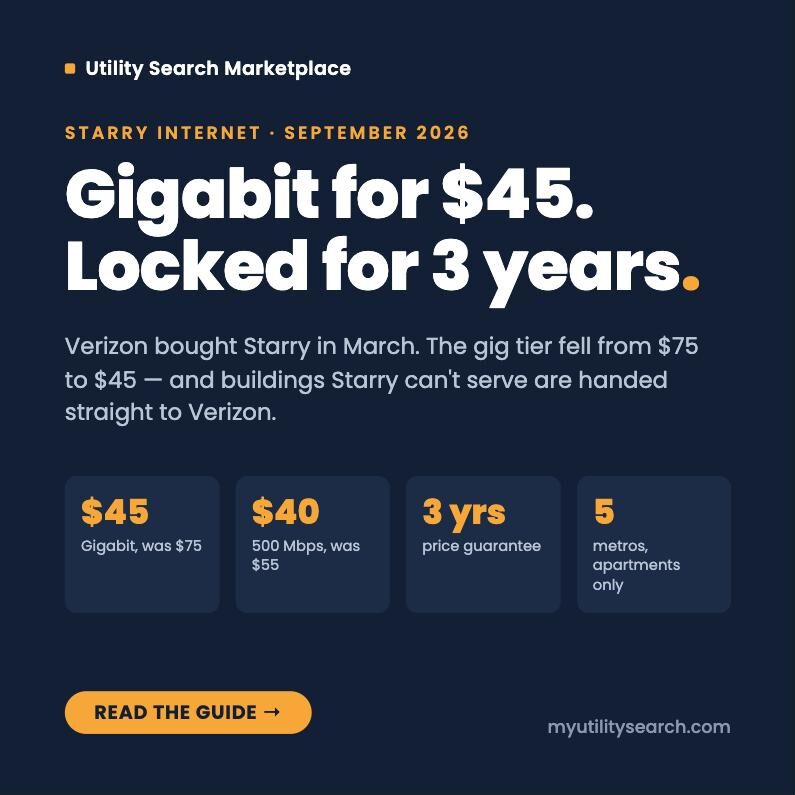
- Starry internet — rooftop millimeter-wave for apartments, now Verizon-owned, gigabit for $45




2 thoughts on “Best 5G Home Internet in 2026: Top Plans, Prices & Speeds”