Blog
GFiber + Astound Merger: Alphabet Sells Majority Stake to Stonepeak

Updated on September 5, 2026
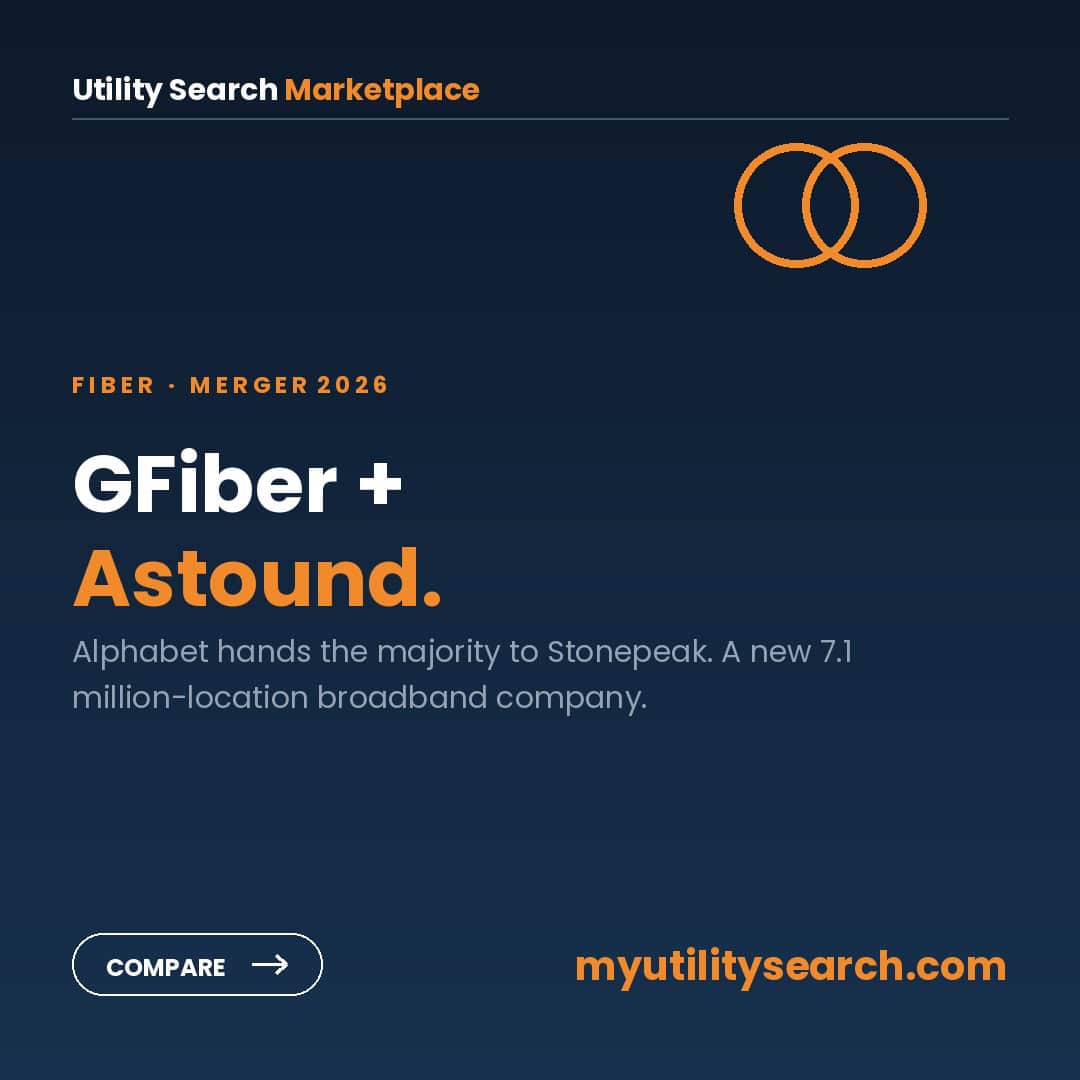
GFiber and Astound Broadband are combining into one independent internet company. Alphabet announced on March 11, 2026 that it is selling a majority stake in GFiber — the business formerly called Google Fiber — to infrastructure investor Stonepeak, which also owns Astound Broadband. The gfiber astound merger puts roughly 7.1 million U.S. locations under one roof and creates a genuine fourth force in broadband that is neither a cable giant nor a national wireless carrier.
TL;DR — the gfiber astound merger
- Announced March 11, 2026. Expected to close in Q4 2026, pending regulatory approval.
- Stonepeak takes majority ownership; Alphabet keeps a significant minority stake.
- GFiber’s management team leads the combined company.
- ~7.1 million combined locations across the two footprints.
- Financial terms were not disclosed.
- Nothing changes for customers yet — the deal has not closed.
What exactly was announced?
Under the gfiber astound merger, Alphabet is stepping back from operating a consumer internet provider without walking away entirely. Stonepeak, which acquired Astound Broadband in 2020, takes majority control of the combined business. Alphabet retains a significant minority interest, and the existing GFiber leadership team runs the merged company.
The two networks in the gfiber astound merger are complementary rather than overlapping. GFiber is fiber-to-the-home in a set of metro markets it built out selectively over a decade. Astound is a cable operator with a substantial fiber component, assembled from regional brands including Wave, RCN, and Grande. Combining them produces a national-scale challenger without the two companies having to compete for the same streets.
Does anything change for GFiber or Astound customers?
Not yet, and this is the important distinction between the gfiber astound merger and the other 2026 deals. This one has been announced, not closed. Until regulators sign off and the transaction completes — expected in Q4 2026 — GFiber and Astound continue operating exactly as they do today, with separate plans, separate billing, and separate support.
When it does close, expect the familiar sequence we have tracked across every deal this year: ownership changes first, bundle and cross-sell offers appear next, billing platforms merge months later, and the brand decision comes last. Whether the combined company keeps “GFiber,” keeps “Astound,” or launches something new has not been announced.
One practical note: because this deal is still pending, you do not need to take any action, re-sign anything, or accept new terms. Any message claiming otherwise is not from your provider.
Why is Alphabet selling GFiber?
The reason behind the gfiber astound merger is simple: building fiber is capital-intensive, slow, and structurally unlike Alphabet’s other businesses. GFiber launched in 2010 with enormous attention and then expanded far more cautiously than expected, because trenching neighborhoods costs thousands of dollars per home and pays back over many years. That is a natural fit for an infrastructure fund with a long time horizon — and an awkward one for a company whose margins come from software.
Selling the majority to Stonepeak while keeping a minority stake lets Alphabet stop funding the buildout without writing off what it built. For Stonepeak, bolting GFiber onto Astound converts two subscale assets into one platform with real negotiating power. It is the same logic driving the rest of the wave — see our telecom consolidation tracker for how the deals compare.
Is a private-equity-backed provider good or bad for customers?
Worth answering honestly rather than reflexively, because the gfiber astound merger puts an infrastructure fund in charge of a consumer brand, because “private equity buys your ISP” invites a cynical read that is only half right.
The case for: infrastructure funds like Stonepeak invest on 10-to-20-year horizons, not quarterly earnings cycles, which is genuinely better suited to fiber than public-market pressure. Scale also gives the combined company leverage on programming and equipment costs it did not have separately, and a credible independent competitor is good for a market where the alternative is three national carriers.
The case against: infrastructure investors need returns, and in broadband those often arrive through price increases, fee restructuring, and tighter promotional discipline. GFiber built its reputation on simple, flat, no-nonsense pricing. Whether that survives contact with a returns-driven owner is the open question — and it is the thing worth watching on your bill in 2027, not 2026.
What should you do right now?
- Nothing urgent. The gfiber astound merger has not closed; your service and pricing are unaffected today.
- Note your renewal date. If you are on a promo that expires in 2027, that is when new-owner pricing is most likely to show up.
- Lock simple pricing if offered. GFiber’s flat-rate plans are the asset most at risk of being “optimized” post-close.
- Re-check your address annually. A 7.1 million-location company will expand differently than two smaller ones did.
Want to see what actually reaches your address?
Whether you are on GFiber, Astound, or something else entirely, the provider list at your home changes faster than most people check. Enter your ZIP or address to compare fiber, cable, and 5G plans side by side on price and speed.
Compare providers at my address →Who has to approve the gfiber astound merger?
Broadband deals do not close because two companies agree. Three separate layers of review stand between announcement and close, and each can attach conditions.
- The FCC must approve the transfer of the licenses and authorizations each company holds. The commission reviews whether the transfer serves the public interest, and it routinely attaches conditions — as it did when it required AT&T to accelerate a spectrum deployment earlier this year.
- Federal antitrust review at the Department of Justice Antitrust Division examines whether combining the two reduces competition. Because GFiber and Astound largely serve different markets, this is a more straightforward review than a deal between direct competitors.
- State and local regulators weigh in wherever the companies hold franchises or state-level authorizations. This layer is the usual source of delay — the Charter–Cox deal has spent months waiting on a single state commission.
That is why “expected to close in Q4 2026” is a target rather than a promise. If you want a sense of how long the tail can be, compare it against the other deals in our consolidation tracker, where announcement-to-close has run anywhere from eight months to well over a year.
What does each company bring to the gfiber astound merger?
The two businesses are genuinely different animals, which is the strategic point of combining them.
| GFiber | Astound Broadband | |
|---|---|---|
| Network type | Fiber to the home | Cable, with substantial fiber |
| Origin | Launched by Google in 2010 | Assembled from Wave, RCN, Grande and others |
| Footprint style | Selected metro markets | Regional clusters across multiple states |
| Pricing reputation | Simple, flat, few fees | Conventional cable pricing and promos |
| Owner after close | Stonepeak majority, Alphabet minority | |
Because the footprints barely overlap, the combined company is not removing a competitor from anyone’s street. That is the strongest consumer argument in favor of this particular deal, and it is a real distinction from cable-on-cable consolidation. The open question is cultural rather than structural: GFiber’s flat pricing is the exception in this industry, and merging it into a conventional cable operation is where that could quietly erode.
What to watch between now and close
Four concrete signals will tell you more than any press release about how the gfiber astound merger will land:
- Whether GFiber’s flat pricing survives the first post-close price sheet. This is the single best indicator of the new owner’s intentions.
- Whether equipment and service fees appear. GFiber historically bundled the router; cable operators historically charge for it.
- Which brand is retired. Keeping GFiber signals a premium fiber strategy; folding into Astound signals a conventional one.
- Whether buildout accelerates. Infrastructure capital exists to be deployed — new market announcements would be a genuinely good sign for coverage.
Meanwhile, you can check what already reaches your address today. The FCC’s National Broadband Map shows the providers reporting service at your location, which is a useful reality check against what any single provider’s marketing claims.
FAQ
Is Google Fiber being sold?
Yes, in part. Alphabet announced on March 11, 2026 that it is selling a majority stake in GFiber to infrastructure investor Stonepeak, which will merge it with Astound Broadband. Alphabet retains a significant minority stake.
When does the gfiber astound merger close?
The companies expect the deal to close in Q4 2026, subject to customary closing conditions and regulatory approvals. It had not closed as of July 2026.
Will my GFiber or Astound plan change?
Not right now. The deal is announced but not closed, so both providers continue operating separately with their existing plans, billing, and support. Changes typically follow months after a close, not before it.
How big is the combined company?
The combined GFiber and Astound footprint reaches approximately 7.1 million U.S. locations.
Who will run the merged company?
The existing GFiber management team will lead the combined business, with Stonepeak holding majority ownership.
What was the deal worth?
Financial terms were not disclosed by Alphabet or Stonepeak.