Blog
First Apartment Utilities Checklist 2026: What to Set Up & When


Updated on October 25, 2026
11 min read
For your first apartment, set up electricity, internet, water/sewer/trash, gas (if any), and renters insurance — plus optional home security. Start about two weeks before move-in; electricity and internet need the most lead time. Before you arrange anything, check your lease to see which of these first apartment utilities the landlord already covers.
TL;DR — your first apartment utilities, in order
- First: read the lease and ask which utilities are included in rent.
- 2 weeks out: set up electricity and book your internet install — these have the longest lead times.
- 1 week out: arrange water/sewer/trash and gas if they’re in your name.
- Move-in week: confirm everything is on, add renters insurance, and consider security.
- Comparing first apartment utilities by address is free — do it before you sign a single contract.
What utilities do I need for a first apartment?
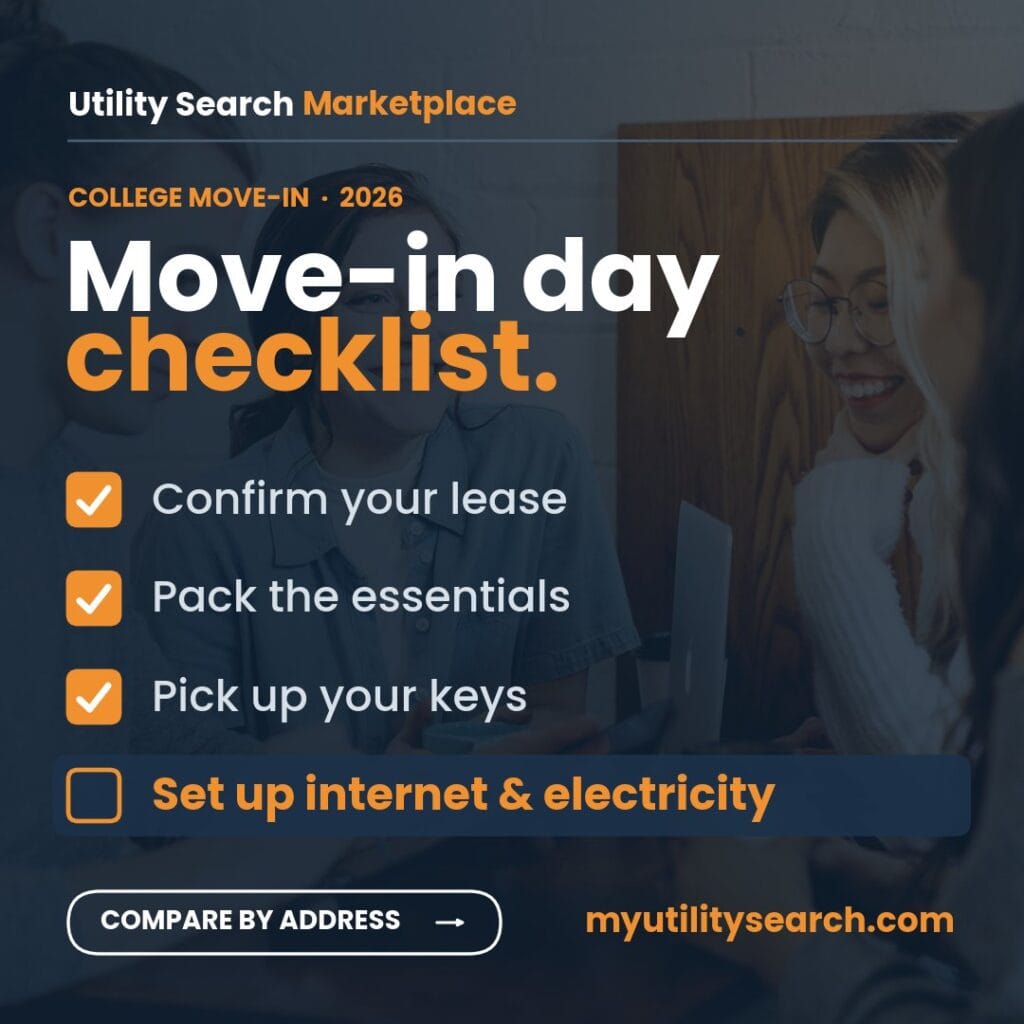
A first apartment typically needs five core utilities and two optional add-ons. The exact mix depends on your building — some landlords bundle water, trash, and even gas into the rent, while electricity and internet are almost always yours to arrange. Here’s the full first apartment utilities checklist with who usually sets each one up, a typical monthly range, and how far ahead to start.
| Utility | Who sets it up | Typical monthly cost | When to start |
|---|---|---|---|
| Electricity | You (shop the plan in deregulated states; regulated states assign the utility) | $60–$100 | ~2 weeks before |
| Internet | You | $30–$70 | 1–2 weeks before (book the install) |
| Water / sewer / trash | Often the landlord; sometimes you | $30–$60 | At lease signing |
| Natural gas (if present) | You | $20–$50 | 1–2 weeks before |
| Renters insurance | You (often lease-required) | $12–$25 | Before move-in |
| Home security (optional) | You | $0–$45 | Move-in week |
| Streaming / TV (optional) | You | $0–$80 | After move-in |
Cost ranges are typical U.S. figures for a one-bedroom apartment; electricity in particular swings with climate, unit size, and local rates. See national averages from the U.S. Energy Information Administration, and our breakdown of the average electric bill by state and home size.
Which first apartment utilities are included in rent?
This is the question that saves first-time renters the most money, so ask it before you sign. There’s no universal rule — it varies by landlord and building.
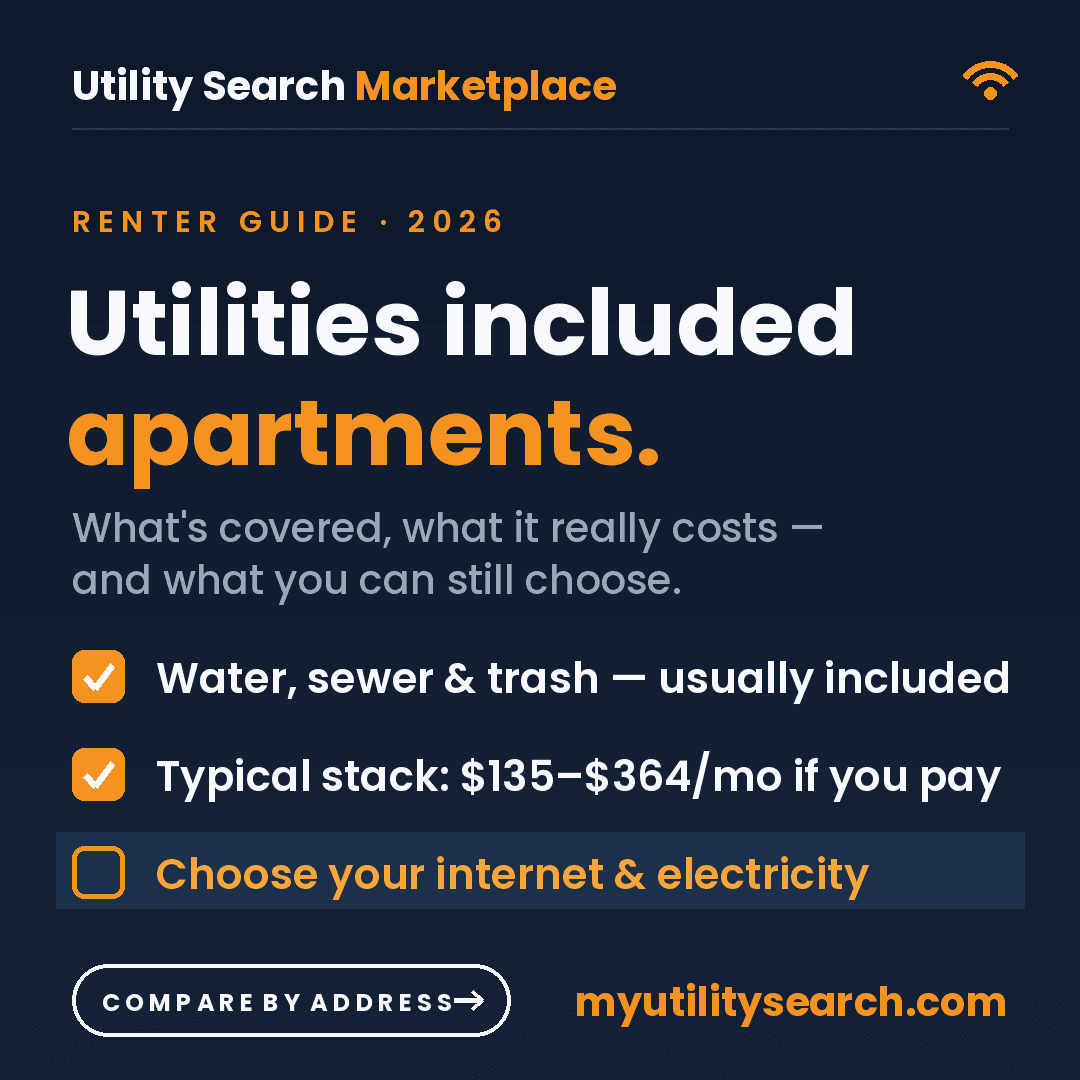
What “utilities included” usually means: Most commonly, a landlord who advertises “utilities included” is covering water, sewer, and trash, and sometimes gas or heat. Electricity and internet are almost always the tenant’s responsibility. Get the specifics in writing.
Ask your landlord three things: which utilities are in the rent, which accounts you open in your own name, and whether any provider is required or pre-wired for the building (common with internet in larger complexes).
How much do first apartment utilities cost?
Budget roughly $150 to $300 a month for first apartment utilities in a typical one-bedroom, though your total depends on climate, unit size, and whether water and trash are included in rent. Electricity is the largest and most variable line among your first apartment utilities, so it’s the one worth comparing before you commit.
- Electricity: $60–$100/mo — the biggest swing, higher in heavy heating or cooling climates.
- Internet: $30–$70/mo — varies by provider and speed at your address.
- Water / sewer / trash: $30–$60/mo — often folded into rent.
- Natural gas: $20–$50/mo — only if the unit has gas heat, hot water, or a stove.
Add renters insurance at about $12–$25 a month, and your all-in first apartment utilities budget usually lands near $200. Comparing electricity and internet at your exact address is the fastest way to keep first apartment utilities on the low end of these ranges. National residential electricity figures come from the U.S. EIA.
When should I set up utilities before moving in?
Set up your first apartment utilities about two weeks before your move-in date. Electricity and internet drive the timeline because they can require a technician visit or a scheduled connection date, and install windows fill up fast during busy moving months.
The setup timeline, step by step
| When | Do this |
|---|---|
| 2 weeks before | Confirm the move-in date and lease terms. Set up electricity (shop the plan if deregulated). Compare internet at the new address and book the earliest install slot. |
| 1 week before | Open water/sewer/trash and gas accounts if they’re in your name. Line up renters insurance (often required before you get keys). |
| Move-in day | Verify power is on and internet works. Note meter readings. Save every account number. |
| First week | Add optional home security or streaming. Set up autopay and paperless billing. |

How do I set up electricity in a first apartment?
Electricity is usually the priciest of your first apartment utilities, and how you set it up depends on where the apartment is. In a deregulated state — Texas, Ohio, Pennsylvania, Illinois, New Jersey, New York and several others — you choose your own plan and provider, so compare rates first. In a regulated state, the local utility is assigned and you simply open an account. Either way, start the account before move-in so the lights are on when you arrive.
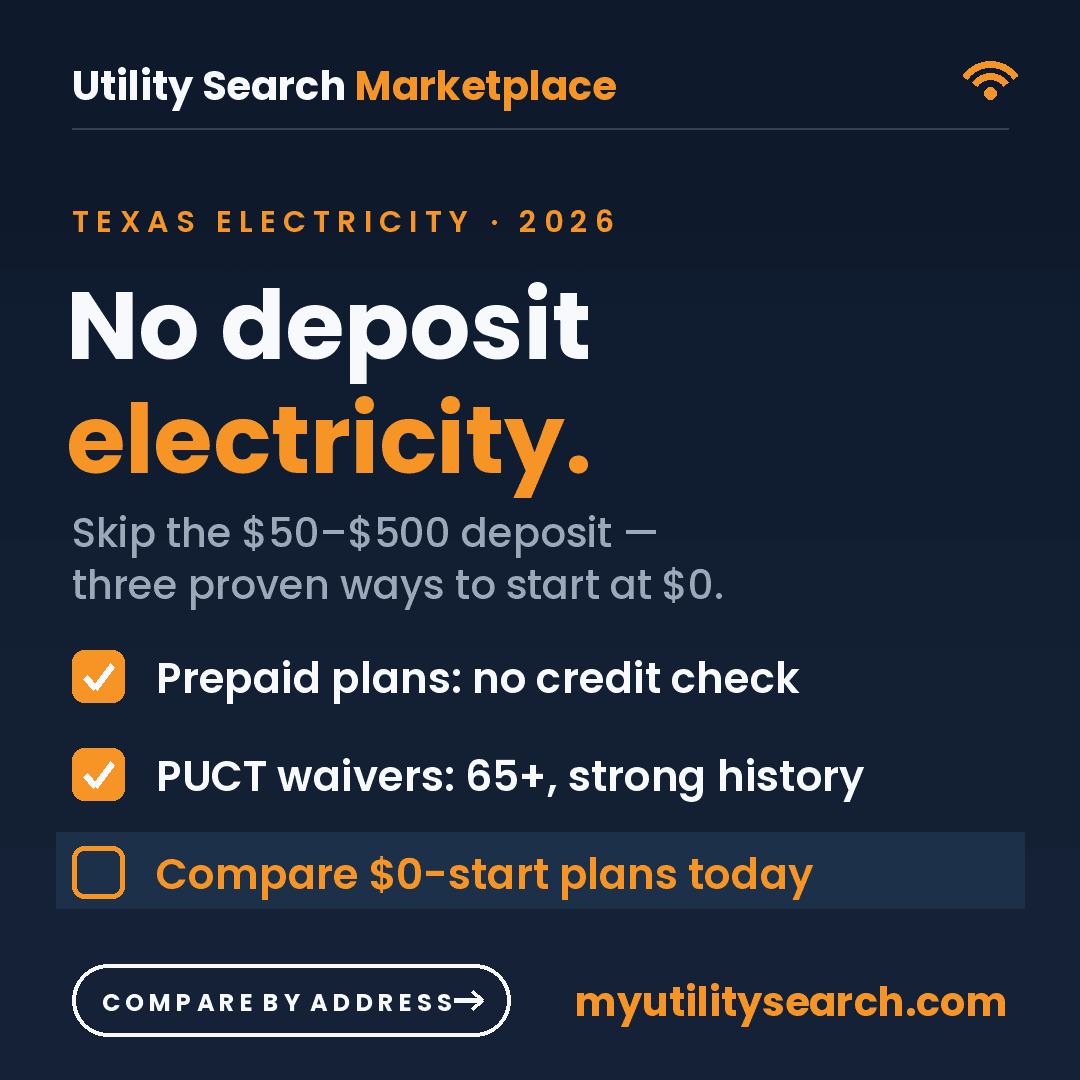
If you can shop, compare on the terms that matter for a first apartment: the rate per kWh, the contract length, and any deposit. Our guide to comparing energy plans and saving money walks through it, and if a deposit is a concern, no-deposit electricity options in Texas show how first-time renters avoid one.
How do I set up internet in a first apartment?
Of all your first apartment utilities, internet is the one renters most often leave too late. Availability is address-specific — the providers and speeds at your new apartment may be completely different from your last place. Check what’s available at the address, then book the install as early as you can.
Compare your options with our best internet providers comparison, see how cable internet stacks up for an apartment, or check what’s available in your area. Confirm which providers serve your building on the FCC National Broadband Map. Students: see our best internet for college students guide.
Common first apartment utility mistakes to avoid
Three first apartment utilities mistakes cost first-time renters the most: waiting until move-in day to think about internet (installs can be days or weeks out), assuming a utility is included when it isn’t, and signing the first electricity plan offered without comparing the rate. Each is avoidable with a few minutes of upfront work.
Set Up Your First Apartment — Electricity & Internet
Compare electricity plans if your new address is in a deregulated state, and see which internet providers actually reach your building.
First apartment utilities: the questions people ask, answered
What first-time renters type the week before move-in, in their own words, answered as of October 25, 2026.
What utilities do I need to set up for a first apartment?
Three accounts in your name at most complexes: electricity, internet, and gas if the unit has gas heat, a gas stove or a gas water heater. Water, sewer and trash are usually in the landlord’s name and either included or billed back on the rent statement. Renter’s insurance is required by most leases but is not a utility. That is the whole list; TV and phone are optional services, not utilities.
When will my power and water start, and when do the bills start?
Power starts the day you schedule it, which should be the lease start date, not move-in day; the first electric bill arrives about 30 days later and covers from that date. Water is usually already on in the landlord’s name, and if it is billed to you it appears on your rent statement or a utility bill a month in arrears. Internet starts on the install or self-activation date and bills a month in advance. Nothing bills you before the start date you chose.
Should I start electricity service when the lease starts or wait until I move in?
Start it on the lease start date. Most leases make you responsible for utilities from day one, and many complexes will charge a per-day ‘vacant utility’ fee if the account is not in your name when the lease begins. The few days of cost before you move in are a dollar or two a day; a utility that is switched off when you arrive with a truck is the expensive mistake. In deregulated states, pick the plan a week or two ahead and set the start date to the lease date.
Do apartments include lights and electricity when I first get the apartment?
The lights will usually be on when you tour and often on move-in day because the complex keeps a landlord account active between tenants, but that account is not yours. Most leases require you to put electricity in your name by the lease start date, and the complex will either disconnect the landlord account or bill you a daily fee until you do. Treat ‘the lights work’ as temporary, not included, unless the lease says utilities are included.
How do I start paying utilities if I rent, and do I have to pay bills when I first move in?
Open the electric account online or by phone in your name with the lease start date, add gas the same way if needed, and order internet with an install date near move-in. Each company bills you directly; set up autopay or pay monthly. In the first month you pay the first month’s rent and deposit to the landlord, a possible deposit to the electric company if you have no credit history ($50 to $200, refunded later), and the internet equipment or install fee; the first utility bills themselves arrive about 30 days after service starts.
How do I know what utilities to set up when renting a house versus an apartment?
A rented house usually puts every account in your name: electricity, gas or propane, water and sewer, trash collection (sometimes a city service, sometimes a private hauler) and internet, plus lawn or septic in rural areas. Read the lease’s utility clause; it lists what the landlord keeps. Then call each provider that serves the address a week or two before the lease start. The address check above shows which internet and, in deregulated states, electricity providers serve the house.
How do I get utilities and internet to a first-floor or garden apartment?
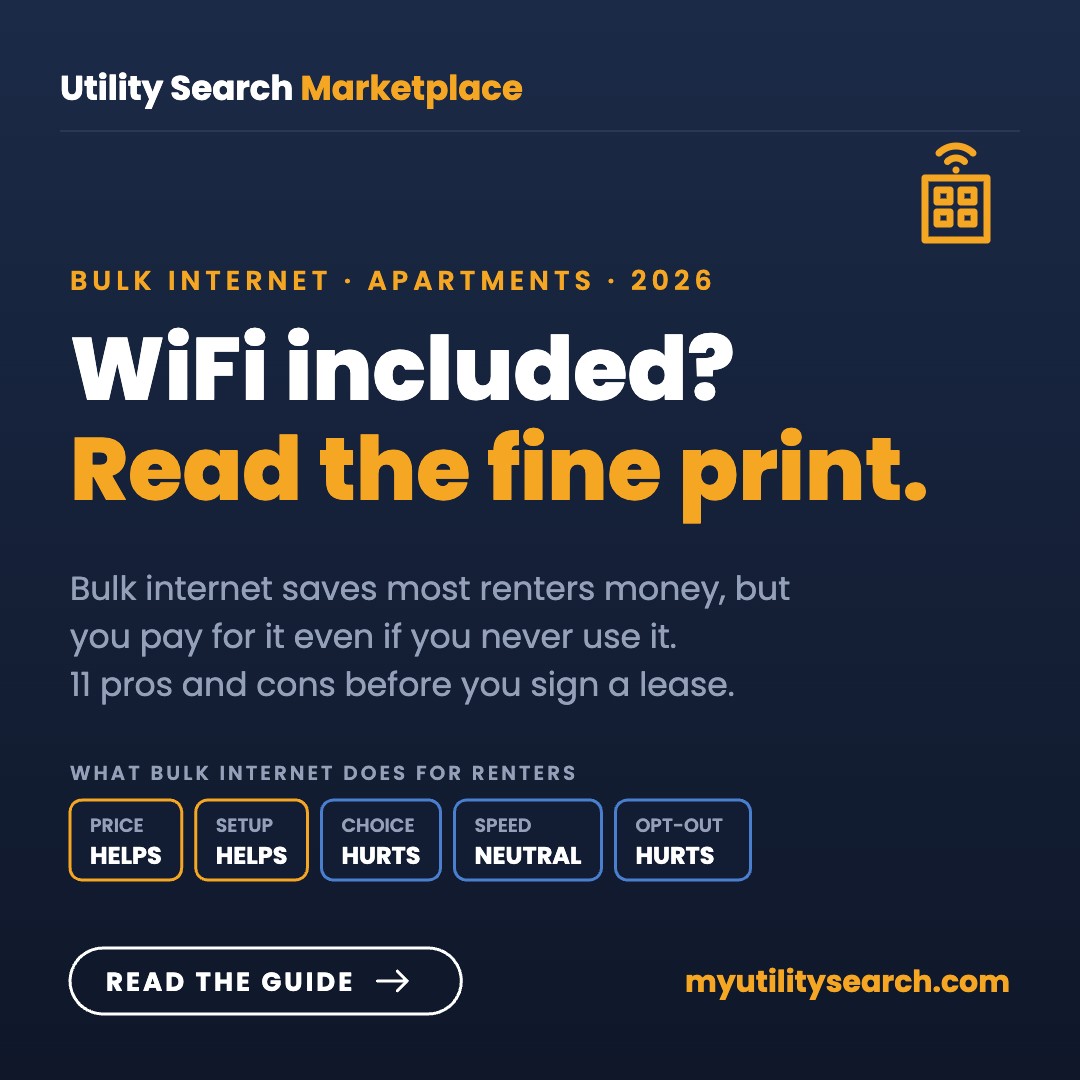
The same way as any other unit; the floor does not matter for electricity or gas, which are metered per unit. For internet, ask the leasing office which providers are wired to the building; most complexes have cable and often fiber already run to every unit, and a first-floor unit is the easiest for a technician if a new line is needed. If the building has a bulk internet agreement, your service may already be active and included.
When should I schedule utilities for a new apartment?
Electricity and gas: one to two weeks before the lease start date, with the start date set to the lease date. Internet: two to three weeks ahead, because installation appointments fill up at the start and end of each month. Renter’s insurance: before the lease is signed, since the office will ask for proof. Water, sewer and trash: usually nothing to schedule. In deregulated states, add a few days to compare electricity plans; the start date, not the order date, is what matters.
How do I check whether an apartment comes with utilities?
Read the utility section of the lease, not the listing; it will say which utilities the landlord pays, which are billed back (RUBS or submeter) and which must be in your name by the start date. If the lease is silent on an item, ask the leasing office in writing. ‘Utilities included’ in an ad almost always means water, sewer and trash and rarely means electricity or internet.
Also searched as: utilities needed for an apartment, what utilities do you need, setting up your first apartment, set up every utility before you move in and when to schedule utilities to a new apartment. They all mean this checklist.
Frequently asked questions
What utilities do I need to set up for my first apartment?
Electricity, internet, water/sewer/trash, and gas if the unit has it, plus renters insurance. Water and trash are often included in rent, while electricity and internet are almost always yours to arrange.
How much should I budget for first apartment utilities?
For a one-bedroom, budget roughly $150–$300 a month across electricity, internet, water, and gas combined. Electricity is the biggest and most variable piece.
When should I set up utilities before moving in?
Start about two weeks before move-in. Electricity and internet need the most lead time because they can require a scheduled connection or technician visit.
Which utilities are usually included in rent?
Most often water, sewer, and trash, and sometimes gas or heat. Electricity and internet are typically the tenant’s responsibility. Always confirm in the lease.
Do I need to put utilities in my name for an apartment?
Any utility not covered by your landlord — usually electricity and internet, sometimes gas and water — goes in your name, which means opening an account before move-in.
Can I choose my electricity provider for a first apartment?
Only in deregulated states like Texas, Ohio, Pennsylvania, Illinois, New Jersey, and New York. There you shop the plan; in regulated states the local utility is assigned.
Is there a deposit for setting up utilities?
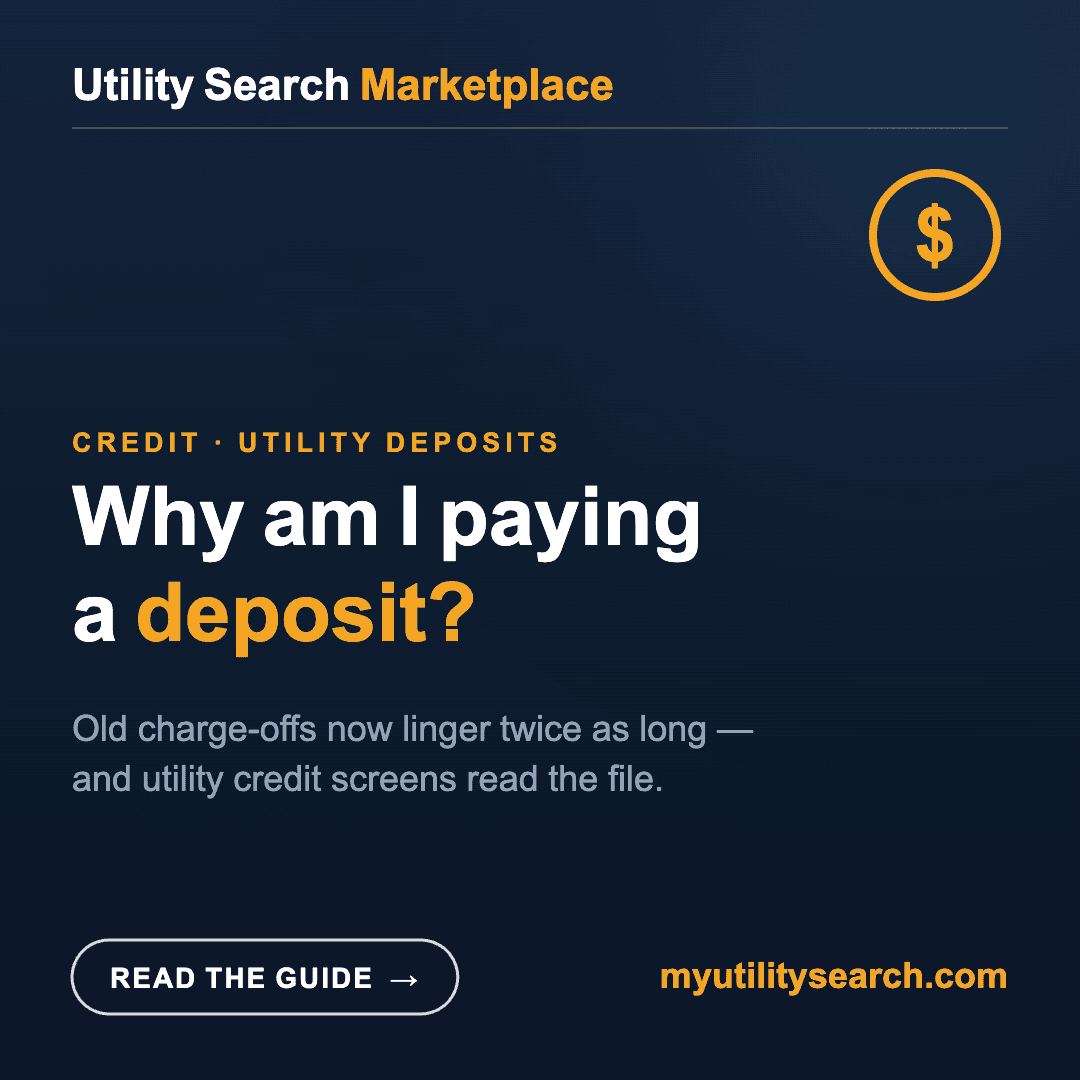
Sometimes. Electricity providers may ask for a deposit with no credit history, but many offer no-deposit plans, and internet providers rarely require one.
What’s the first thing I should do about utilities in a new apartment?
Read the lease and ask which utilities are included. That tells you exactly which first apartment utilities you need to set up yourself before comparing.
Also compare energy, home security and home warranty at your address
Electricity plans in 14 deregulated states. Security and warranty nationwide.
Keep going
- Moving with College HUNKS? Set up internet, power & security at your new place
- How to set up electricity, internet, and security when you move
- College move-in checklist: dorm essentials + internet setup
- Best internet for college students: dorm & apartment picks
- Compare the best internet providers for 2026
- Average electric bill by state and home size
- How to compare energy plans and save money