





Blog
Spectrum Internet: Best Plans, Prices & Availability 2026


Updated on October 1, 2026
10 min read
Merger update — August 2026: Spectrum’s parent, Charter, is completing its $34.5 billion acquisition of Cox Communications (FCC approved; California approved August 13 — the final regulatory hurdle — with closing expected mid-to-late August 2026). Spectrum is the surviving consumer brand, and Cox systems are expected to move onto Spectrum plans and pricing shortly after close. Your current Spectrum plan and bill are unchanged near term — see our full Charter–Cox merger guide.
What is Spectrum internet?
Spectrum is Charter Communications’ consumer internet brand and the second-most-available cable provider in the country. It delivers spectrum internet over a hybrid fiber-coaxial cable network, with download speeds from 100 Mbps to 2 Gbps in most areas. Every plan comes with unlimited data, no annual contract, and a free modem — a cleaner deal than most cable rivals.
Spectrum internet plans and prices (2026)
Spectrum keeps its lineup simple. Pricing below is the promotional first-year rate; it typically rises by about $10–$20/mo after 12 months, depending on tier. Confirm the exact price and speed at your address before you sign up.
| Spectrum plan | Download speed | First-year price* | Best for |
|---|---|---|---|
| Internet Advantage | 100 Mbps | $30/mo | Light use, 1–2 devices |
| Internet Premier | 500 Mbps | $40/mo (reg. $50) | Most households — the value pick |
| Internet Gig | 1,000 Mbps | $50/mo (reg. $70) | Heavy streaming, big households (free Advanced WiFi) |
*12-month promo pricing with no contract and a free modem. Advanced WiFi is +$10/mo on Advantage and Premier and included free on Internet Gig. Spectrum also offers a 2 Gig tier (about $70/mo) in select fiber markets. Limited-time: every Spectrum internet plan now includes one free Unlimited Mobile line for a year when you order online. Pricing and availability vary by address.
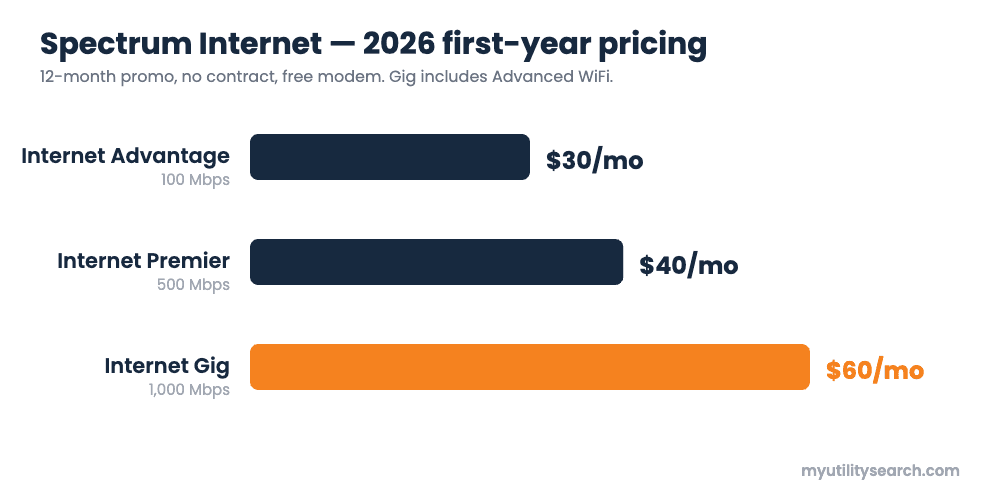
*First-year promo pricing; rates rise about $10–$20/mo after 12 months and vary by market. Check current pricing on the Spectrum plans page. Uploads are much lower than download (cable), and Advanced WiFi is about $10/mo on lower tiers (free on Gig; 2 Gig includes Invincible WiFi, a $30/mo value).
Where is Spectrum available?
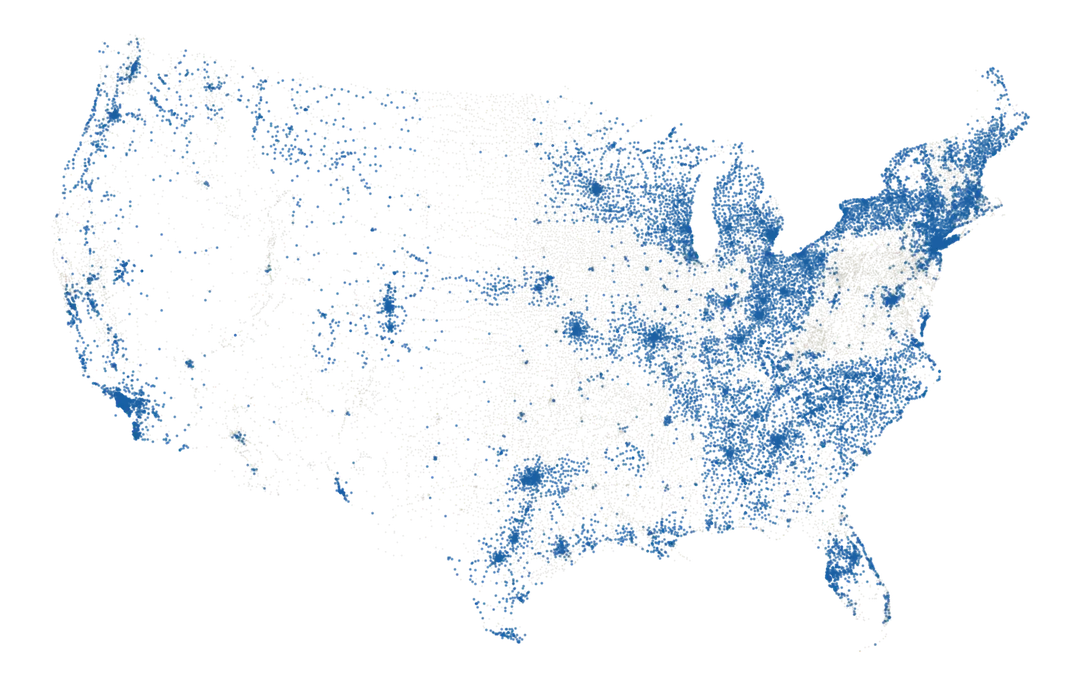
Spectrum is one of the most widely available providers in the country — second only to fiber giants in footprint. In our provider-footprint database, Spectrum is mapped across roughly 16,400 U.S. ZIP codes, more than double Xfinity’s cable footprint. But “available in your ZIP” isn’t the same as “available at your address,” because cable coverage varies street by street. In many of those ZIPs Spectrum competes with fiber (AT&T, Verizon Fios) or another cable operator; in others it’s the only high-speed wired option. Check the FCC Broadband Map or enter your ZIP to confirm what’s serviceable where you live.
Spectrum footprint: the ZIP codes we track
We track roughly 16,400 Spectrum ZIP codes — one of the broadest cable footprints in the country. Coverage is densest across the eastern half of the U.S., Texas, Southern California and the Pacific Northwest.
Spectrum data caps and contracts
This is where Spectrum stands out from most cable providers: there are no data caps and no annual contracts on any plan, and a modem is included free. You can cancel or downgrade any time, and heavy streaming or work-from-home use won’t trigger overage fees. Compare that with Xfinity, which applies a 1.2 TB cap in many markets, and see our guide to data caps and overage fees.
Spectrum pros and cons
| Pros | Cons |
|---|---|
| No data caps, unlimited data | Uploads far slower than downloads (cable) |
| No annual contract; free modem | Promo price jumps ~$10–$20/mo after year one |
| Very wide availability (~16,400 ZIPs) | Advanced WiFi costs extra on lower tiers |
| Fast downloads, up to 2 Gbps | Fiber rivals offer symmetrical speed where available |
Is Spectrum good for working from home?
Spectrum is a solid work-from-home option where fiber isn’t available: downloads are fast, coverage is wide, and unlimited data means video calls, cloud backups, and streaming won’t hit a cap. The trade-off is upload speed — cable uploads are much lower than downloads, so heavy uploaders may prefer fiber. For the full picture, see our guide to the best internet for working from home, compare fiber vs cable vs 5G, and check 1 Gig internet plans if you need more speed.
Is your plan keeping up?
If your results are lower than you’re paying for, you may have faster options at your address. Compare internet plans available where you live — fiber, cable, and 5G, side by side.
Spectrum 2026 Price Increase — What Changed (updated August 4, 2026)
In 2026, Spectrum (Charter) raised its legacy internet tiers — Flagship, Ultra, and Gig — by $10/month, communicated in June and appearing on bills through July 2026. The increases came paired with speed boosts (Flagship 400 to 500 Mbps; Ultra 600 Mbps to 1 Gig). Legacy TV Essentials also rose $4 (from $31 to $35). This change targets older/legacy plans; Spectrum’s current marketed pricing is not affected.
| Affected (legacy) | Increase | Speed change | Timing |
|---|---|---|---|
| Internet — Flagship | +$10/mo | 400 → 500 Mbps | On bills by Jul 2026 |
| Internet — Ultra | +$10/mo | 600 Mbps → 1 Gig | On bills by Jul 2026 |
| Internet — Gig | +$10/mo | — | On bills by Jul 2026 |
| TV — Essentials | +$4/mo ($31→$35) | — | On bills by Jul 2026 |
Spectrum for business: what Spectrum Business charges
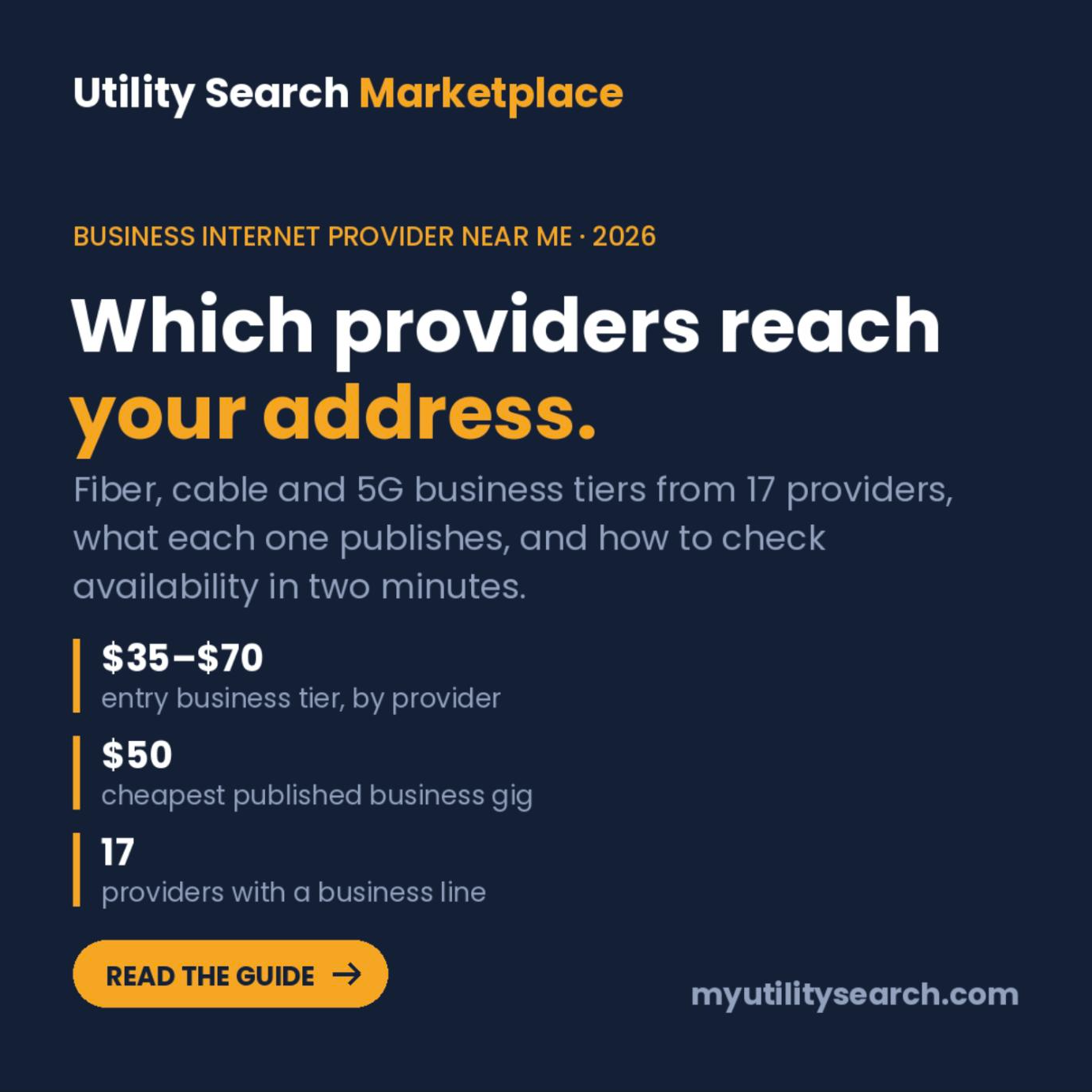
Spectrum Business sells the same cable network at business terms. As of September 28, 2026 its business plans page lists Business Internet 500 Mbps at $50 a month, 750 Mbps at $95 and 1 Gig at $115, with no contract, no data caps and an optional three-year price guarantee. That makes Spectrum the cheapest entry point among the four largest business internet providers; the 500 Mbps tier is priced close to the residential equivalent, and the business premium shows up at 1 Gig (about 1.9× the residential promo rate).
| Business plan | Monthly price | Terms |
|---|---|---|
| Business Internet 500 Mbps | $50 | No contract, no data caps |
| Business Internet 750 Mbps | $95 | No contract, no data caps |
| Business Internet 1 Gig | $115 | No contract; optional 3-year price guarantee |
Source: the provider’s own business plans page, read September 28, 2026. Business pricing is quoted by address and term; treat these as the published starting points.
What the business plan adds over the residential one: a service-level agreement with priority repair, static IP options, commercial-use terms and business support. If downtime does not cost you money, the residential plan at the same address is the cheaper answer — see business internet providers compared and what business internet costs.
Compare business internet at your address
Business plans are quoted by address and term. See which providers reach your storefront or office before you sign anything.
Spectrum Price Increase 2026: FAQ
Why did my Spectrum bill go up $10 in 2026?
Spectrum raised legacy Flagship, Ultra, and Gig internet plans by $10/month in 2026, communicated in June and hitting bills through July. Many customers also received a paired speed increase.
Did Spectrum internet go up to $100/month in 2026?
For some legacy plans the $10 increase pushes the internet rate near $100/month; currently-marketed promotional pricing is separate and unaffected.
Did I get a speed increase with the price hike?
Yes for legacy tiers — Flagship went 400 to 500 Mbps and Ultra went 600 Mbps to 1 Gig.
Which Spectrum plans are affected by the 2026 increase?
Legacy Flagship, Ultra, and Gig internet, plus legacy TV Essentials. Spectrum’s current marketed plans are not part of this change.
How do I avoid the Spectrum increase?
Review whether a current plan or a competing provider at your address is cheaper; compare options before your next bill cycle.
Does Spectrum offer business internet?
Yes. Spectrum Business Internet is sold at 500 Mbps ($50), 750 Mbps ($95) and 1 Gig ($115) a month as of September 28, 2026, with no contract or data caps and an optional three-year price guarantee. Business plans add a service-level agreement, static IP options and priority support.
Does Spectrum have a data cap?
No. Every Spectrum internet plan includes unlimited data with no overage fees and no annual contract, and that has not changed with the Cox acquisition. Cox plans sold from September 16, 2026 are now Spectrum plans and are unlimited too. Legacy Cox customers on older plans should check My Account.
How much does Spectrum internet go up after the first year?
Expect a jump of roughly $20 to $30 a month when the promotional period ends, which is typical for cable. Spectrum does not offer a multi-year price lock the way Xfinity and Optimum do, so the post-promo rate is the number to plan around. Ask about current retention offers before the increase lands.
Spectrum 2026 market landscape: scale, the Cox merger & mobile
Spectrum is the consumer brand of Charter Communications, the second-largest U.S. cable broadband provider — and with its acquisition of Cox closing in 2026, its footprint gets bigger. Spectrum competes on no data caps, no contracts and increasingly on a free mobile line rather than a headline price lock.
- Consolidation: as Cox systems move under Spectrum, expect more markets on Spectrum plans and pricing.
- New competitor entrants: Spectrum faces fiber overbuilders (AT&T Fiber, Metronet, Frontier, Brightspeed) and 5G home internet from T-Mobile and Verizon, which it answers with faster base speeds and mobile bundles.
How Starlink affects Spectrum’s tiers
Spectrum is an urban and suburban cable provider, so Starlink (about $120/mo satellite) barely touches its core markets — wired alternatives almost always exist there. Satellite competes only at the rural fringe of Spectrum’s footprint; the real pressure on its tiers is fiber and 5G, which is why Spectrum leans on unlimited data, no contracts and a free mobile line rather than on availability.
Spectrum internet FAQ
Is Spectrum internet good?
Spectrum is one of the stronger cable options — no data caps, no contracts, and fast downloads up to 2 Gbps. Its weak spot, like all cable, is slower upload speed. Where fiber is available, fiber will beat it on uploads and latency.
Why is my Spectrum internet slow or cutting out?
Cable internet can slow during peak evening hours when the whole neighborhood is online, and uploads are always much lower than downloads. Restarting the modem often helps; if it’s consistently slow you may be on a lower tier — compare plans or fiber options at your address.
How do I cancel Spectrum internet?
Spectrum is no-contract, so you can cancel anytime with no early termination fee, by phone or at a store. Before switching, check which providers serve your address so you don’t lose coverage — enter your ZIP to compare.
How much does Spectrum internet cost?
Spectrum plans start around $30/mo (100 Mbps) for the first year and go up to about $50/mo for 1 Gig (a 2 Gig fiber tier runs about $70/mo in select markets). Promotional pricing typically rises by about $10–$20/mo after 12 months, and rates vary by market. Qualifying low-income households can get Spectrum Internet Assist — 50 Mbps for $25/mo, or $15/mo for households on NSLP, CEP, or SSI.
Does Spectrum have a data cap?
No — Spectrum has no data caps on any plan. All plans include unlimited data at no extra charge.
Does Spectrum require a contract?
No. Spectrum internet is no-contract on every plan, so you can cancel or downgrade at any time with no early termination fee. A modem is also included free.
What are Spectrum’s fastest speeds?
Most areas offer up to 2 Gbps download over cable. Upload speeds are much lower than download, as with all cable providers.
Is Spectrum fiber or cable?
Spectrum is a cable (hybrid fiber-coaxial) provider. It markets its network as “fiber-powered,” but the connection to your home is cable, so uploads are slower than a true fiber plan.
Compare internet, energy & home security at your address
Keep going
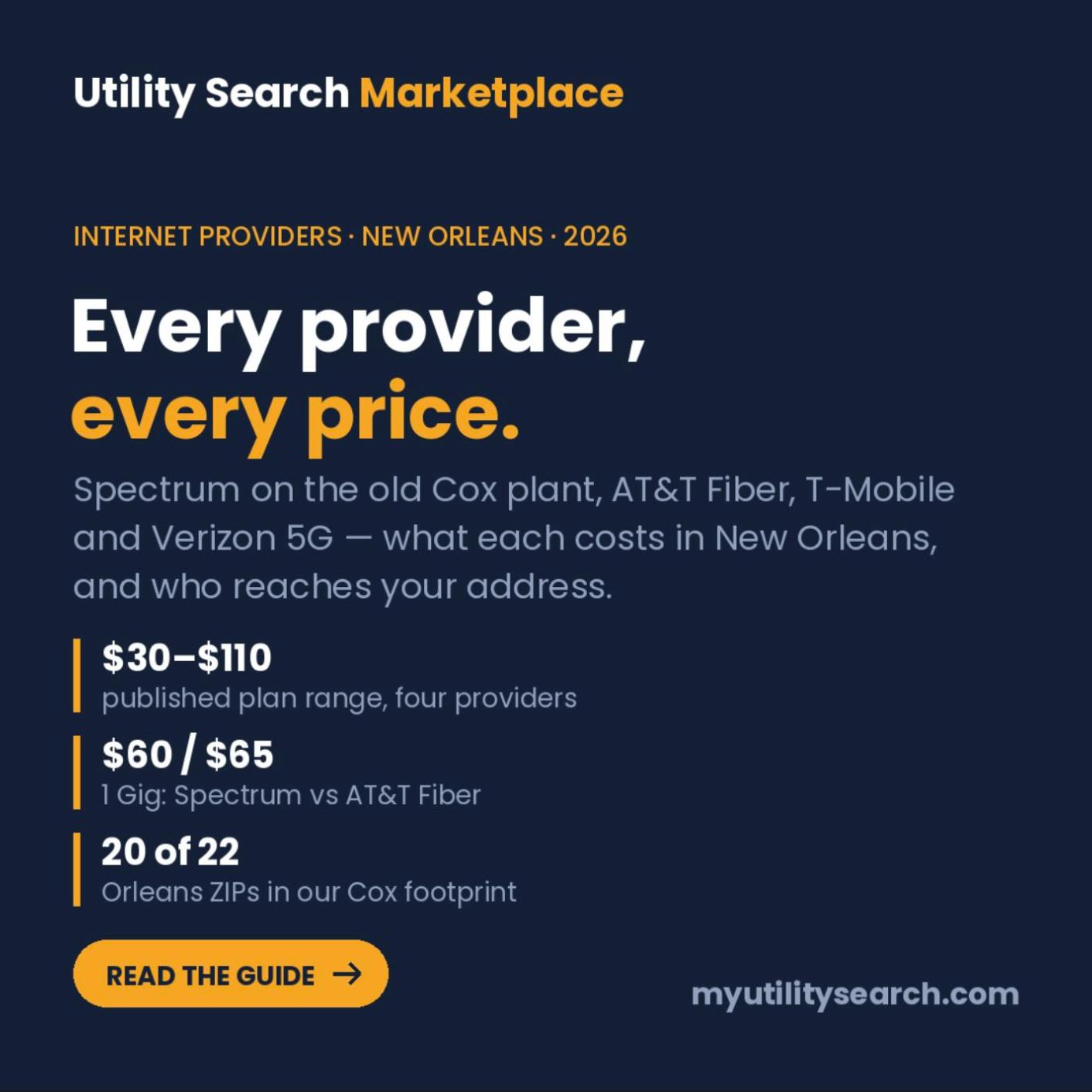
- Internet providers New Orleans — Spectrum (ex-Cox), AT&T Fiber and 5G prices, fees and footprint
- Spectrum price increase 2026: who pays and how to fight back
- TDS internet plans — the fiber overbuilder in parts of Spectrum’s footprint
- Xfinity internet: plans, prices & availability
- Fiber vs cable vs 5G home internet
- Optimum internet: plans, prices & availability
- AT&T Fiber internet: plans, prices & availability
- Best internet for working from home
- 1 Gig internet plans explained
- Internet data caps & overage fees
- Test your internet speed
- AltaFiber internet: plans, prices & availability
- Breezeline internet: plans, prices & availability
- Astound Broadband: plans, prices & availability
Best for most households: Spectrum Internet Premier (500 Mbps) if you want cable without a data cap or contract, and Spectrum’s own Advantage tier at $30 for a one- or two-person home. Skip Spectrum if fiber reaches your address: the upload speed gap is the real difference, not the download. Promo pricing varies by market and jumps after the first year, so check the price at your address before you sign.



One thought on “Spectrum Internet: Best Plans, Prices & Availability 2026”